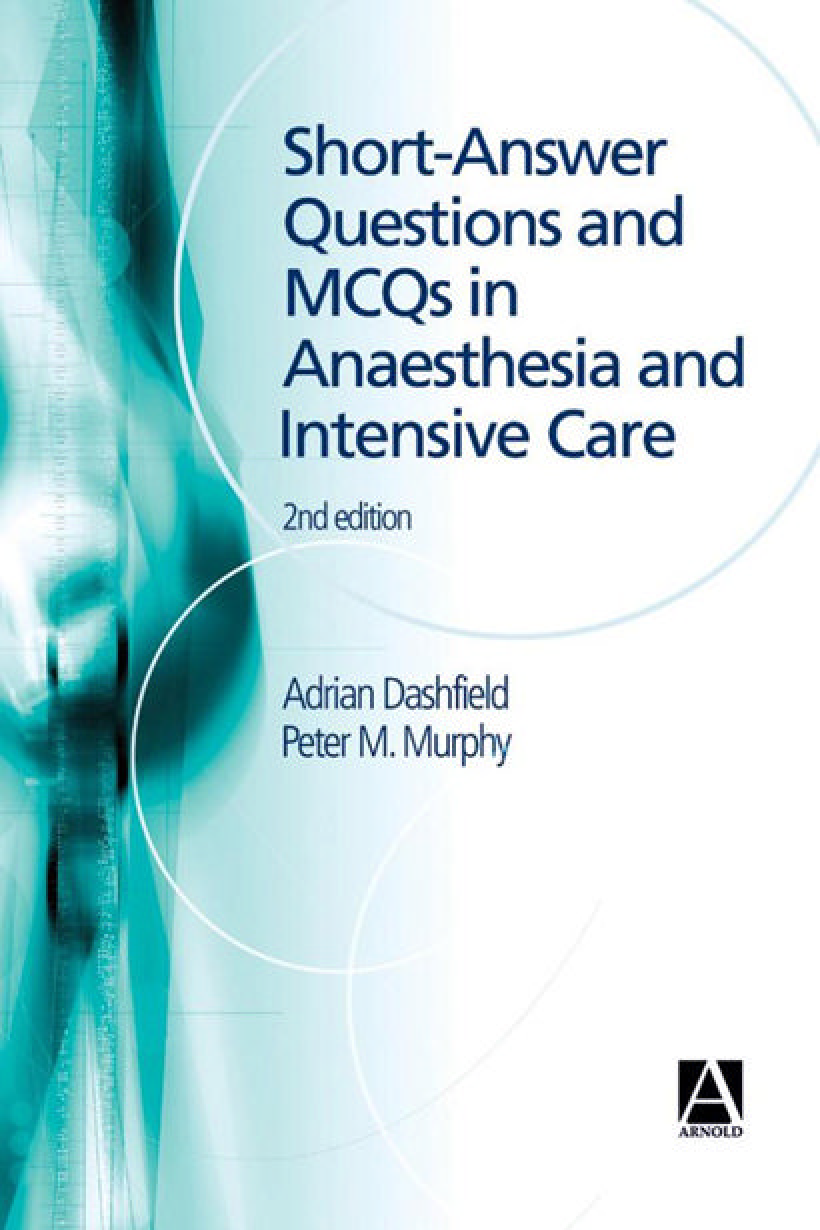
Examination Questions and Answers in Basic Anatomy and Physiology:
Contents
1 Organisation of the Body ........................................................................ 1
2 Cells and Tissues ...................
...
Examination Questions and Answers in Basic Anatomy and Physiology:
Contents
1 Organisation of the Body ........................................................................ 1
2 Cells and Tissues .....................................................................................
2.1
Cells and Tissues ...........................................................................
2.2
Cell Cycle (Mitosis and Protein Synthesis) ................................... 7
7
27
3 Measurement, Errors and Data ............................................................. 35
4 Chemistry for Physiology .......................................................................
4.1
Atoms and Molecules ....................................................................
4.2
Solutions ........................................................................................
4.3
Diffusion and Osmosis ...................................................................
4.4
Tonicity, Moles and Osmoles .........................................................
4.5
Acids, Bases and Buffers ...............................................................
4.6
Organic Chemistry and Macromolecules ...................................... 43
43
52
61
69
79
93
5 Integument ............................................................................................... 105
6 Homeostasis ............................................................................................. 119
7 Skeleton and Joints ................................................................................. 125
8 Muscles ..................................................................................................... 143
9 Gastro-Intestinal System ........................................................................ 161
10 Endocrine System .................................................................................... 191
11 Renal System ........................................................................................... 211
12 Cardiovascular System ...........................................................................
12.1 Blood ..............................................................................................
12.2 Heart ..............................................................................................
12.3 Blood Vessels .................................................................................
12.4 Pressure: The Physics of Pressure .................................................
237
237
250
262
274
ixx
Contents
12.5
12.6
Pressure Applied to the Cardiovascular System ............................ 286
Blood Pressure and Its Control ...................................................... 297
13 Respiratory System ................................................................................. 315
13.1 Anatomy and Physiology ............................................................... 315
13.2 Pressure Applied to the Respiratory System ................................. 335
14 Nervous System .......................................................................................
14.1 Cells and Action Potential .............................................................
14.2 Brain and Spinal Cord Anatomy ....................................................
14.3 Autonomic System, Neurotransmitters, Refl exes ..........................
14.4 Special Senses (Eye & Ear) ...........................................................
14.4.1 Eye ...................................................................................
14.4.2 Ear ....................................................................................
15 Reproductive System .............................................................................. 405
16 Waves, Light Waves, Sound Waves, Ultrasound
(The Physics Of) ......................................................................................
16.1 Waves .............................................................................................
16.2 Light Waves ...................................................................................
16.3 Sound .............................................................................................
16.4 Ultrasound ......................................................................................
347
347
360
377
389
389
397
419
419
424
429
432
17 Ionising Radiation ................................................................................... 437
17.1 Medical Imaging with X-Radiation ............................................... 437
17.2 Radioactivity, Radiotherapy, Nuclear Medicine,
Radiation Safety ............................................................................. 445
18 Electricity ................................................................................................. 465
19 Biomechanics ........................................................................................... 475
20 Energy and Heat ..................................................................................... 493
Advice to the Exam Candidate
The correct choice of answer for each question is provided. Accompanying the cor-
rect choice is a justifi cation for the choice or an explanation of the correct answer
and sometimes of why the other choices are incorrect. The degree of diffi culty var-
ies, but not by intentional design. The perception of diffi culty depends on that part
of science that the question examines, the level of scientifi c background brought to
the course by the student and their level of studious preparation for the
examination.
There is only one best correct answer for each of the multiple choice questions
among the four choices presented. However, there may be more than one correct
answer. You must choose the best one. In an examination, never leave a question
unanswered. If you cannot decide on an answer, guess at it (after eliminating any
choices that you deem to be incorrect). That is, you will be rewarded for the ability
to decrease the number of choices from which you are guessing, from 4 to 3 or 2. In
marking multiple choice questions, I suggest that that one mark be allocated for a
correct answer and that a quarter of a mark be deducted for a wrong answer or an
unanswered question. Deducting a quarter mark will reduce the score that would be
gained by selecting an answer from the four choices purely at random (i.e. guess-
ing), from about 25 % to about 6 %. Not to deduct a quarter mark is, in my opinion,
unsound.
Be aware of questions that are asked in the negative. That is, those that have NOT
true; or FALSE; or INCORRECT; or EXCEPT one, in the stem. In this case you are
seeking a statement that is wrong in order to answer the question. Do not be intimi-
dated by arithmetical calculations. The calculation itself will be simple. Deciding
what to add, multiply or divide with what, is the tricky part.
Some questions have been paraphrased from those published in the third edition
of the book Human Science: Matter and Energy in the Human Body (Caon, M., &
Hickman, R. (2003), Crawford House Australia Publishing, Belair South Australia),
and are used with the authors’ permission.
[Show More]