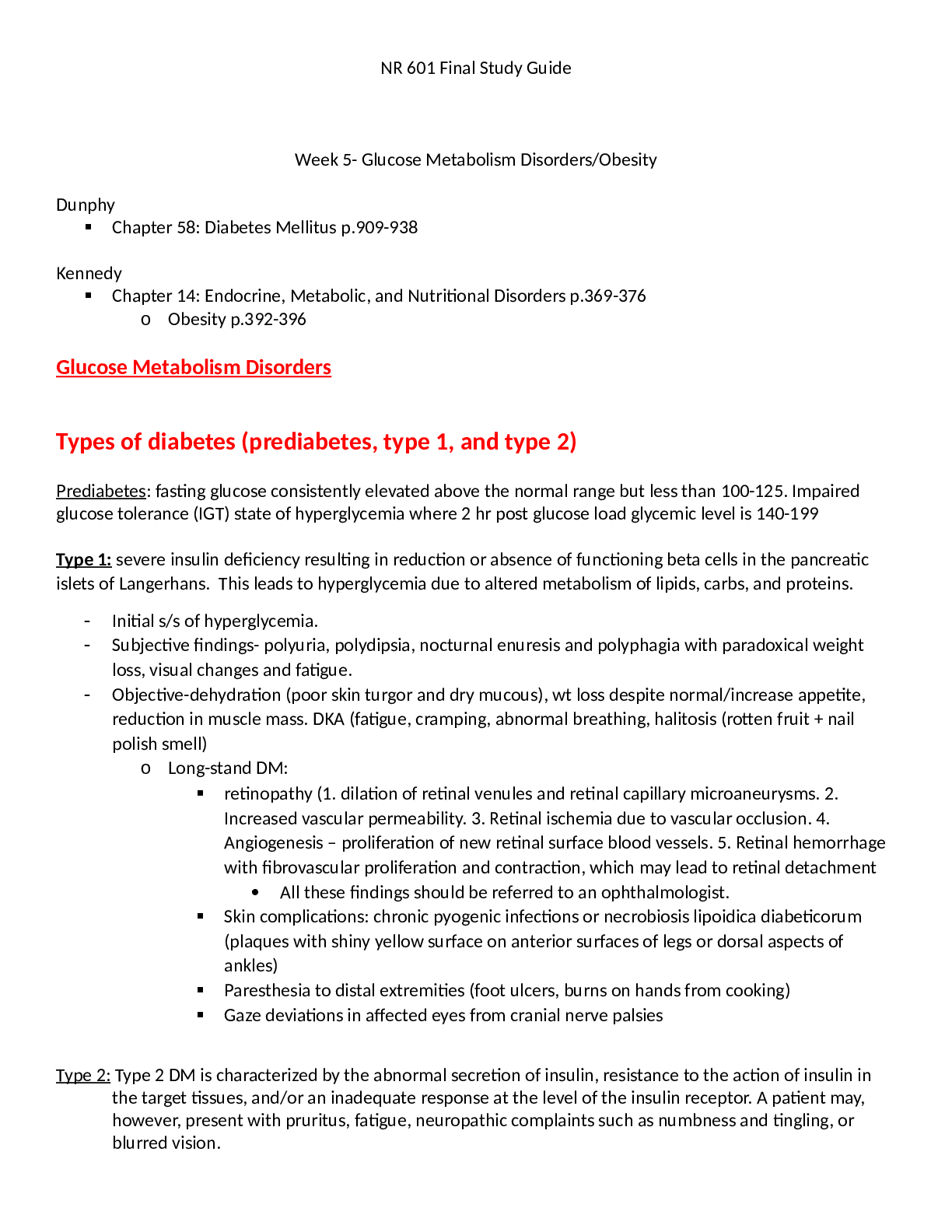
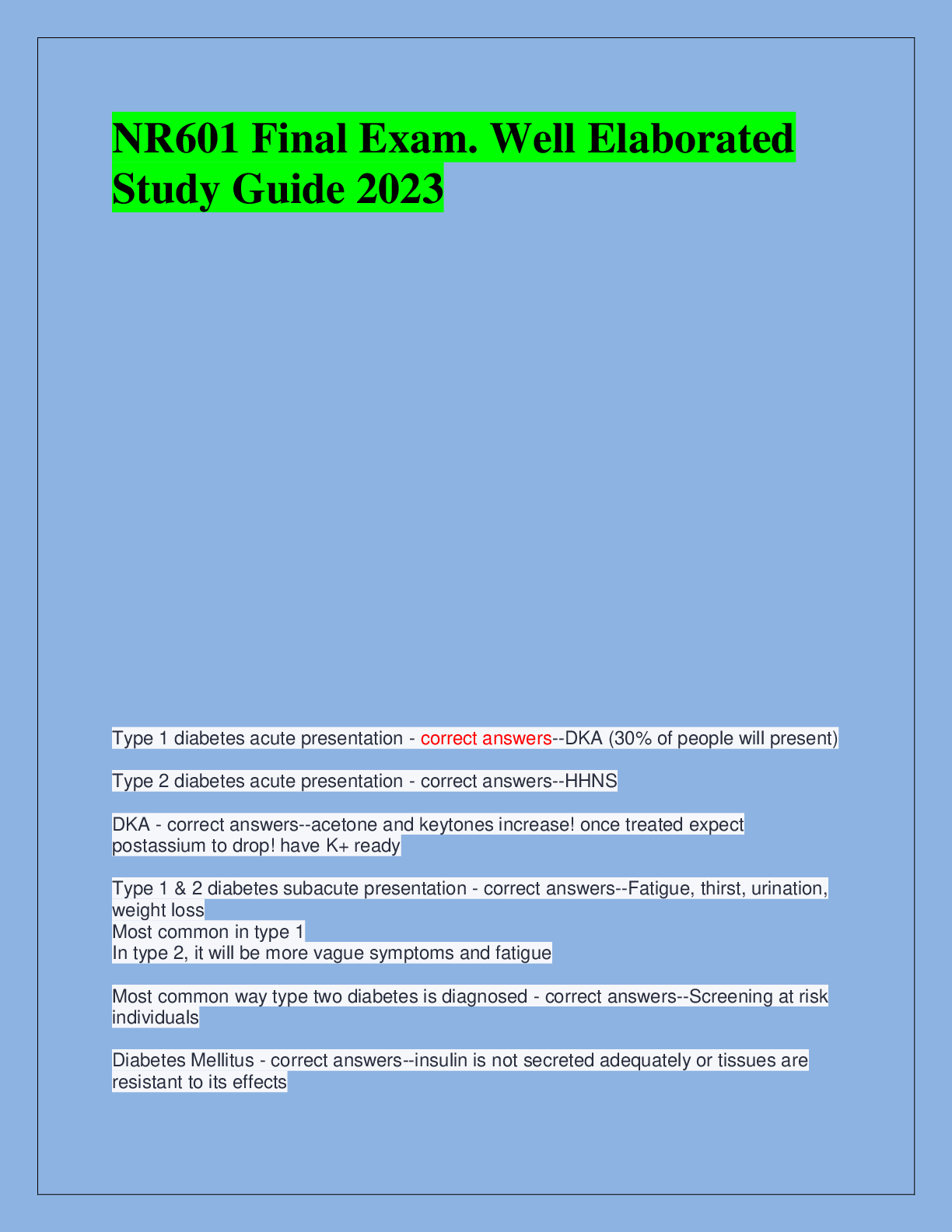
Types of diabetes (prediabetes, type 1, and type 2)
Prediabetes: fasting glucose consistently elevated above the normal range but less than 100-125. Impaired
glucose tolerance (IGT) state of hyperglycemia where 2 hr po
...
Types of diabetes (prediabetes, type 1, and type 2)
Prediabetes: fasting glucose consistently elevated above the normal range but less than 100-125. Impaired
glucose tolerance (IGT) state of hyperglycemia where 2 hr post glucose load glycemic level is 140-199
Type 1: severe insulin deficiency resulting in reduction or absence of functioning beta cells in the pancreatic
islets of Langerhans. This leads to hyperglycemia due to altered metabolism of lipids, carbs, and proteins.
Initial s/s of hyperglycemia.
Subjective findings- polyuria, polydipsia, nocturnal enuresis and polyphagia with paradoxical weight
loss, visual changes and fatigue.
Objective-dehydration (poor skin turgor and dry mucous), wt loss despite normal/increase appetite,
reduction in muscle mass. DKA (fatigue, cramping, abnormal breathing, halitosis (rotten fruit + nail
polish smell)
o Long-stand DM:
retinopathy (1. dilation of retinal venules and retinal capillary microaneurysms. 2.
Increased vascular permeability. 3. Retinal ischemia due to vascular occlusion. 4.
Angiogenesis – proliferation of new retinal surface blood vessels. 5. Retinal hemorrhage
with fibrovascular proliferation and contraction, which may lead to retinal detachment
All these findings should be referred to an ophthalmologist.
Skin complications: chronic pyogenic infections or necrobiosis lipoidica diabeticorum
(plaques with shiny yellow surface on anterior surfaces of legs or dorsal aspects of
ankles)
Paresthesia to distal extremities (foot ulcers, burns on hands from cooking)
Gaze deviations in affected eyes from cranial nerve palsies
Type 2: Type 2 DM is characterized by the abnormal secretion of insulin, resistance to the action of insulin in
the target tissues, and/or an inadequate response at the level of the insulin receptor. A patient may,
however, present with pruritus, fatigue, neuropathic complaints such as numbness and tingling, or
blurred vision.
Risk factors: most common ethnicity
Race/Ethnicity
• African American
• Latino
• Native American
• Asian American
• Pacific Islander
Diabetes Diagnostic Criteria
Hbg A1C of 6.5% or higher
Symptoms of diabetes (polyuria, polydipsia, weight loss) + a random plasma glucose of 200 or higher
Fasting plasma glucose of 126 or higher (fasting for 8 hours)
Two-hour plasma glucose level of 200 or higher during an oral glucose tolerance test (with a 75 g
glucose load)
*** In the absence of unequivocal hyperglycemia results should be confirmed by repeat testing on a
new blood sample without delay, preferably using the same type of test ***
*All above-but confirmation of type 2 diabetes mellitus requires: two fasting blood glucoses ≥126
mg/dL or two random blood glucoses ≥200 mg/dL.
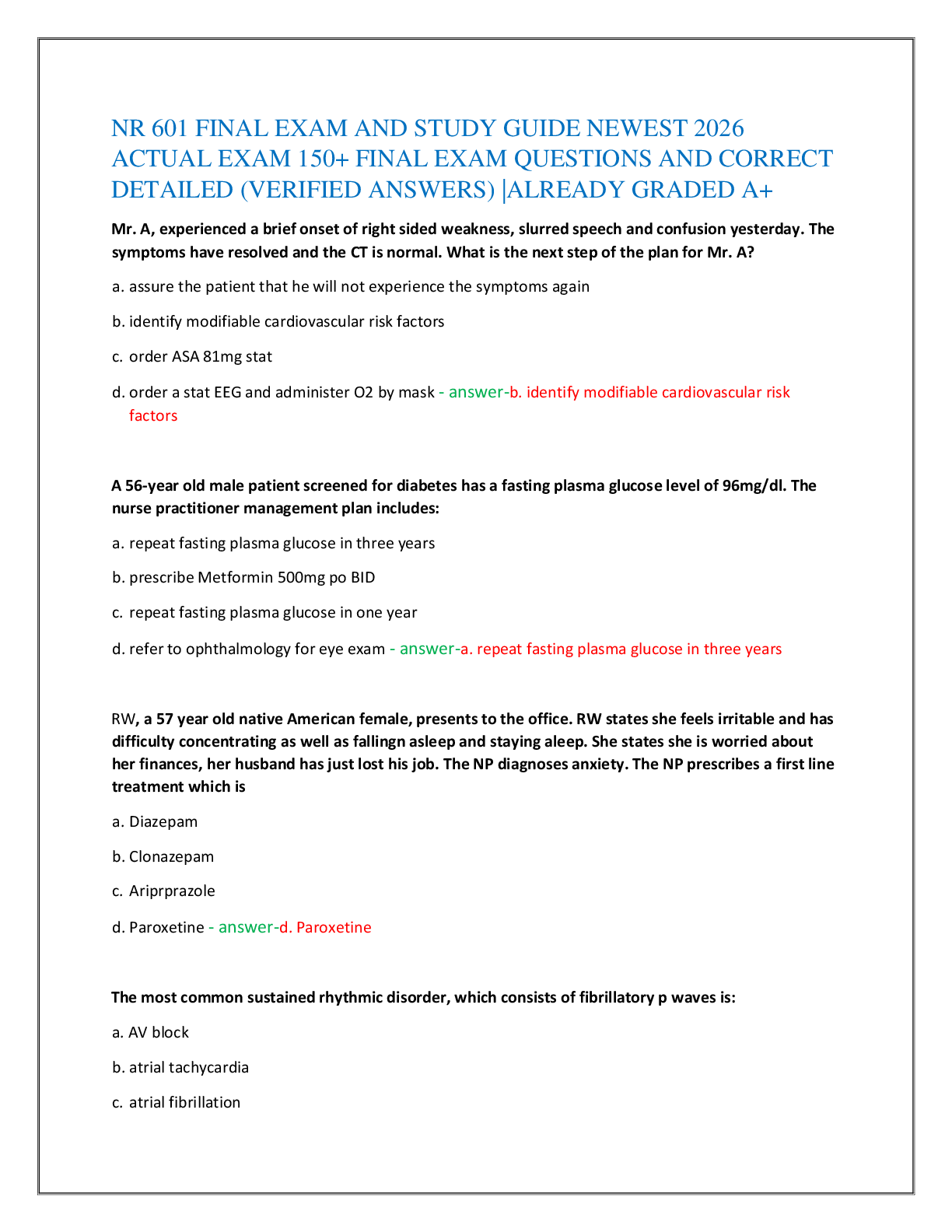
You do not screen for type 1 diabetes but you do screen for type 2 if an individual is overweight or
obese, regardless of age, and for all adults aged 45 years and older. Tests should be repeated at a
minimum of 3 year intervals
Initial treatment recommendations- first line treatment for each type
Type 1 DM:
First line: Insulin
Goal is to normalize the elevated blood glucose level
Insulin regimen to achieve plasma glucose levels:
o Before meals: 80-130,
o Peak postprandial (1-2 hours after the beginning of a meal): < 180
o Hgb A1C < 7%
The 2017 ADA standards: the majority of T1DM should be treated with multiple daily injections of
prandial insulin and daily basal insulin or with a continuous SQ insulin infusion pump
Drugs for Type 1 DM
o Single-Dose Therapy
Single Injection
Intermediate or long-acting insulin with or without regular insulin in the morning
Or
Intermediate or long acting insulin at bedtime
Recommended at a minimum SMBG in the morning and at bedtime
o Conventional Split-Dose Therapy
Two Injections
Mixture of NPH and regular insulin in the morning and evening
Recommended at a minimum SMBG before each dosing and at bedtime
[Show More]




 GRADE A SOLUTION.png)