PAIN
Phases of Nociceptive Pain (NORMAL PAIN)
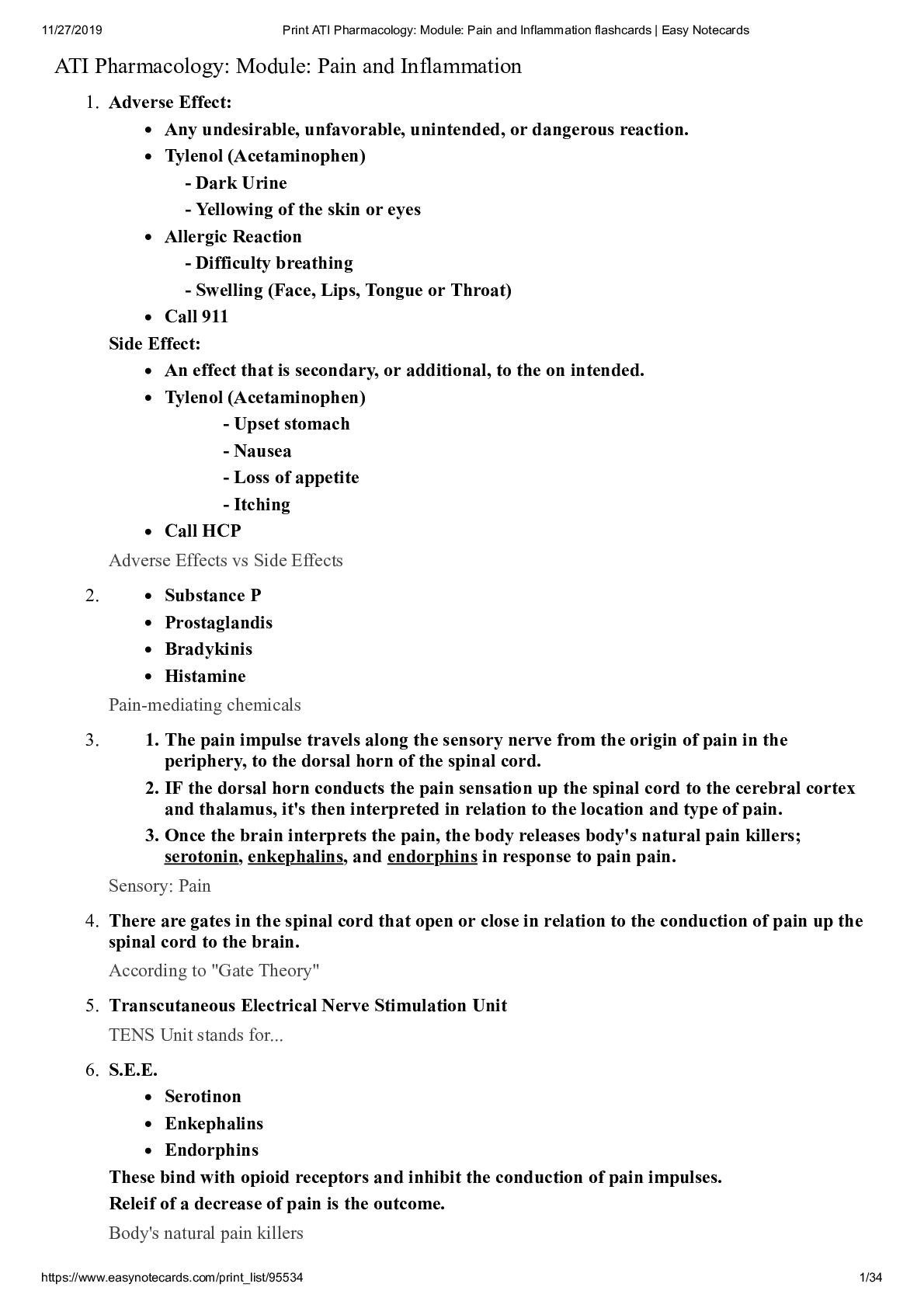
Transduction (injured tissue release NTs that CARRY pain message)
Transmission (neurons release NTs that BLOCK pain impulse)
Perception (being AWARE of the pain)
Modulat
...
PAIN
Phases of Nociceptive Pain (NORMAL PAIN)
Transduction (injured tissue release NTs that CARRY pain message)
Transmission (neurons release NTs that BLOCK pain impulse)
Perception (being AWARE of the pain)
Modulation (serotonin and endorphins=IMPEDE pain impulse/help block pain)
Neuropathic pain (PINS&NEEDLES, abnormal processing of pain message due to
abnormal/damaged pain nerves. Most difficult to treat/assess)
Example: diabetes, herpes zoster, sciatica, phantom limb pain
Treatments: antidepressants, antispasmodic agents, skeletal muscle relaxants
Sources of Pain
Visceral (Sources: internal organ-stomach, intestine, gallbladder. Ex. Kidney stones,
appendicitis, ovarian cysts)
Deep somatic (Sources: blood vessels, joints, tendons, muscles/bone. May result from
pressure, trauma, or ischemia. Ex. Pain w/osteoarthritis or fractures)
Cutaneous somatic (Sources: skin surface/subQ tissue. Sharp burning sensation. Ex.
Partial thickness burn, abrasions, bruises.
Referred (felt at particular site, but originates from another location. Both sites
innervated by same spinal nerve making it difficult for the brain to differentiate point of
origin. Ex. Heart attack, gallbladder, kidney pain)
Cancer pain (infiltration of lesion, never injury from periphery or CNS. Pain descriptor is
dependent on underlying pathology. Associated disorders: bone metastases,
neuropathy)
Types of Pain
Acute (self-protecting purpose-warns of actual or potential tissue damages. Short term,
self-limiting, follows predictable pattern, resolves after healing. Ex. Surgery, trauma,
kidney stones)
Chronic (pain for longer than 6 months. Either malignant-cancer, or non-malignantarthritis, fibromyalgia. Does NOT stop after healing. Often does not show symptoms of
typical pain. Ex. Severe migraines, back pain, neuropathy)
Breakthrough (transient spike in pain level, moderate/severe in otherwise controlled
pain. Ex. Patient is taking a long-acting opioid has a recurrence of pain before next
scheduled dose)
Pain and Aging Adult (pain is a common experience for those 65+, but is NOT a normal aging
process. Pain should not be tolerated or accepted)
Cues: changes in dressing, walking, toileting, or involvement in activities. Slowness and
rigidity may develop, fatigue may occur. Look for sudden onset of acute confusion, which
may indicate poorly controlled pain. (you’ll need to rule out infection/adverse med
reactions)
Initial Pain Assessment (Where? When did pain start? What does your pain feel like-burning,
stabbing, throbbing, aching? How much pain do you have now? What makes your pain
better/worse? How does the pain limit functions/activities? What does this pain mean to you?
PQRST method of Pain Assessment
P-Provocation (cause of pain)
Q-Quality (dull, ache, sharp, numb)
R-Radiates or Refers
S-Severity
T-Time
Pain Assessment Tools for Adults
Pain rating scales (one-dimensional, rate pain 1-10)
Verbal descriptor scales (use patient’s words to describe pain)
Horizontal line scale (mark from “no pain” to “worst pain”)
Nonverbal Behaviors of Pain
Acute (guarding, grimacing, vocalization-moaning, agitation, diaphoresis-sweating,
change in vital signs-tachycardia)
Chronic (adapts over time, little indications that they’re in pain, bracing, rubbing,
diminished activity, sighing, change in appetite)
Assessing Pain in Patient with Dementia (communicate pain through their behavior: agitation,
pacing, repetitive yelling)
PAINAD scale (Pain Assessment IN Advanced Dementia: breathing independent of
vocalization, negative vocalization, facial expression, body language, consolability)
OLDER ADULT
Changes of Aging
Physiological (physical changes, reduced abilities, review notes on different body
systems)
Functional factors (ability to function day to day, change in function with ADLs, fear of
becoming dependent)
Cognitive factors (reduction in number of brain cells, cognitive impairments are NOT
normal age-related changes; look for underlying causes)
Psychosocial changes (retirement, social isolation, death, sexuality, housing and
environment)
Cognitive Disorders
Delirium: ACUTE confused state
Dementia: generalized impairment of intellectual functioning
Depression: mood disturbance characterized by feeling of sadness and despair
[Show More]