WGU Information Systems Management
C724 Module 1
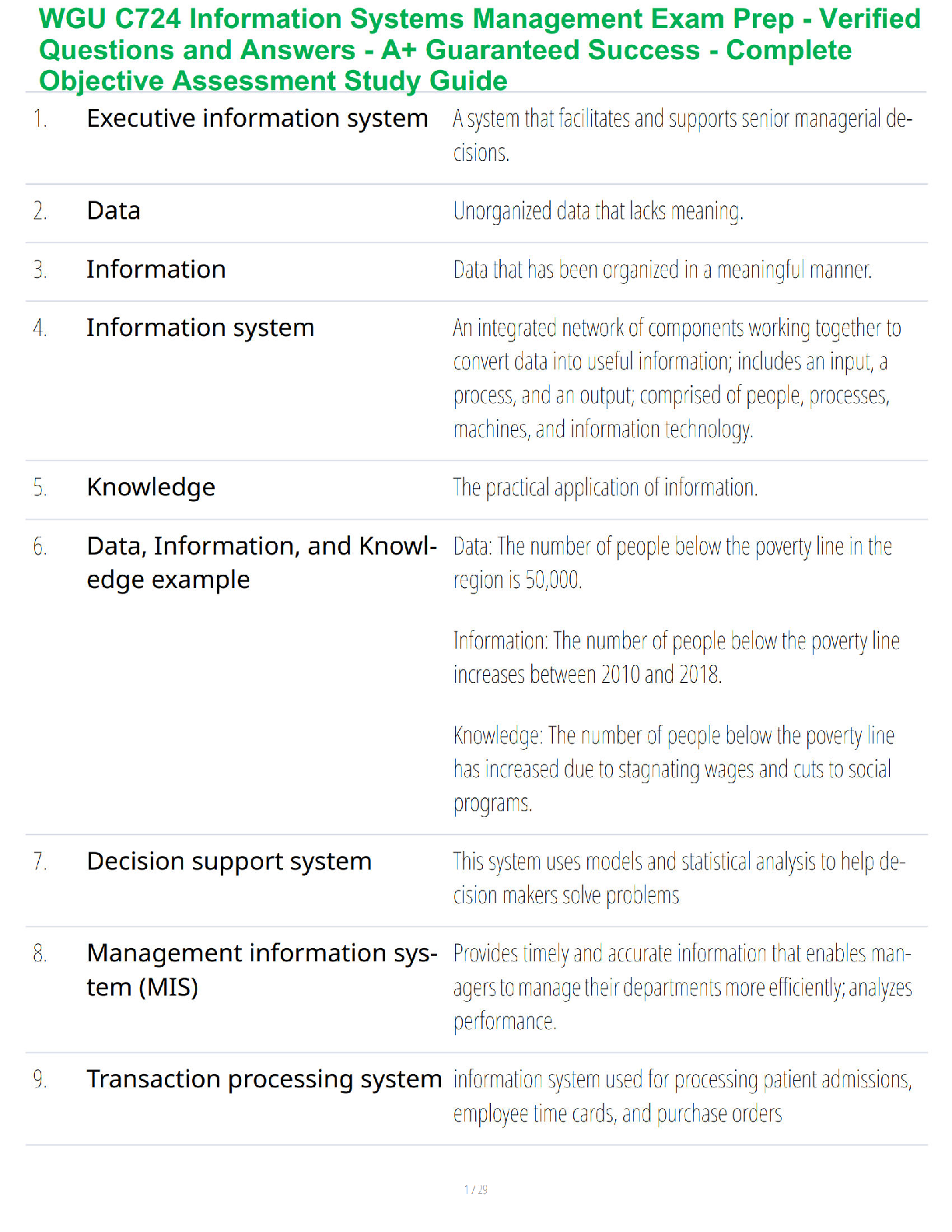
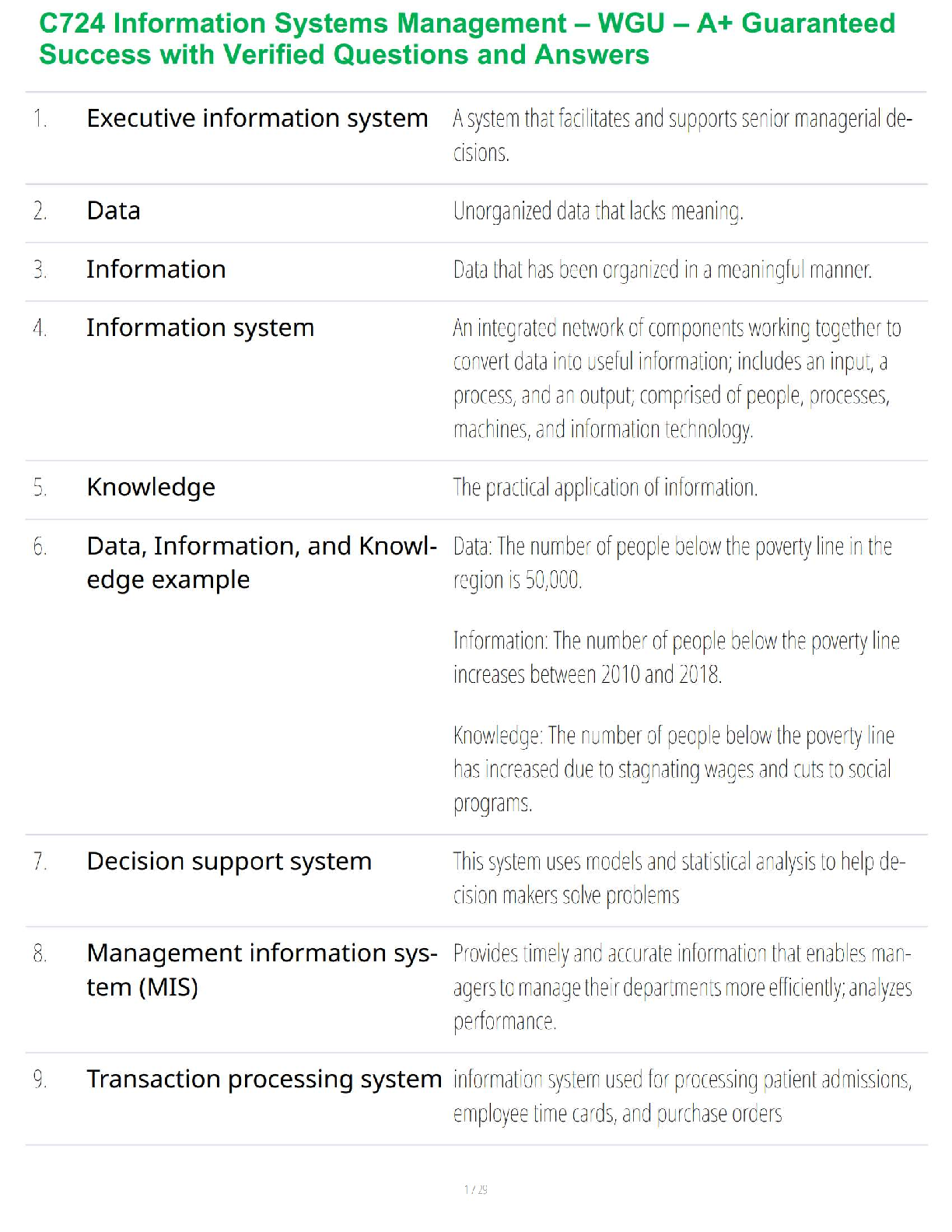
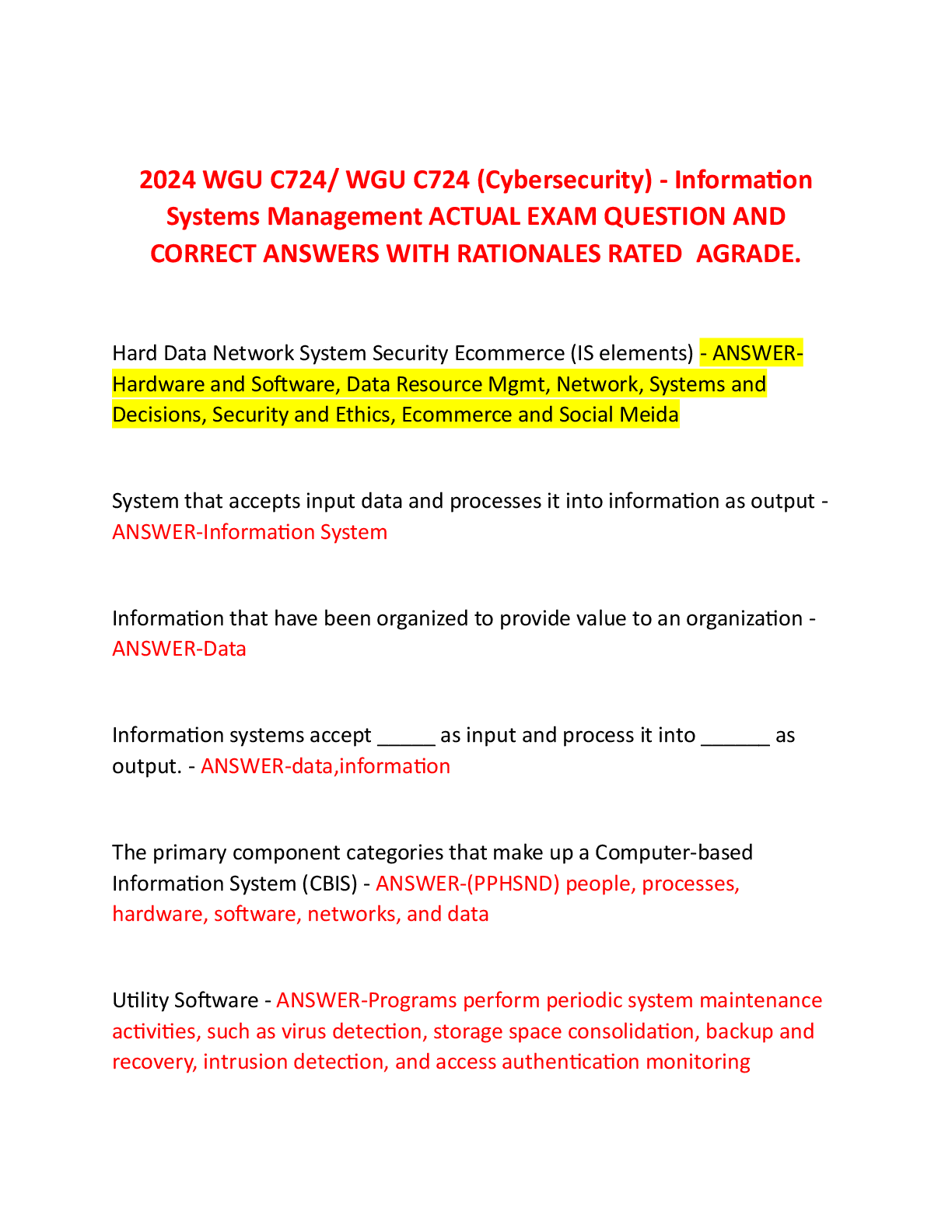
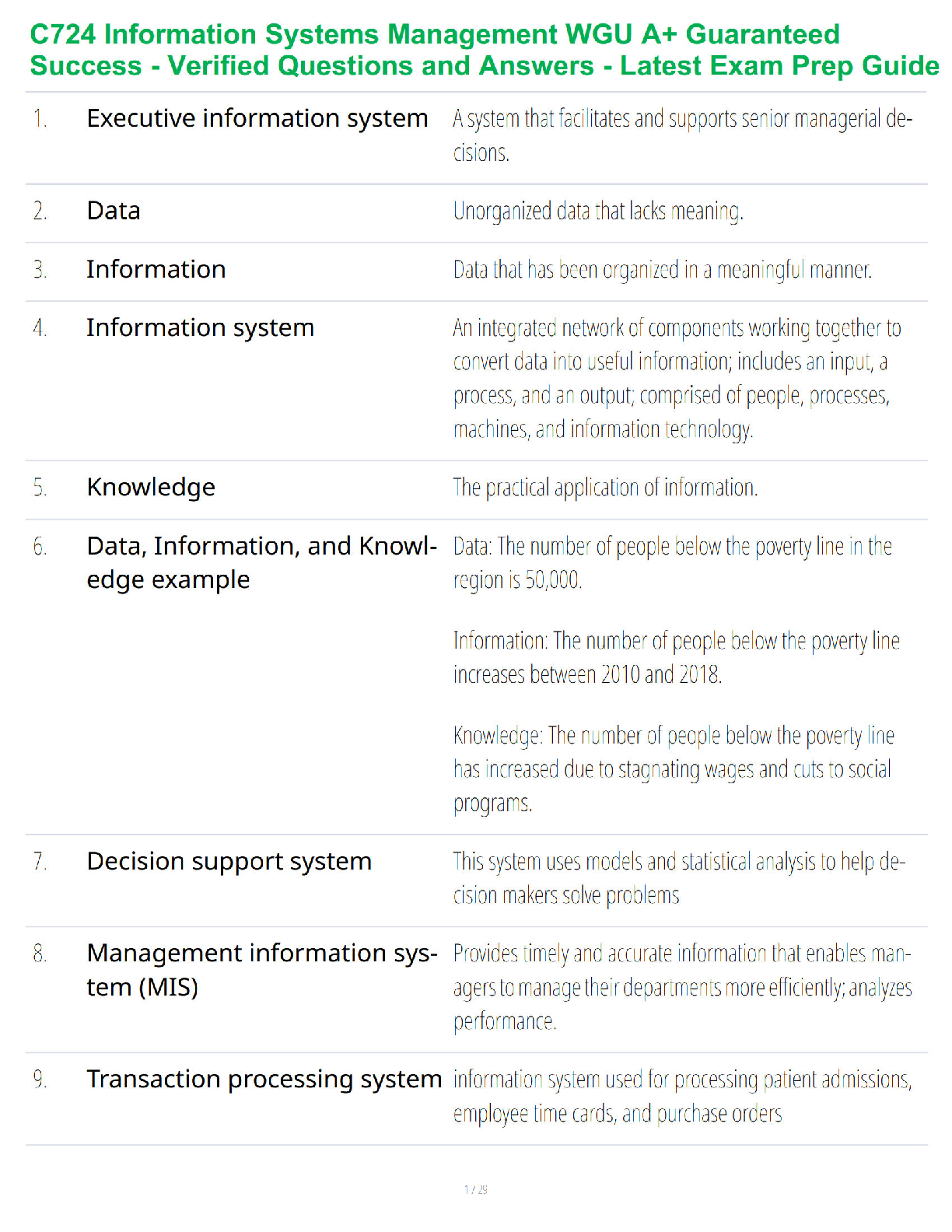
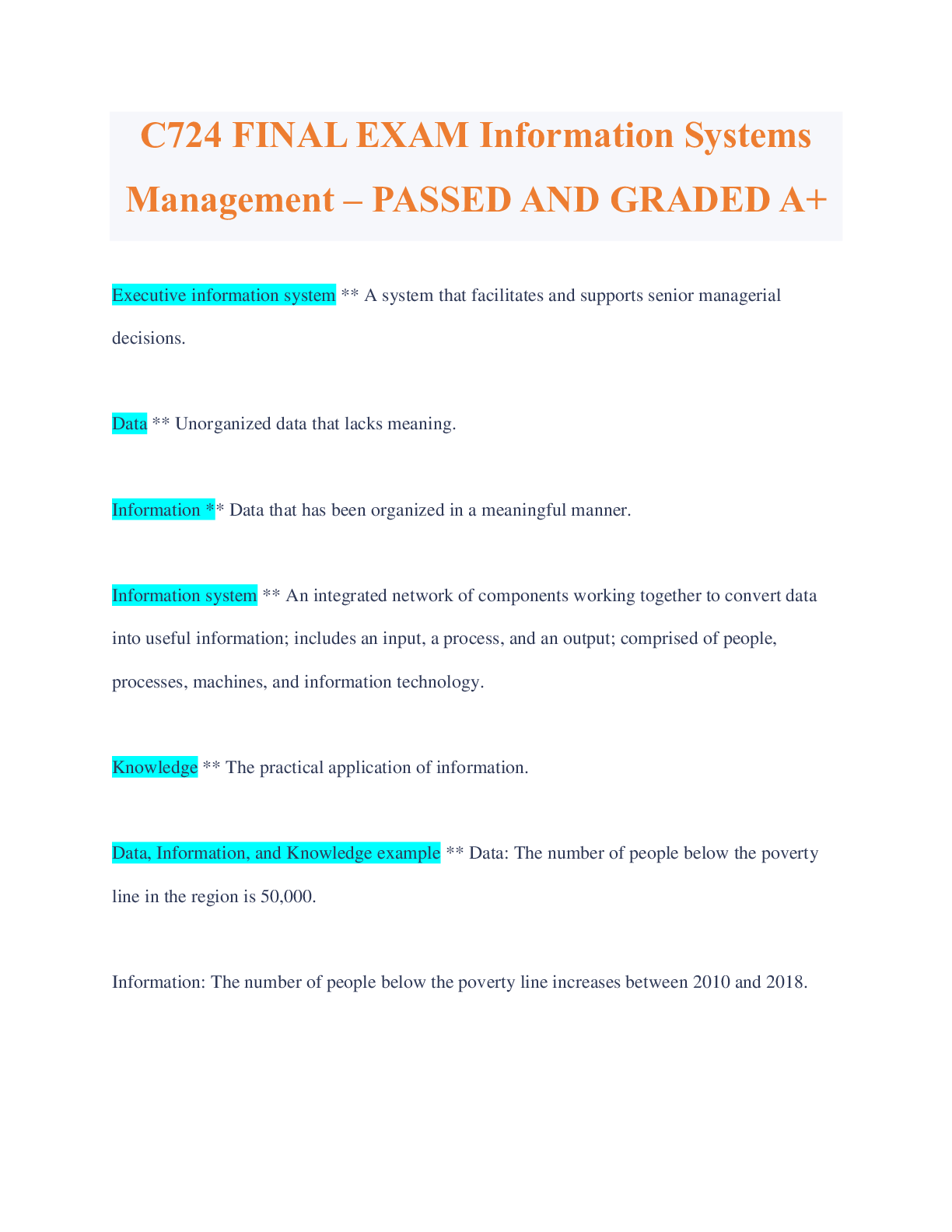
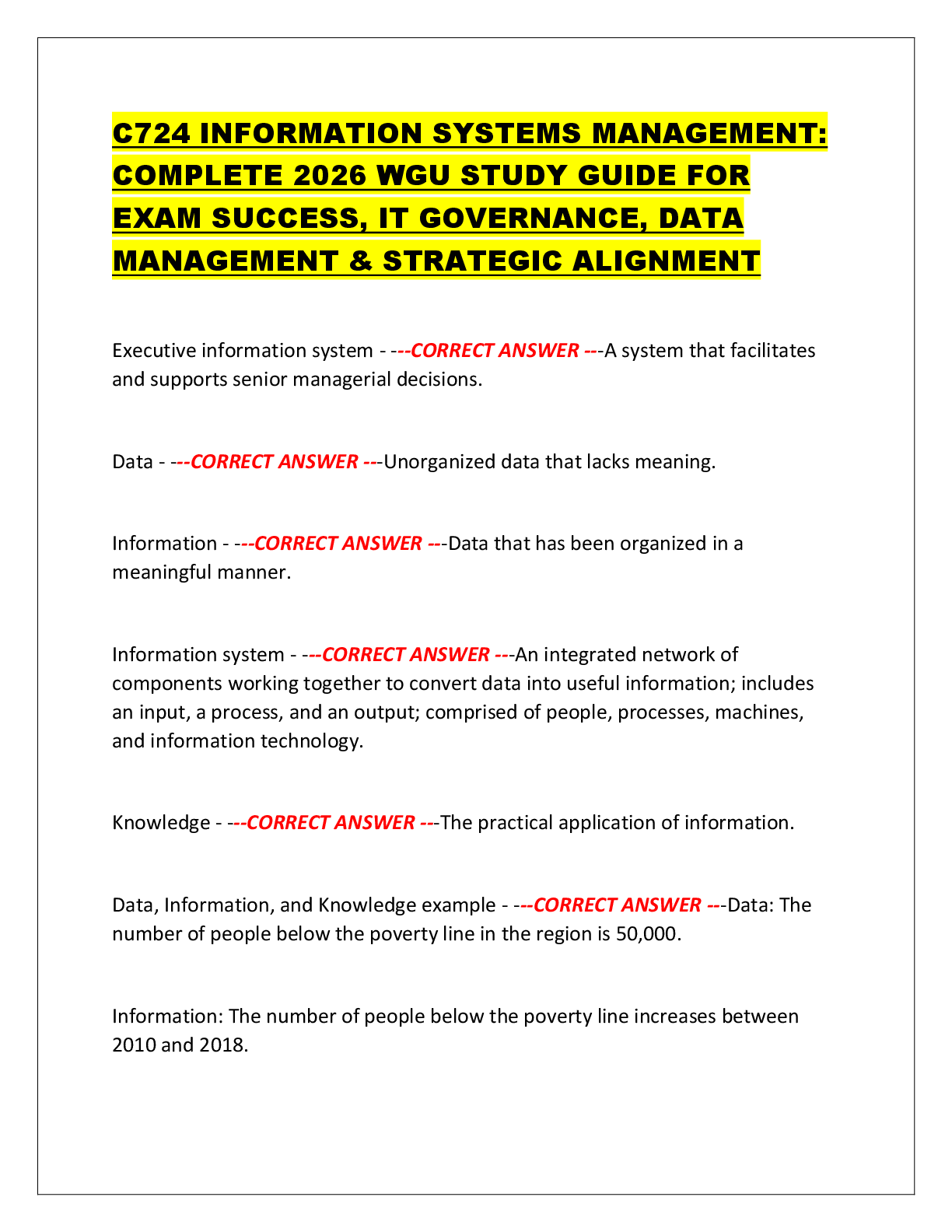
Information system ✔✔This consists of all the components that work together to process data into
useful information.
Information ✔✔This is data that has been organized
...
WGU Information Systems Management
C724 Module 1
Information system ✔✔This consists of all the components that work together to process data into
useful information.
Information ✔✔This is data that has been organized to provide value to an organization.
Data ✔✔The input the system accepts to produce useful information
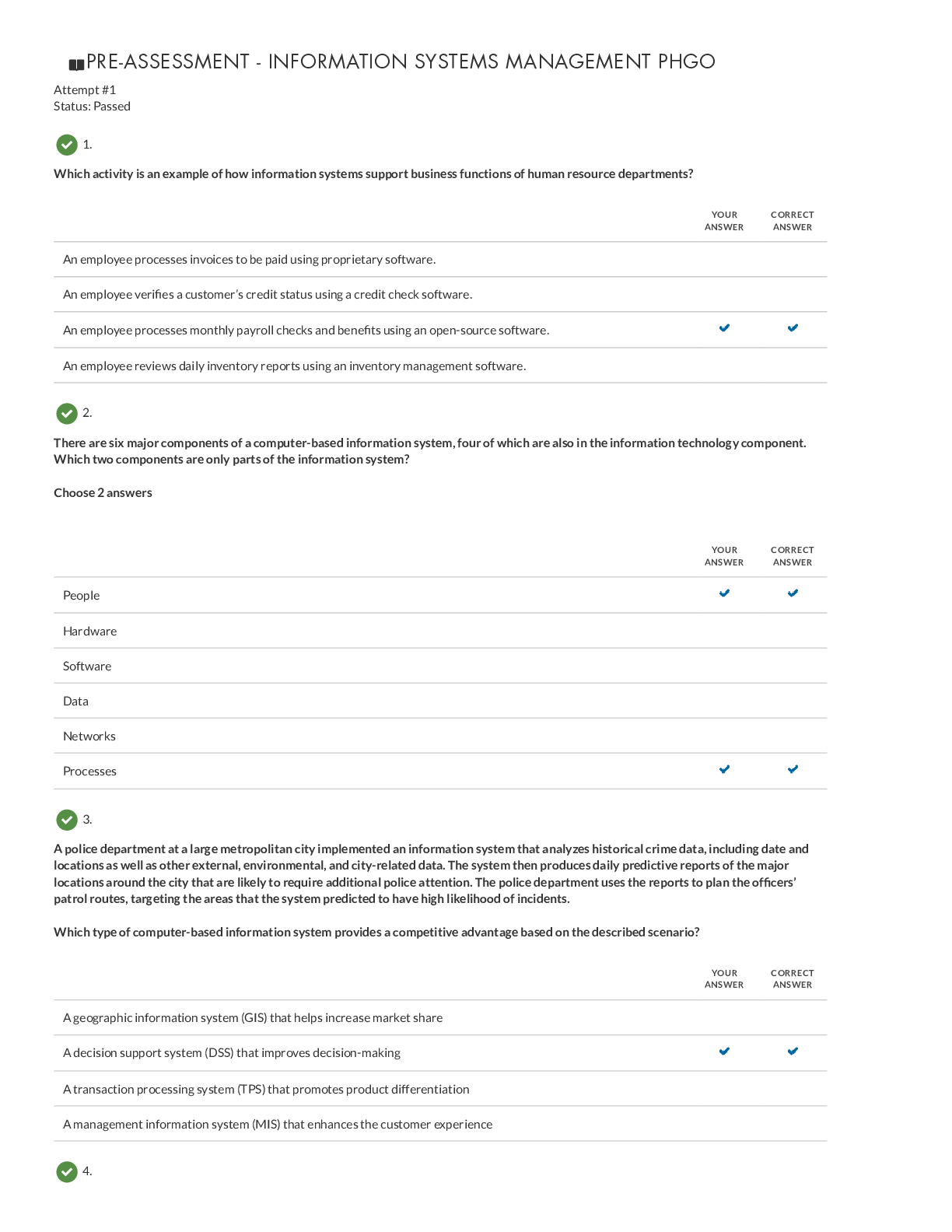
Software and data ✔✔Two out of six of the main components of a computer-based information
system.
Hardware ✔✔Is the computer and all of its peripherals
Software ✔✔Programs comprised of pre-coded instructions written in a programming language
which the end user typically uses to interact directly with the IS.
Network ✔✔A group of two or more computers and other devices connected to each other.
First level managers ✔✔Management information systems focus on technology, people, and
organizations. They primarily serve these people.
TPS, MIS, DSS, EIS ✔✔This system organizes and presents data and information using internal
and external data sources in support of senior executives as a four-level pyramid that depicts
different types of information systems, as they relate to different hierarchical levels within an
organization.
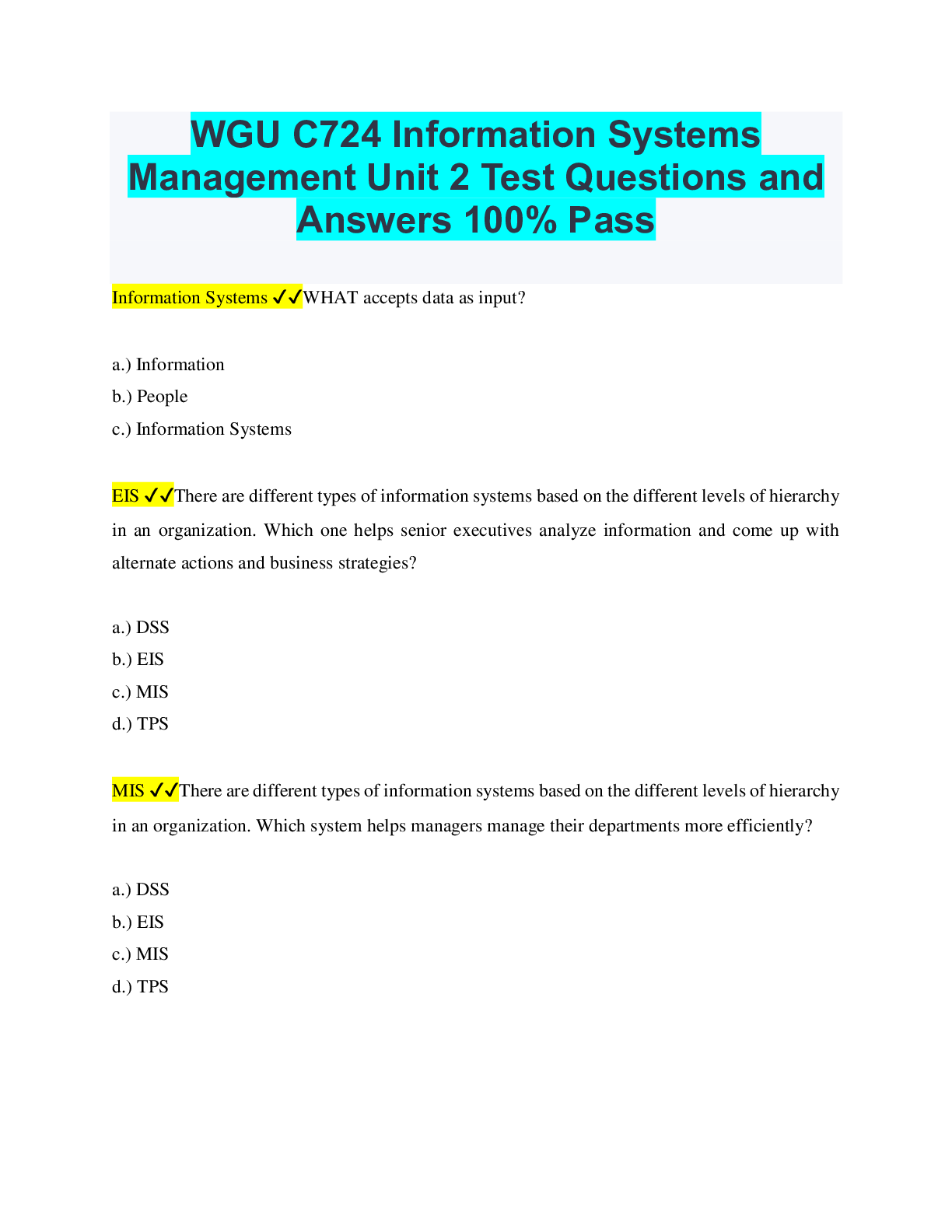
EIS (Executive Information System) ✔✔This system supports senior executives by providing
important data in the form of graphs and charts to analyze and identify long-term trends.
TPS (Transaction Processing System) ✔✔This system tracks the flow of daily routine transactions
that are necessary to conduct business, such as payroll or order processing.
MIS (Management Information System) ✔✔This system provides first level managers with reports
on current performance and historical records to help keep an organization running smoothly.
DSS (Decision-support System) ✔✔This system provides modeling and analytical tools that
support middle to senior managers in all aspects of the decision making process, when problems
are unique, unstructured, and not easily specified in advance, to project potential future trends.
Major threats to managing information systems ✔✔Floods, earthquakes, power outages and more.
Security ✔✔A critical issue that information systems executives must make difficult hardware
decisions regarding the issues that pose possible outside threats to the system.
Skilled workers ✔✔This is one of the most important issues facing businesses today since the IS
management function is extremely complex and changes regularly.
Horizontal ✔✔This is the structure of the IS function because information systems encompass
many different business functions in an organization, and cannot work alone in a vertical structure.
3 years ✔✔A large part of IS management's main agenda changes this often due to the constant
evolving of information systems, confirming the highly dynamic nature of the IS management
function.
Examples of IS ✔✔Online reservation booking, track customer activities, and predicting future
sales patterns.
Examples of IT ✔✔Telephone and r
[Show More]