AP World History Modern Unit 3 Already
Passed
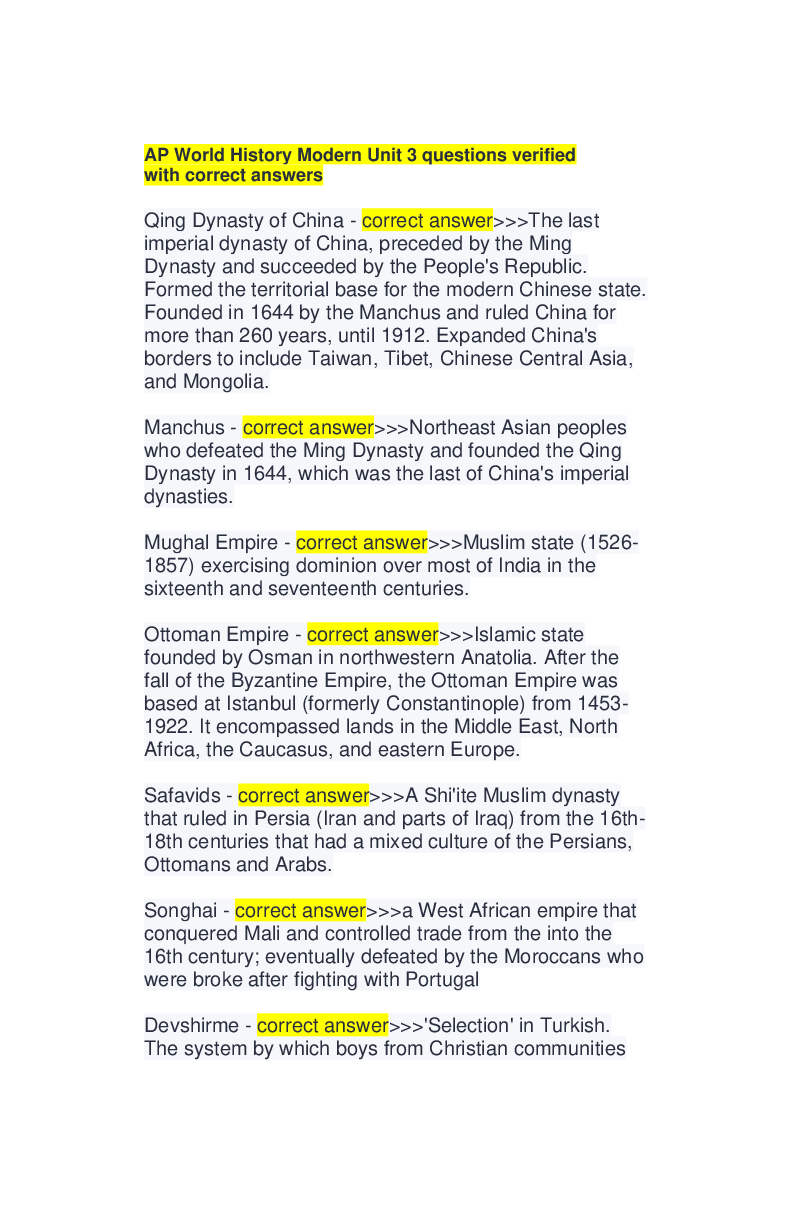
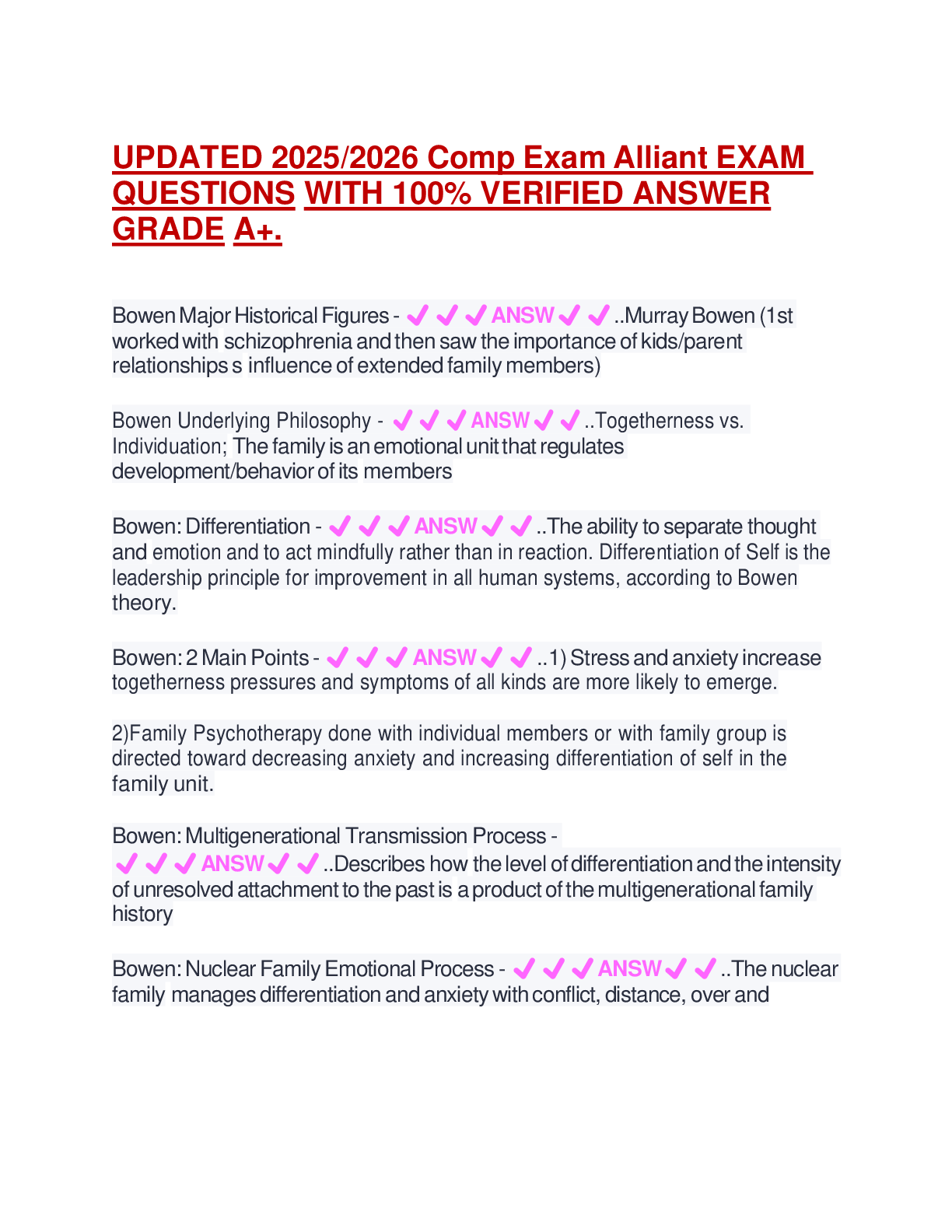
Qing Dynasty of China ✔✔The last imperial dynasty of China, preceded by the Ming Dynasty and
succeeded by the People's Republic. Formed the territorial base for the modern
...
AP World History Modern Unit 3 Already
Passed
Qing Dynasty of China ✔✔The last imperial dynasty of China, preceded by the Ming Dynasty and
succeeded by the People's Republic. Formed the territorial base for the modern Chinese state.
Founded in 1644 by the Manchus and ruled China for more than 260 years, until 1912. Expanded
China's borders to include Taiwan, Tibet, Chinese Central Asia, and Mongolia.
Manchus ✔✔Northeast Asian peoples who defeated the Ming Dynasty and founded the Qing
Dynasty in 1644, which was the last of China's imperial dynasties.
Mughal Empire ✔✔Muslim state (1526-1857) exercising dominion over most of India in the
sixteenth and seventeenth centuries.
Ottoman Empire ✔✔Islamic state founded by Osman in northwestern Anatolia. After the fall of
the Byzantine Empire, the Ottoman Empire was based at Istanbul (formerly Constantinople) from
1453-1922. It encompassed lands in the Middle East, North Africa, the Caucasus, and eastern
Europe.
Safavids ✔✔A Shi'ite Muslim dynasty that ruled in Persia (Iran and parts of Iraq) from the 16th18th centuries that had a mixed culture of the Persians, Ottomans and Arabs.
Songhai ✔✔a West African empire that conquered Mali and controlled trade from the into the
16th century; eventually defeated by the Moroccans who were broke after fighting with Portugal
Devshirme ✔✔'Selection' in Turkish. The system by which boys from Christian communities were
taken by the Ottoman state to serve as Janissaries (elite military units utilized by the Ottomans)
Janissary ✔✔elite Ottoman guard (trained as foot soldiers or administrators) recruited from the
Christian population through the devshirme system, that often converted to Islam
Samurai ✔✔Class of warriors in feudal Japan who pledged loyalty to a noble in return for land.
Divine Right ✔✔the idea that monarchs are God's representatives on earth and are therefore
answerable only to God.
Absolute Monarchy ✔✔A system of government in which the head of state is a hereditary position
and the king or queen has almost complete power
Versailles ✔✔Palace constructed by Louis XIV outside of Paris to glorify his rule and subdue the
nobility.
Zamindars ✔✔Archaic tax system of the Mughal empire where decentralized lords collected
tribute for the emperor.
Taj Mahal ✔✔beautiful mausoleum (tomb) at Agra (India) built by the Mughal emperor Shah
Jahan (completed in 1649) in memory of his favorite wife; illustrates syncretic blend between
Indian and Arabic architectural styles
Tax farming ✔✔To generate money for territorial expansion Ottoman rulers used this taxcollection system. Under this system the government hires private individuals to go out and collect
taxes for them.
Protestant Reformation ✔✔Religious re
[Show More]
.png)

.png)
.png)
.png)