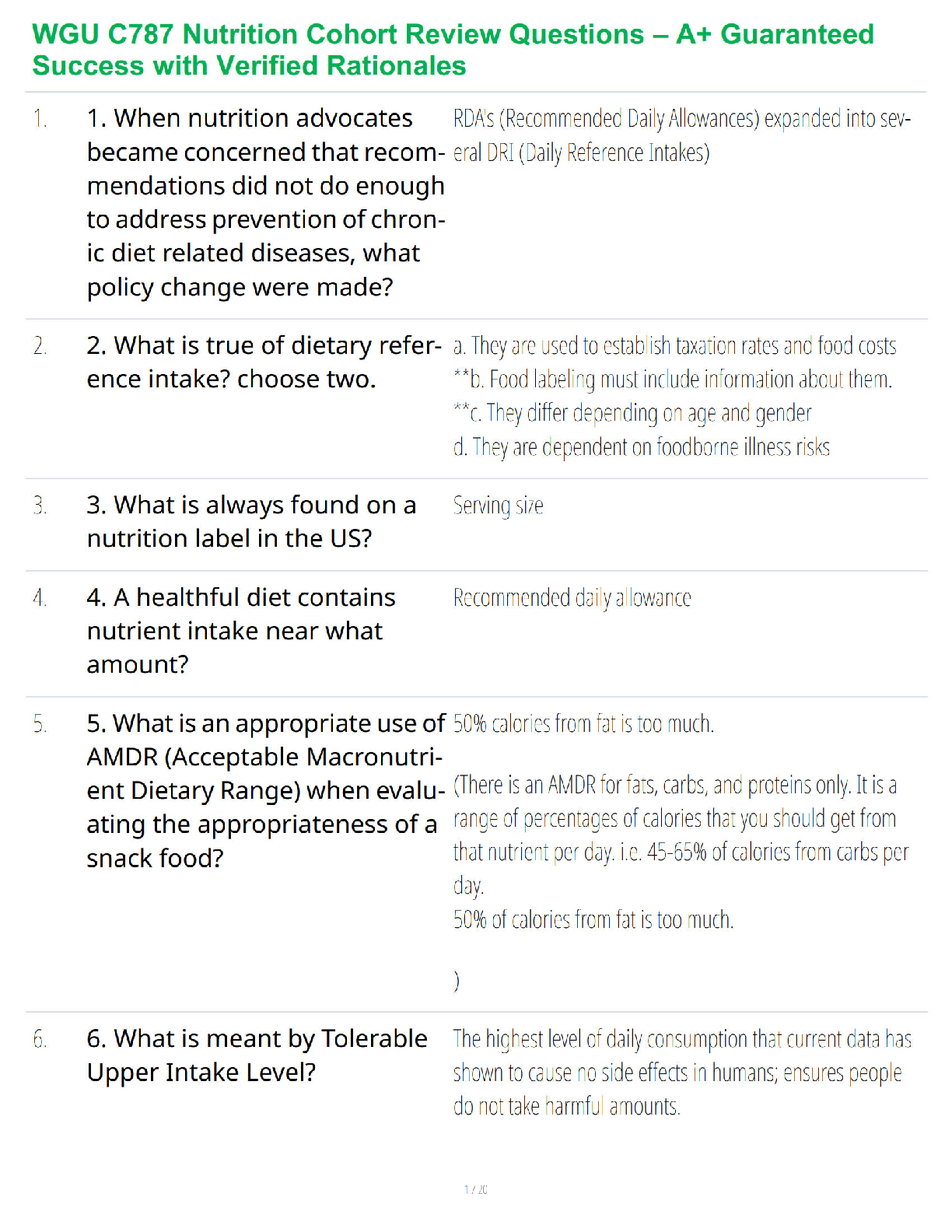
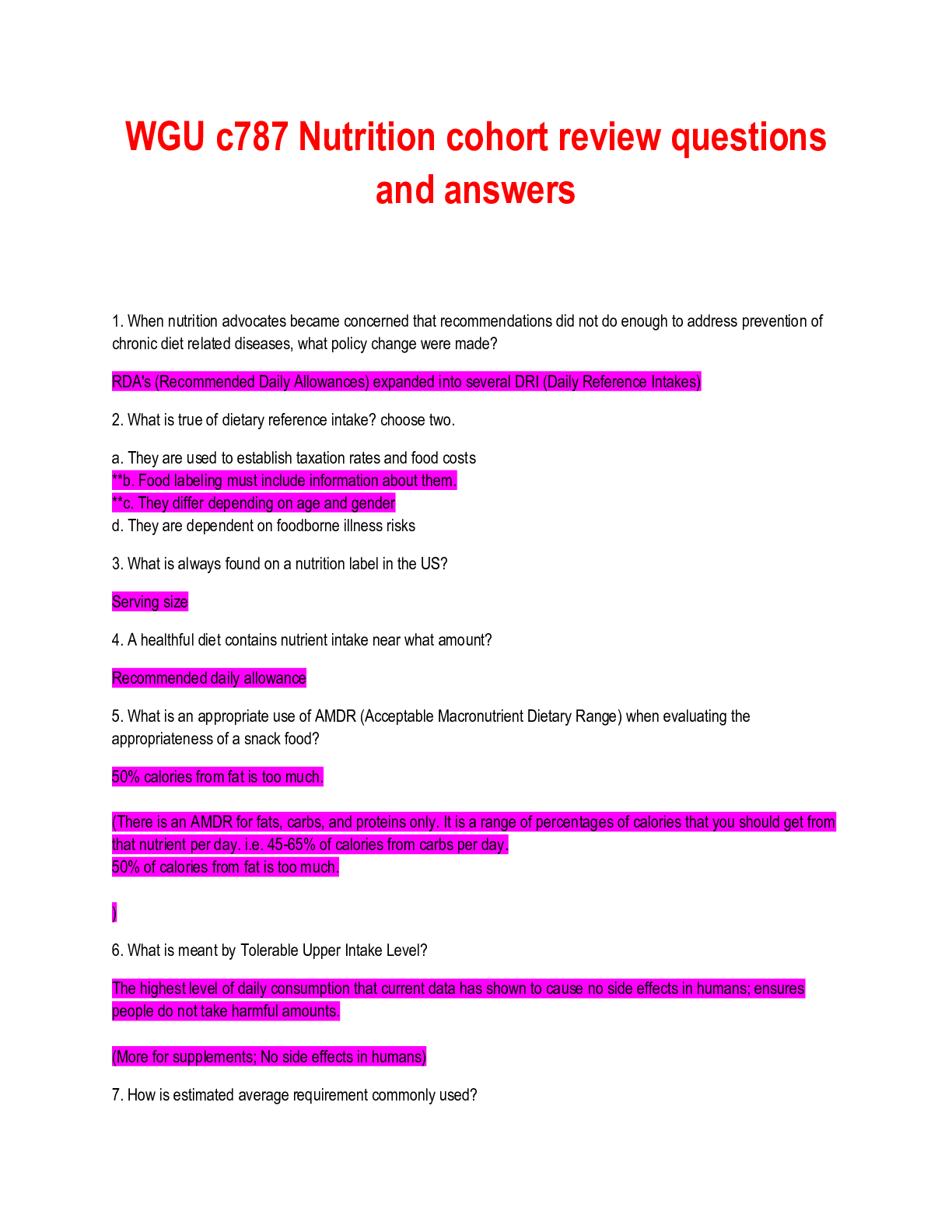
AMDR (Acceptable Macronutrient Distribution Ranges) - ANSWER CARBS-45-65%
FATS -20-35%
PROTEINS- 10-35%
(RANGE OF % OF CALORIES THAT YOU NEED FROM EACH MACRONUTRIENT DAILY)
DRI (Dietary Reference Intakes) - ANSWER
...
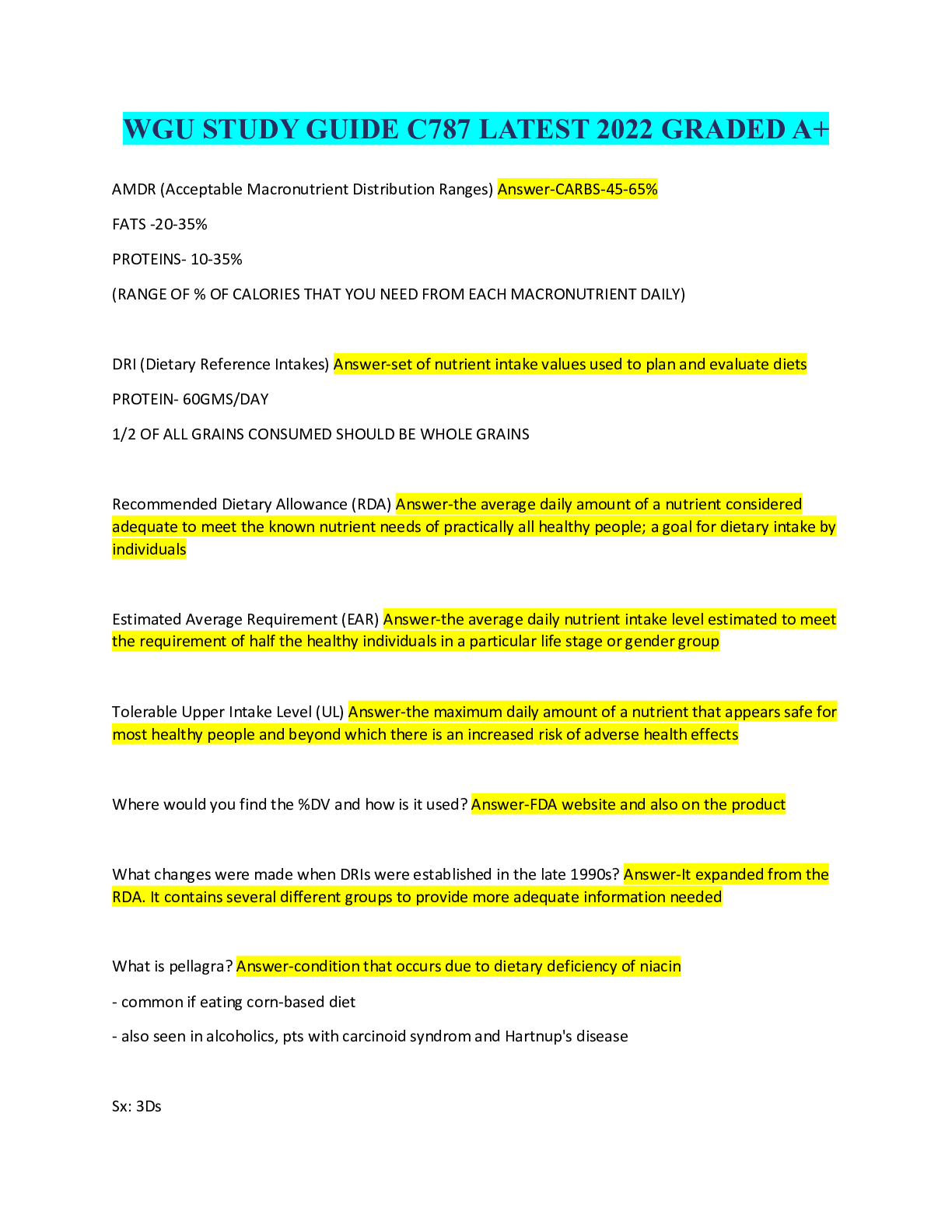
AMDR (Acceptable Macronutrient Distribution Ranges) - ANSWER CARBS-45-65%
FATS -20-35%
PROTEINS- 10-35%
(RANGE OF % OF CALORIES THAT YOU NEED FROM EACH MACRONUTRIENT DAILY)
DRI (Dietary Reference Intakes) - ANSWER set of nutrient intake values used to plan and evaluate diets
PROTEIN- 60GMS/DAY
1/2 OF ALL GRAINS CONSUMED SHOULD BE WHOLE GRAINS
Recommended Dietary Allowance (RDA) - ANSWER the average daily amount of a nutrient considered adequate to meet the known nutrient needs of practically all healthy people; a goal for dietary intake by individuals
Estimated Average Requirement (EAR) - ANSWER the average daily nutrient intake level estimated to meet the requirement of half the healthy individuals in a particular life stage or gender group
Tolerable Upper Intake Level (UL) - ANSWER the maximum daily amount of a nutrient that appears safe for most healthy people and beyond which there is an increased risk of adverse health effects
Where would you find the %DV and how is it used? - ANSWER FDA website and also on the product
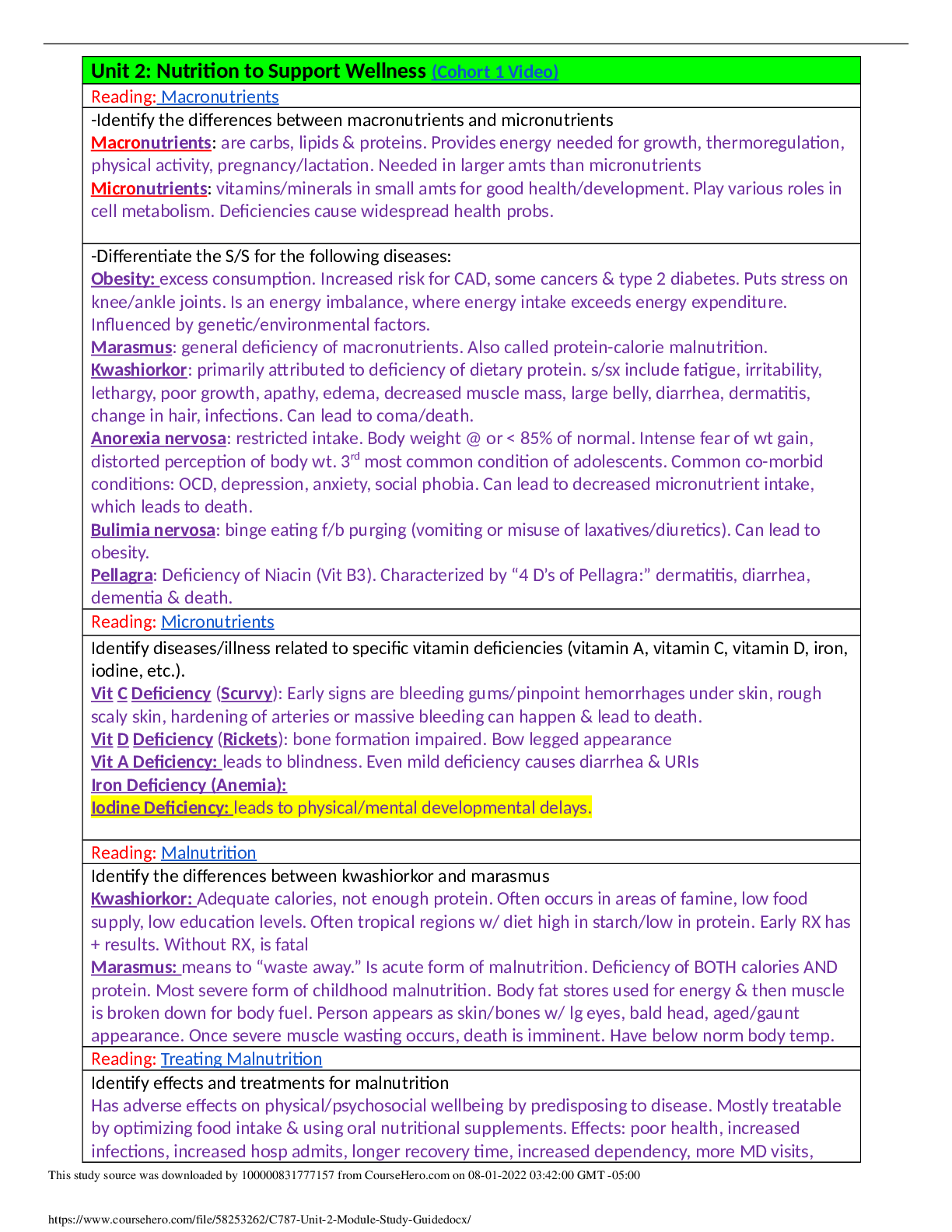
What changes were made when DRIs were established in the late 1990s? - ANSWER It expanded from the RDA. It contains several different groups to provide more adequate information needed
What is pellagra? - ANSWER condition that occurs due to dietary deficiency of niacin
- common if eating corn-based diet
- also seen in alcoholics, pts with carcinoid syndrom and Hartnup's disease
Sx: 3Ds
- diarrhea
- dermatitis (present in sun-exposed areas)
- dementia
- death if untreated
What is obesity? - ANSWER excessive accumulation of body fat
What is marasmus? - ANSWER 1. "to waste away" (chronic condition) [body's adaptation to starvation]
2. Inadequate food intake (protein and calories deficiency) over a long period of time
3. Common in children 6-18 months; impairs brain development and learning
4. Muscles, including heart, waste and weaken (no edema) skin and bones
5. Poor growth if any
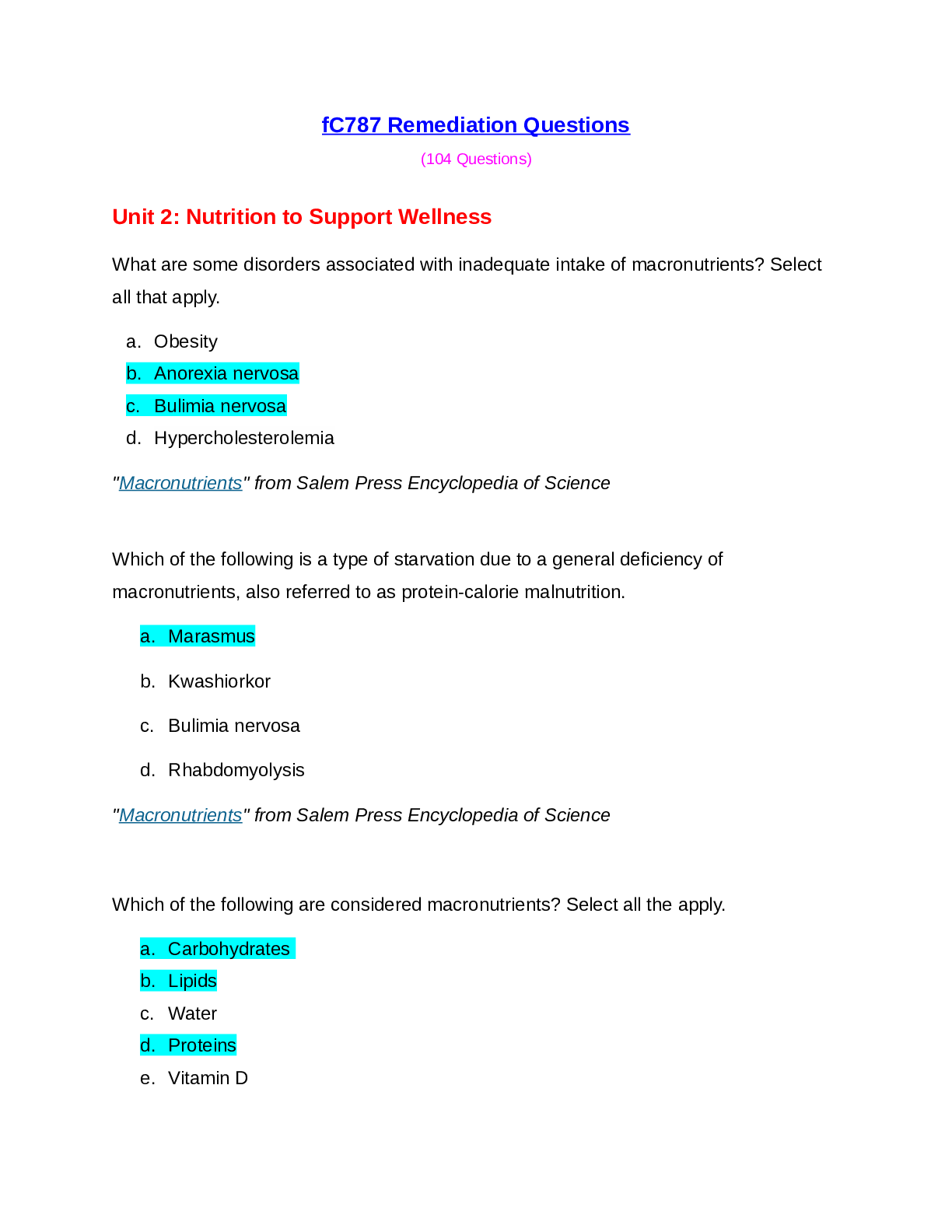
What is Kwashiorkor? - ANSWER protein deficiency/malnutrition
What is anorexia nervosa? - ANSWER Self starvation due to a distorted body image of being overweight
What is bulimia nervosa? - ANSWER binge eating and purging
Vitamin A deficiencies - ANSWER *Night blindness (nyctalopia)- reversible and detected using a dark adaptation test
Xeropthalmia (corneal damage)- not reversible
Dry, scaly skin (hyperkeratosis)
Vitamin C deficiencies - ANSWER scurvy, poor wound healing, bleeding gums, petechiae
iron deficiency - ANSWER anemia
Iodine deficiencies - ANSWER cretinism and goiter
Vitamin D deficiencies - ANSWER rickets, osteomalacia, osteoporosis
Vitamin E deficiencies - ANSWER hemolytic anemia
Vitamin K deficiencies - ANSWER decreased synthesis of clotting factors, hemorrhage
What is the difference between saturated and unsaturated fat and what recommendations would you make to a patient regarding their consumption? - ANSWER Saturated fats
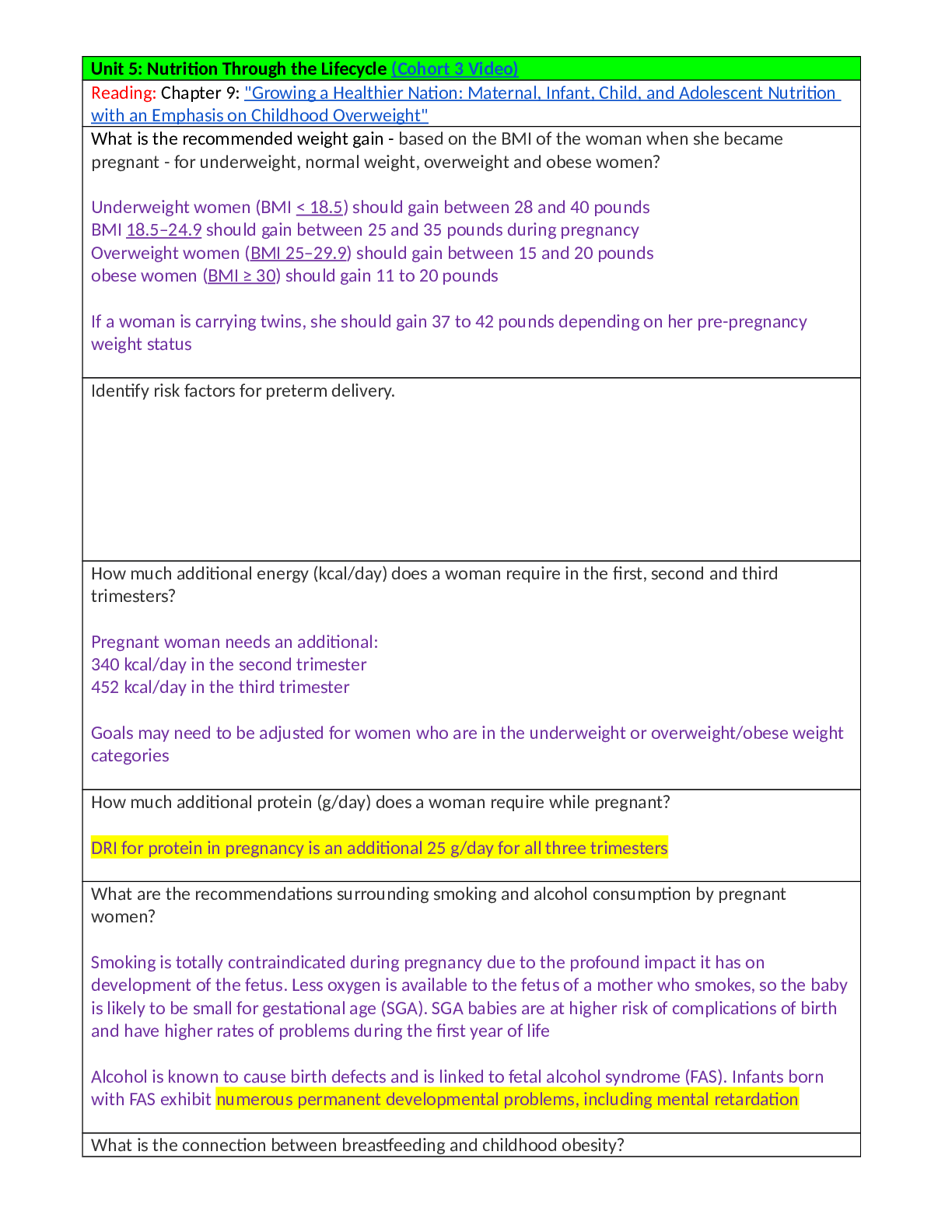
MyPlate Recommendations - ANSWER make half your plate fruits and vegetables; select nutrient dense foods in order to meet DRIs without exceeding calorie needs
What does % Daily Value (%DV) show? - ANSWER It shows how much of a nutrient is in one serving of the food. %DVs are based on the Daily Values for key nutrients, which are the amounts (in grams, milligrams, or micrograms) of nutrients recommended per day for Americans 4 years of age and older.
What are the primary diseases associated with poor diet and lifestyle? - ANSWER
How much of the total healthcare expenditures is spent on preventative approaches to preventable disease? - ANSWER 3 %
Define and provide examples of prevention strategies: Primary, Secondary, Tertiary. - ANSWER Primary- prevention strategies, or health promotion, encourage health-enhancing behaviors by giving individuals, families, and communities ways to reduce risk factors associated with disease and injury.
Secondary-prevention includes risk appraisal and screening to emphasize early detection and diagnosis of disease.
[Show More]