WGU C787 Study Guide Questions and
answers, 100% Accurate, graded A+
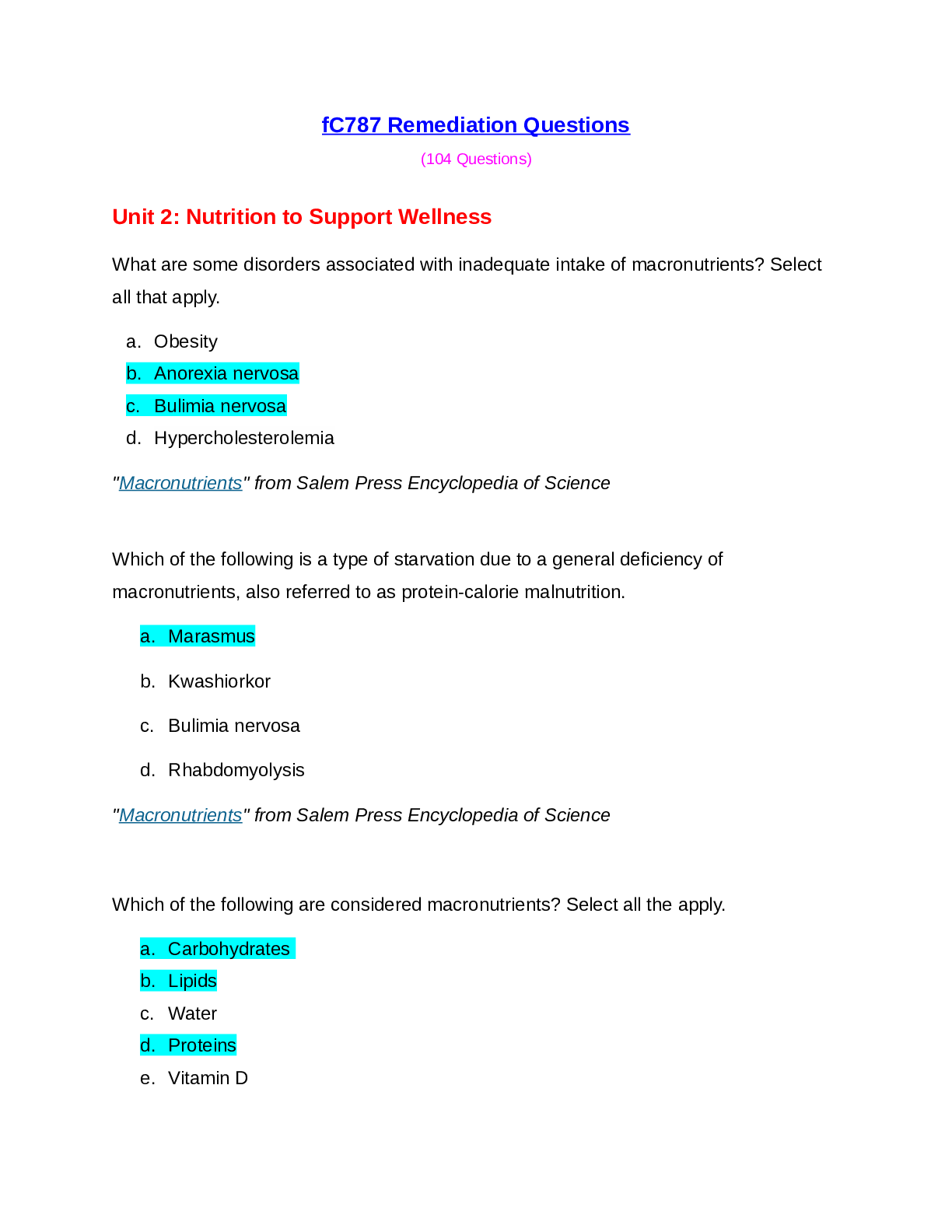
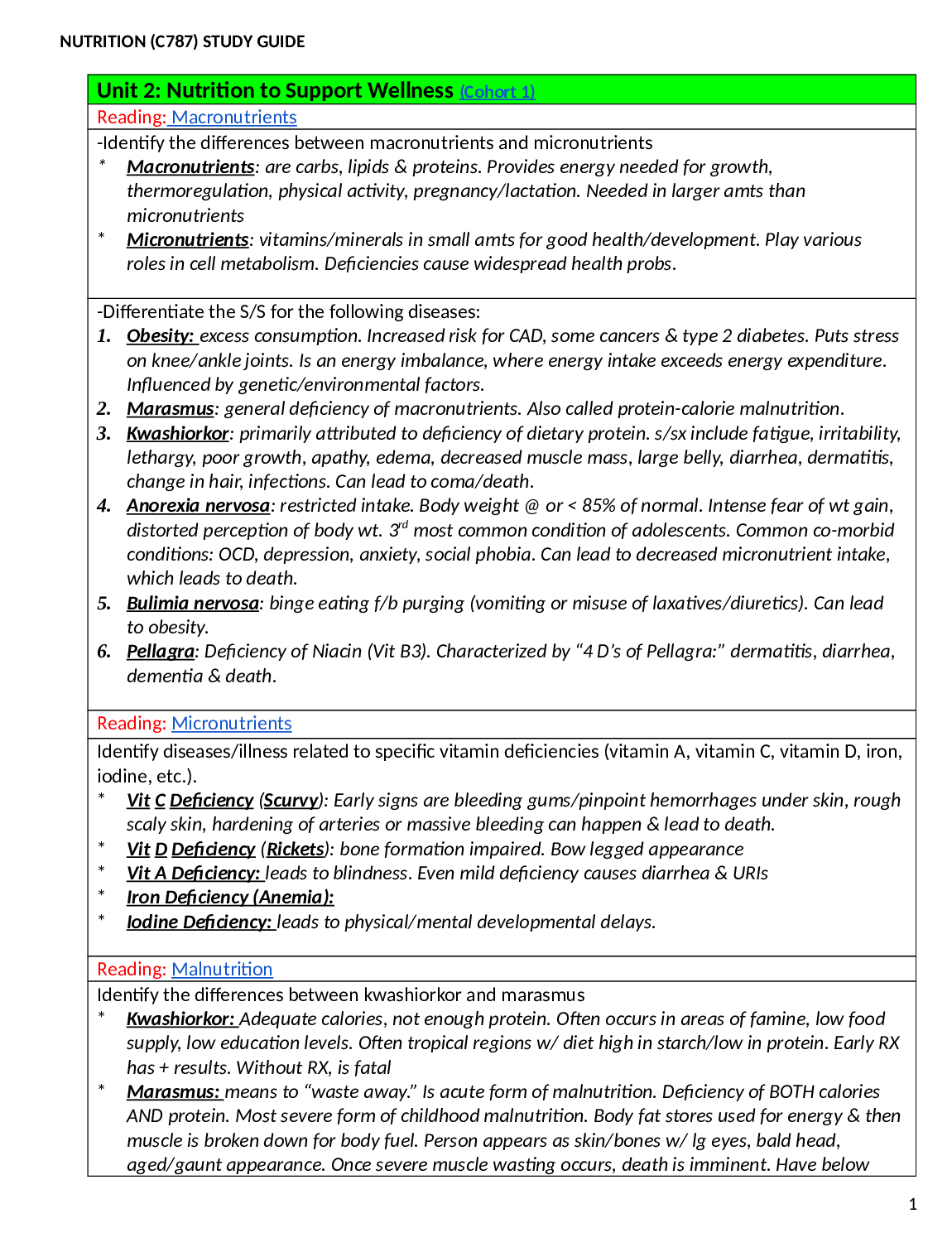
Macronutrients - ✔✔-carbohydrates, lipids, and proteins required in large amounts, provide energy
Micronutrients - ✔✔-vitamins and minerals require
...
WGU C787 Study Guide Questions and
answers, 100% Accurate, graded A+
Macronutrients - ✔✔-carbohydrates, lipids, and proteins required in large amounts, provide energy
Micronutrients - ✔✔-vitamins and minerals require smaller amounts, make possible the biochemical
reactions that extract energy from macronutrients molecules
Obesity - ✔✔->30% body fat
Overweight - ✔✔->25% body fat
Marasmus - ✔✔-A disease of severe protein-calorie malnutrition during early infancy, in which growth
stops, body tissues waste away, and the infant eventually dies. s/s: htn, stroke, type 2 dm, exposed ribs,
decreased body fat
Kwashiorkor - ✔✔-Protein deficiency in childhood, leading to symptoms such as lethargy, irritability,
thinning hair, and swollen body, which may be fatal if not treated. s/s: potbelly, edema in legs
Anorexia Nervosa (AN) - ✔✔-an eating disorder characterized by an inability to maintain normal weight,
an intense fear of gaining weight, and distorted body perception
bulimia nervosa - ✔✔-an eating disorder characterized by binge eating followed by purging
Pellagra is a _____ deficiency disease. - ✔✔-Niacin- common in corn based diets and alcoholics. s/s:
diarrhea, dermatitis, dementia, death if not tx.
Vitamin A deficiency - ✔✔-night blindness, dry skin, corneal damage
Vitamin C deficiency - ✔✔-scurvy, poor wound healing, bleeding gums, petechiae
Iron deficiency - ✔✔-anemia
Iodine deficiency - ✔✔-results in goiter/thyroid problems
Vitamin D deficiencies - ✔✔-rickets
osteomalacia
osteoporosis
calcium deficiency
colon cancer
Vitamin E deficiency (rare) - ✔✔-hemolytic anemia
Vitamin K deficiencies - ✔✔-decreased synthesis of clotting factors
hemorrhage
Malnutrition - ✔✔-faulty or inadequate diet
treating malnutrition - ✔✔-correcting diet
correcting body fluid/potassium
"hurry slowly"
diluted milk w/added sugar
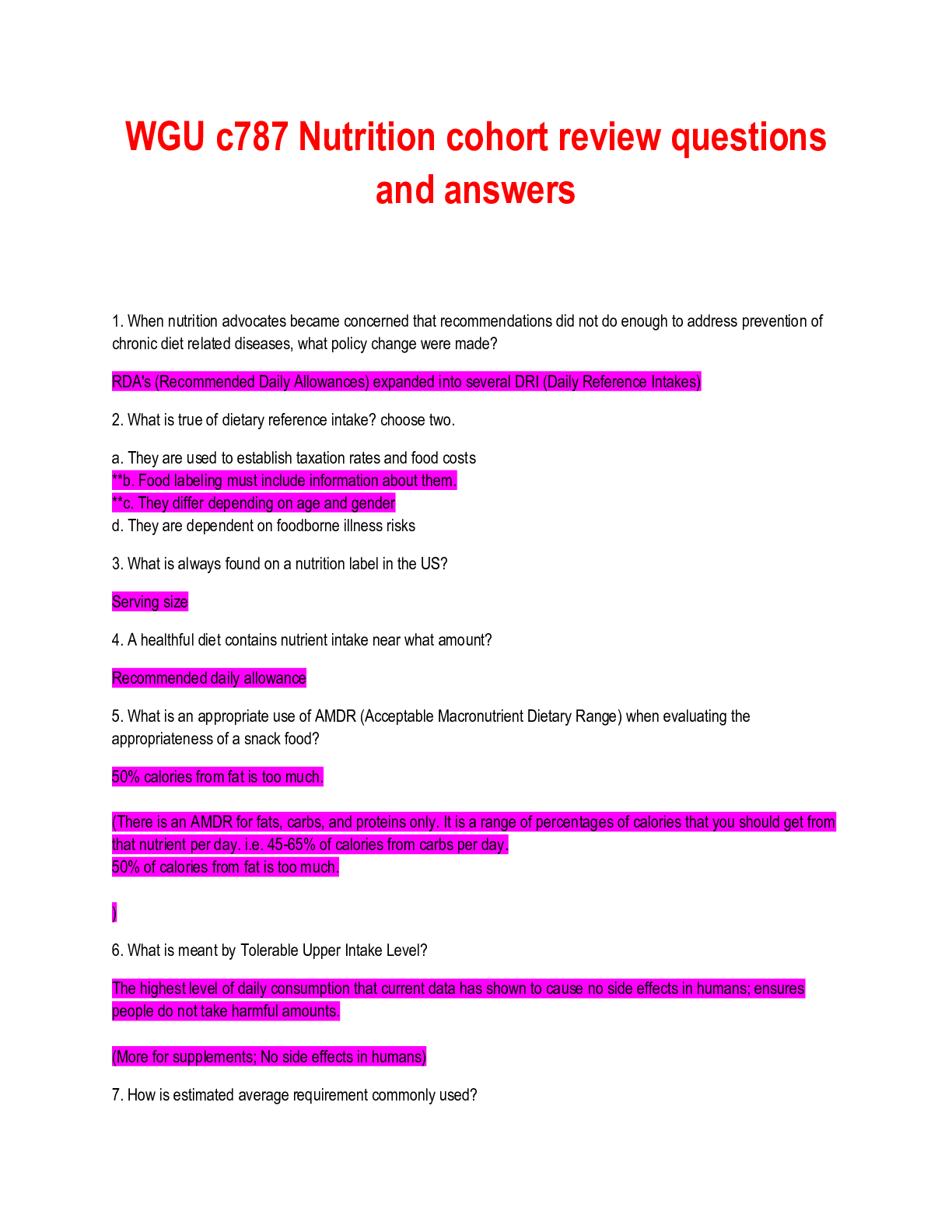
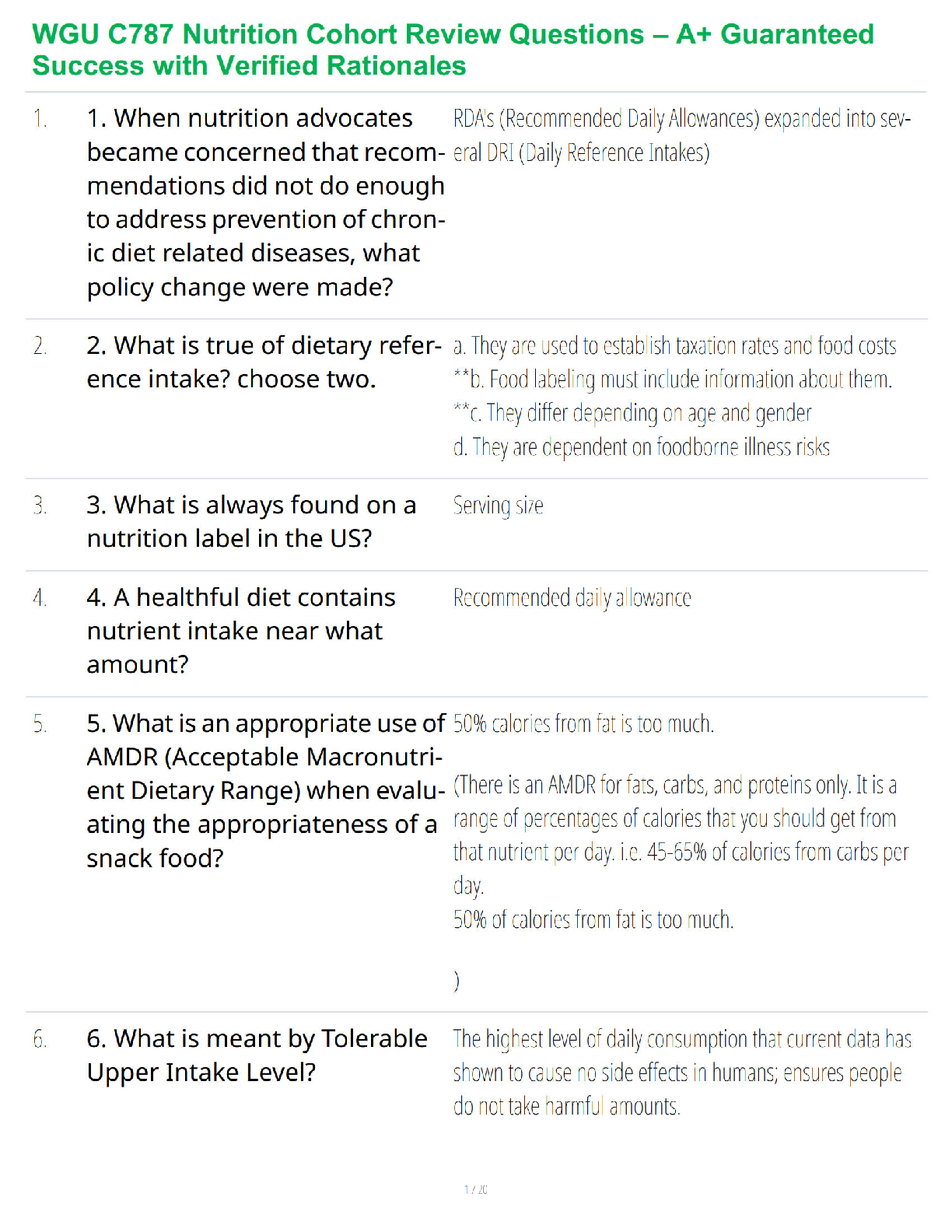
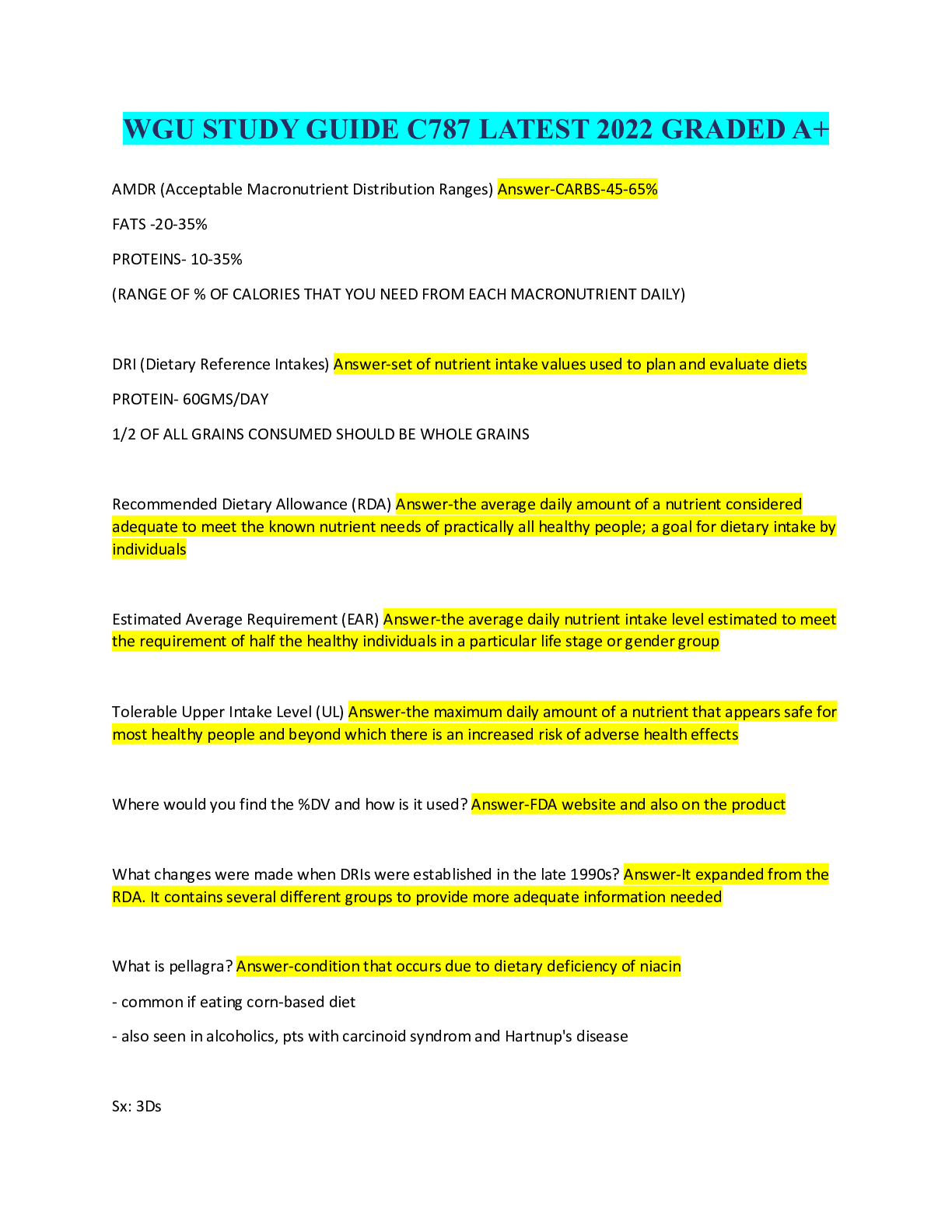
What changes were made when DRIs were established in the late 1990's? - ✔✔-It expanded from the
RDA. It contains several different groups to provide more adequate information needed
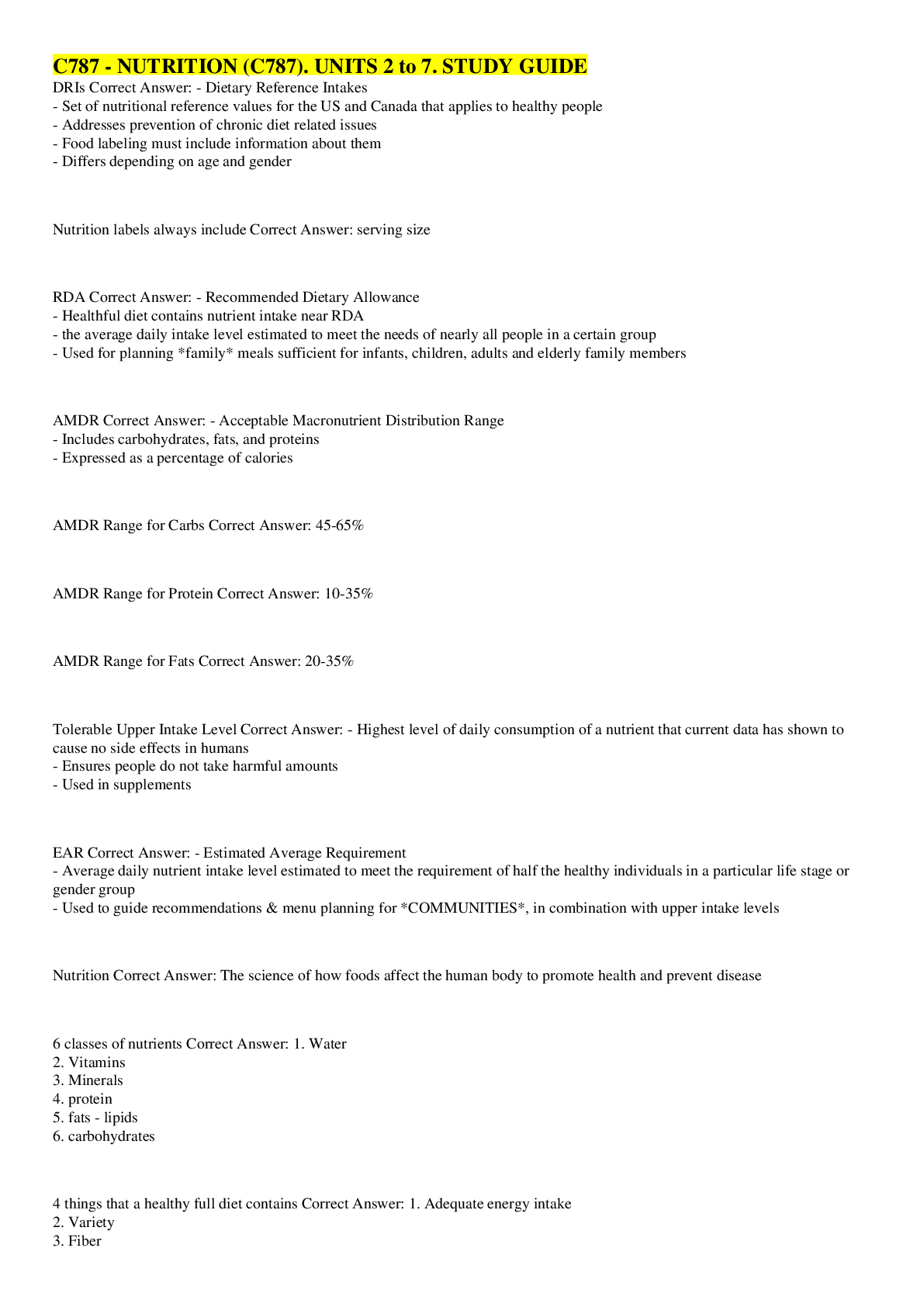
DRI - ✔✔-Dietary Reference Intakes; combines the classic concerns of deficiency diseases with the
contemporary interest of reducing the risk of chronic diet-related diseases
UL - ✔✔-Tolerable upper intake level. The maximum daily amount of a nutrient that appears safe for
most healthy people and beyond which there is an increased risk of adverse health effects.
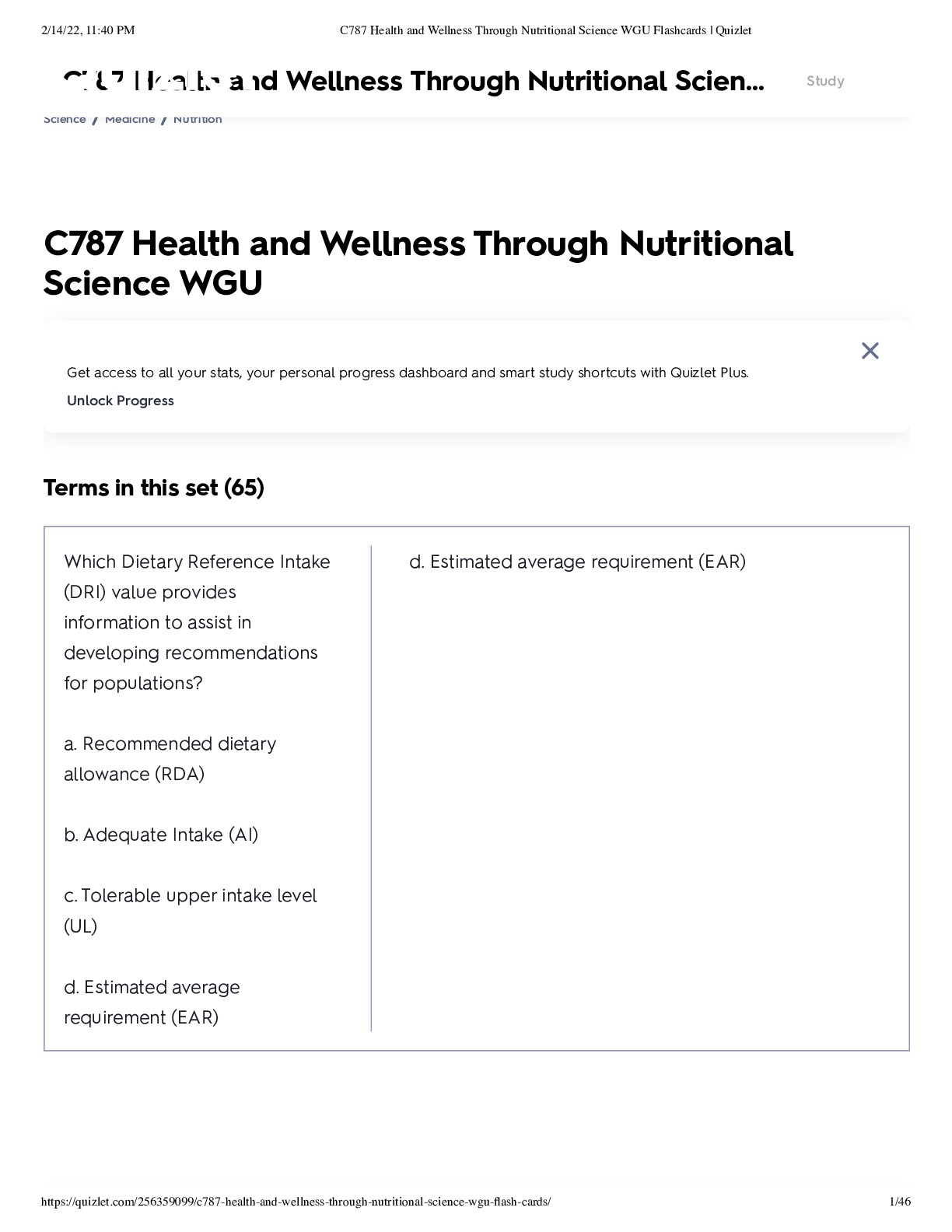
EAR - ✔✔-Estimated Average Requirements- Average amount sufficient for half of population
RDA - ✔✔-Recommended Daily Allowances- a healthy diet has nutrients nearing this amount
Identify the types of dietary fats (including trans-fats) and recommendations regarding their
consumption. - ✔✔-SATURATED (limit/avoid)
TRANS (worse)
MONOSATURATED (good lowers LDL)
POLYUNSATURATED (same as above)
What is the DASH diet and what level of sodium has been shown to reduce high blood pressure? - ✔✔-
Dietary Approaches to Stop HypertensionCONSUME UP TO 2300 MG OF SODIUM A DAY
How much of the "My Plate" is fruits and Vegetables? - ✔✔-1/2 the plate
What recommendations would you make to a pregnant patient regarding folate and why? - ✔✔-all
women who can become pregnant should get 400 mcg of folic acid each day, in addition to consuming
food with folate from a varied diet, to lower the chance of having a baby with a neural tube defect.
Provide examples of whole grains versus refined grains and how could a patient better meet the
recommendation for consumption of whole grains? - ✔✔-at least half of the grains should be whole
grains
whole grains:
Barley
Brown rice
Buckwheat
Bulgur (cracked wheat)
Millet
Oatmeal
Popcorn
Whole-wheat bread, pasta or crackers
Identify at least 4 ways to modify a diet creating a healthier eating style/pattern. - ✔✔-Make half your
plate veggies and fruits. ...
Include whole grains. ...
Don't forget the dairy. ...
Add lean protein. ...
Avoid extra fat. ...
Define nutrient-dense and give examples of nutrient-dense foods. - ✔✔-Nutrient-dense foods contain
vitamins, minerals, complex carbohydrates, lean protein, and healthy fats.
examples:
fruits and vegetables
whole grains
low-fat or fat-free milk products
seafood
lean meats, eggs
peas, beans, and nuts.
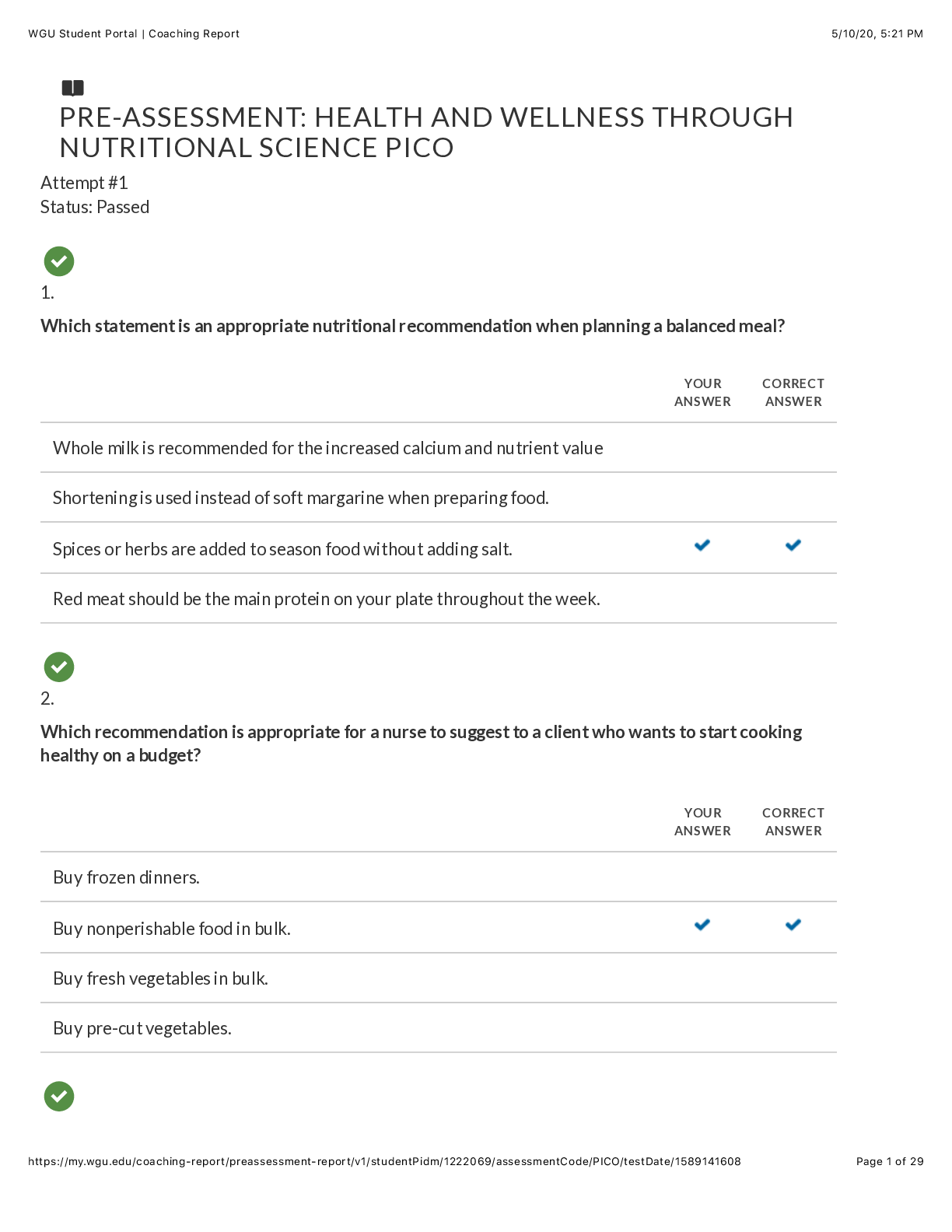
Identify foods that are typically high in sodium and strategies to reduce sodium in the diet. - ✔✔-No
more than 2300 mg of sodium
Recommended per day is 1000-1500 mg/daily
high sodium foods:
canned soup
canned beans
frozen dinners
burritos
cold cuts
pizza
breads/crackers
AMDR for carbohydrates - ✔✔-CARBS-45-65%
AMDR for fats - ✔✔-FATS -20-35%
AMDR for protein - ✔✔-PROTEINS- 10-35%
AMDR - ✔✔-Acceptable Macronutrient Distribution Range
Vitamin B12 for older adults (advice) - ✔✔-Older adults may benefit from a daily supplement to prevent
deficiency. Absorption decreases in the elderly.
How DV relates to %DV - ✔✔-It shows how much of a nutrient is in one serving of the food. %DVs are
based on the Daily Values for key nutrients, which are the amounts (in grams, milligrams, or
micrograms) of nutrients recommended per day for Americans 4 years of age and older.
Define "footnote" - ✔✔-At the bottom of the nutrition facts panel, there is often a footnote or a box
that explains the daily value percentages in the product
Why are some nutrients listed without %DV? - ✔✔-Trans fat, Sugars and, Protein do not list a %DV on
the Nutrition Facts panel.
How to spot added sugars in foods - ✔✔-You can find added sugar by looking at the ingredients in a
product. Look for words ending in "ose," such as fructose, dextrose, and maltose, and look for syrups
and juices (see "The many names of added sugars").
How to calculate BMI from weight (lbs) and height (inches) - ✔✔-weight (lb) / [height (in)]2 x 703
What 4 things does a healthy weight loss plan consist of? - ✔✔-*Emphasizes vegetables, fruits, whole
grains, and fat�free or low-fat dairy products.
*Includes lean meats, poultry, fish, beans, eggs, and
nuts.
*Limits saturated and trans fats, sodium, and added
sugars.
*Controls portion sizes.
What are the primary diseases associated with poor diet and lifestyle? - ✔✔-cardiovascular disease
high blood pressure
type 2 diabetes
some cancers
and poor bone health
How much of the total healthcare expenditures is spent on preventative approaches to preventable
disease? - ✔✔-3%
Define and provide examples of prevention strategies: Primary, - ✔✔-Primary- prevention strategies, or
health promotion, encourage health-enhancing behaviors by giving individuals, families, and
communities ways to reduce risk factors associated with disease and injury.
Secondary - ✔✔-Secondary-prevention includes risk appraisal and screening to emphasize early
detection and diagnosis of disease.
tertiary prevention - ✔✔--aims to prevent the long-term consequences of a chronic illness or disability
and to support optimal functioning
-examples: prevention of pressure ulcers as complication of a spinal cord injury; promoting
independence for the client who has traumatic brain injury
What are some factors that contribute to overweight and obesity (modifiable and non-modifiable)? -
✔✔-modifiable-diet and lifestylenon-modifiable-age, race, family history
How much weight loss (percent of total body weight) has been shown to improve health risks associated
with overweight and obesity? - ✔✔-10%
What is the biggest nutritional benefit of fruits and veg? - ✔✔-decreased risk of cancer
Identify government agency sponsored dietary recommendations for management of chronic kidney
disease. - ✔✔-* 2,300 milligrams of sodium each day.
* avoid high amounts of protien
* limit trans and saturated fats
* less phosphorus and calcium
* right amount of potassium, avoid salt substitutes
What are anthropometric measures? - ✔✔-body measurements
Limit cholesterol intake to - ✔✔-* desired cholesterol level: <170 mg/dL
* limit cholesterol into to 30
An underweight patient would be at risk for what conditions or diseases? - ✔✔-malnutrition
vitamin deficiencies
anemia
osteoporosis from too little vitamin D and calcium
What is a calorie? - ✔✔-the amount of energy needed to raise the temperature of 1 gram of water 1
degree Celsius
What percent of calorie intake goes to digestion, physical activity and basal metabolic rate or (basic
functions)? - ✔✔-digestion: 0-15% of the calorie
[Show More]

.png)
.png)