LEIK FNP Practice Questions and
Answers with Certified Solutions
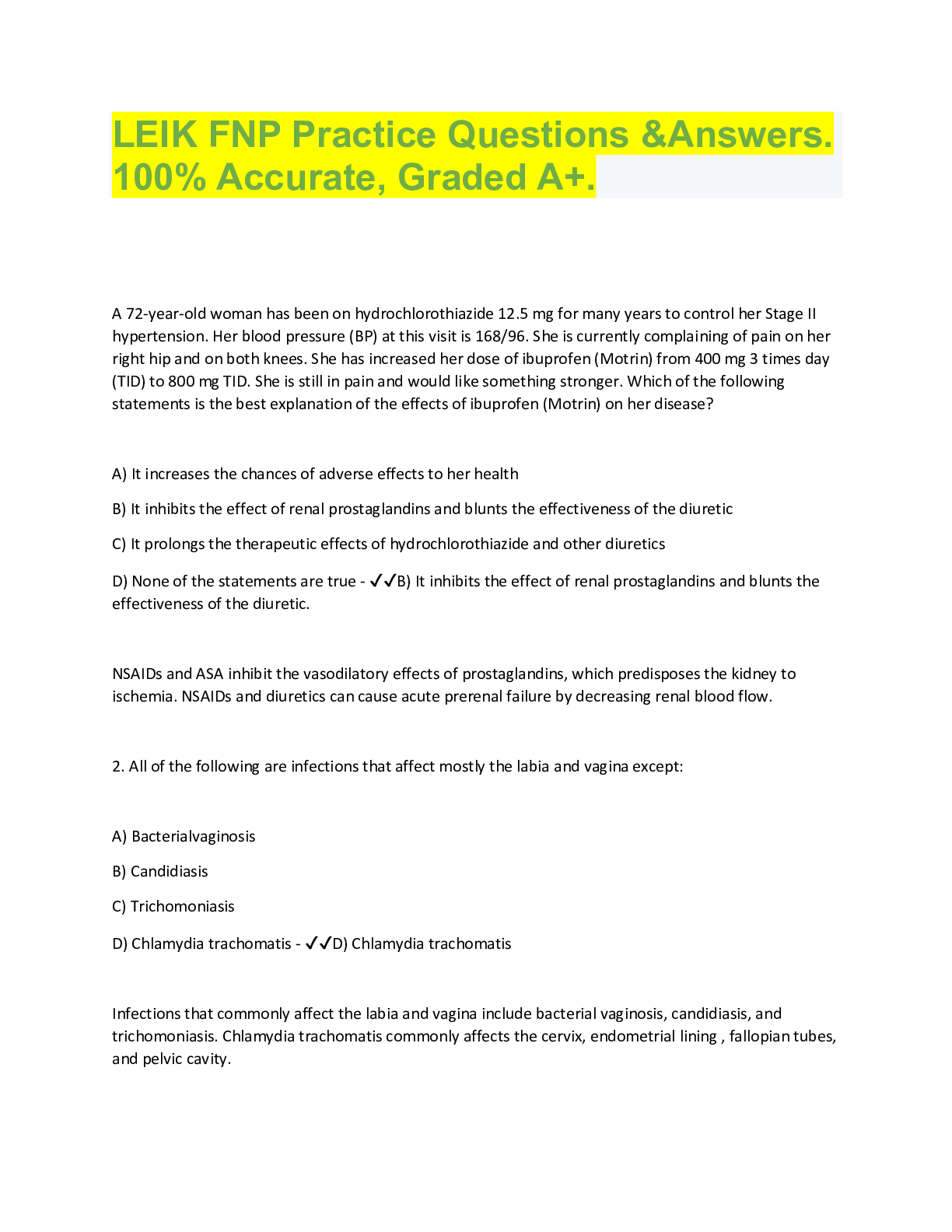
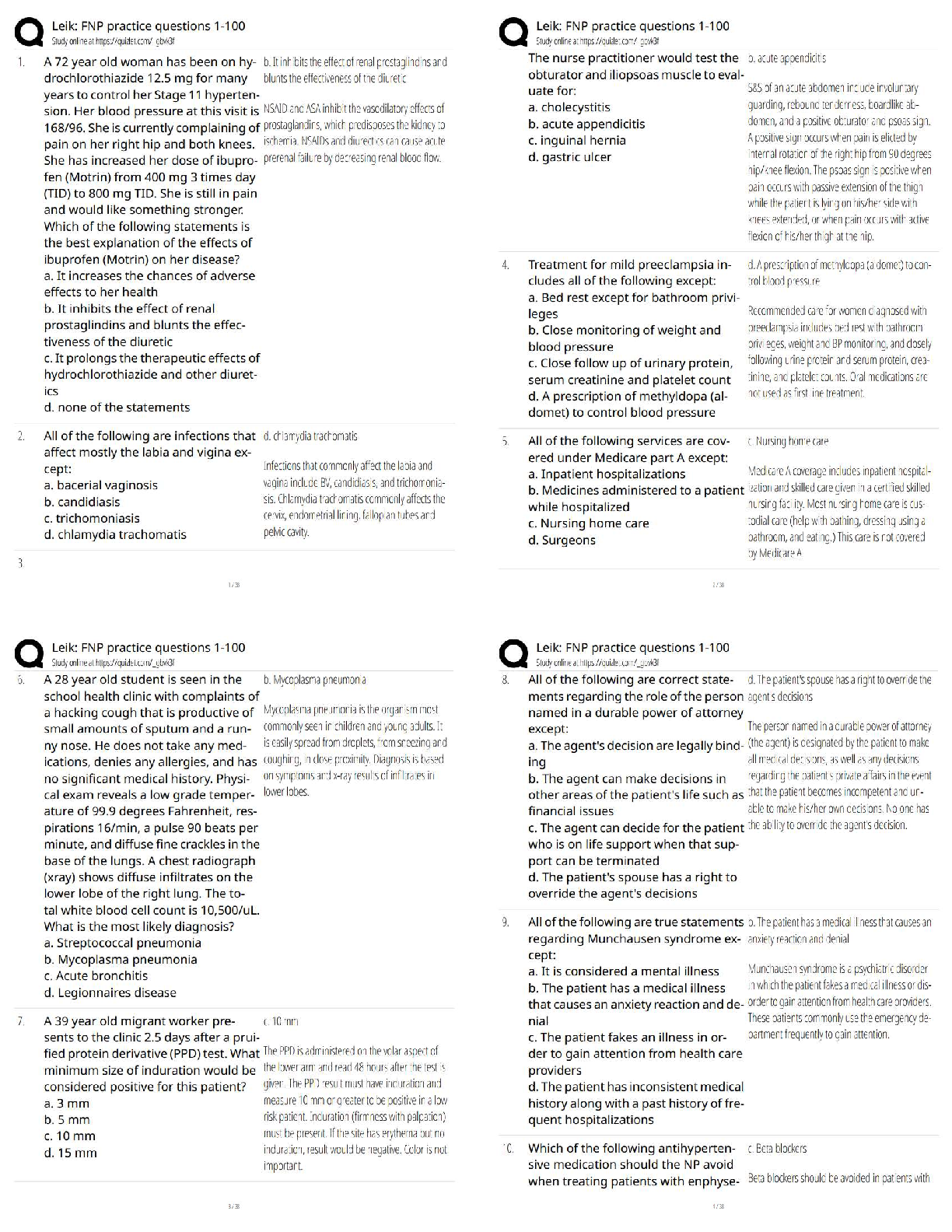
A 72-year-old woman has been on hydrochlorothiazide 12.5 mg for many years to control her
Stage II hypertension. Her blood pressure (BP) at this visit i
...
LEIK FNP Practice Questions and
Answers with Certified Solutions
A 72-year-old woman has been on hydrochlorothiazide 12.5 mg for many years to control her
Stage II hypertension. Her blood pressure (BP) at this visit is 168/96. She is currently
complaining of pain on her right hip and on both knees. She has increased her dose of ibuprofen
(Motrin) from 400 mg 3 times day (TID) to 800 mg TID. She is still in pain and would like
something stronger. Which of the following statements is the best explanation of the effects of
ibuprofen (Motrin) on her disease?
A) It increases the chances of adverse effects to her health
B) It inhibits the effect of renal prostaglandins and blunts the effectiveness of the diuretic
C) It prolongs the therapeutic effects of hydrochlorothiazide and other diuretics
D) None of the statements are true ✔✔B) It inhibits the effect of renal prostaglandins and blunts
the effectiveness of the diuretic.
NSAIDs and ASA inhibit the vasodilatory effects of prostaglandins, which predisposes the
kidney to ischemia. NSAIDs and diuretics can cause acute prerenal failure by decreasing renal
blood flow.
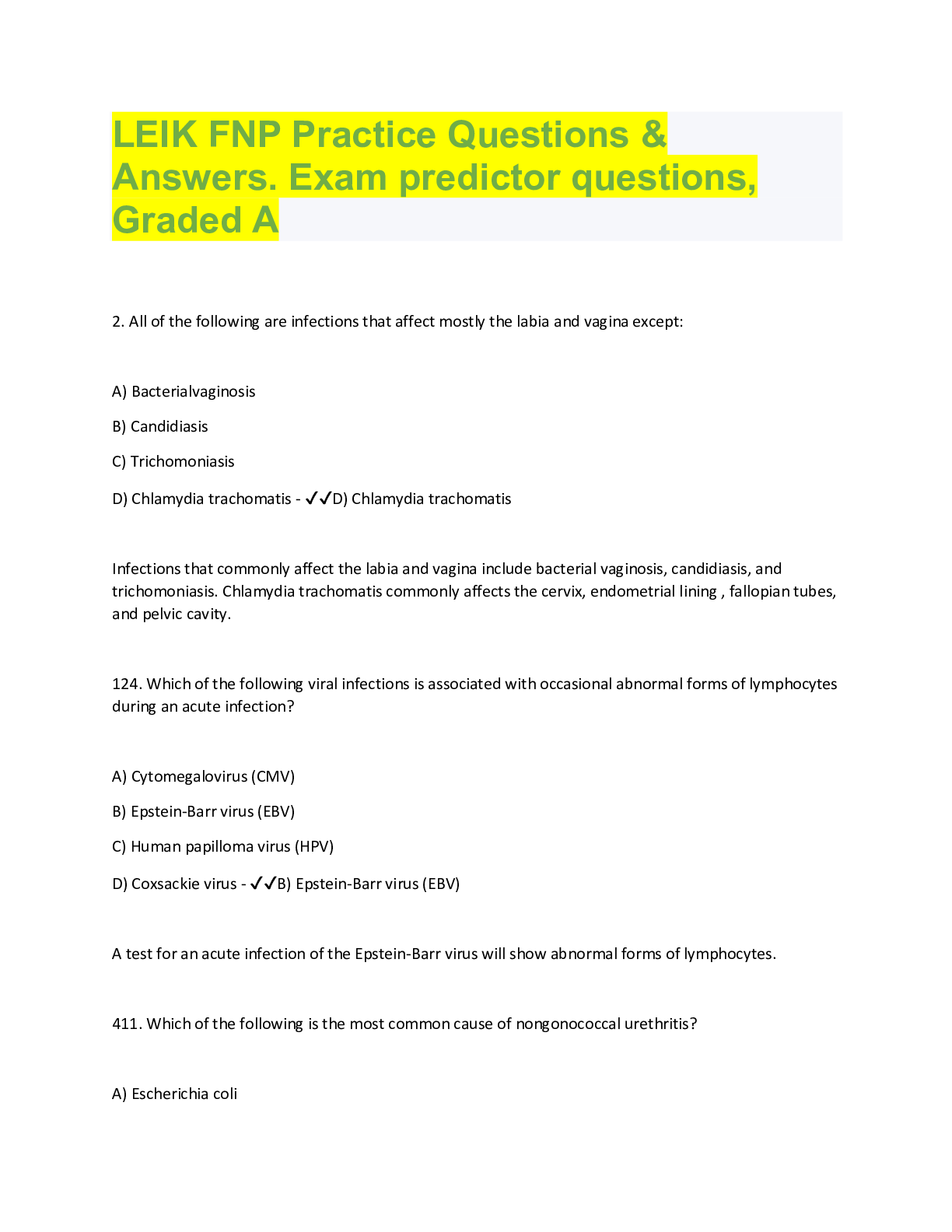
2. All of the following are infections that affect mostly the labia and vagina except:
A) Bacterialvaginosis
B) Candidiasis
C) Trichomoniasis
D) Chlamydia trachomatis ✔✔D) Chlamydia trachomatis
Infections that commonly affect the labia and vagina include bacterial vaginosis, candidiasis, and
trichomoniasis. Chlamydia trachomatis commonly affects the cervix, endometrial lining ,
fallopian tubes, and pelvic cavity.
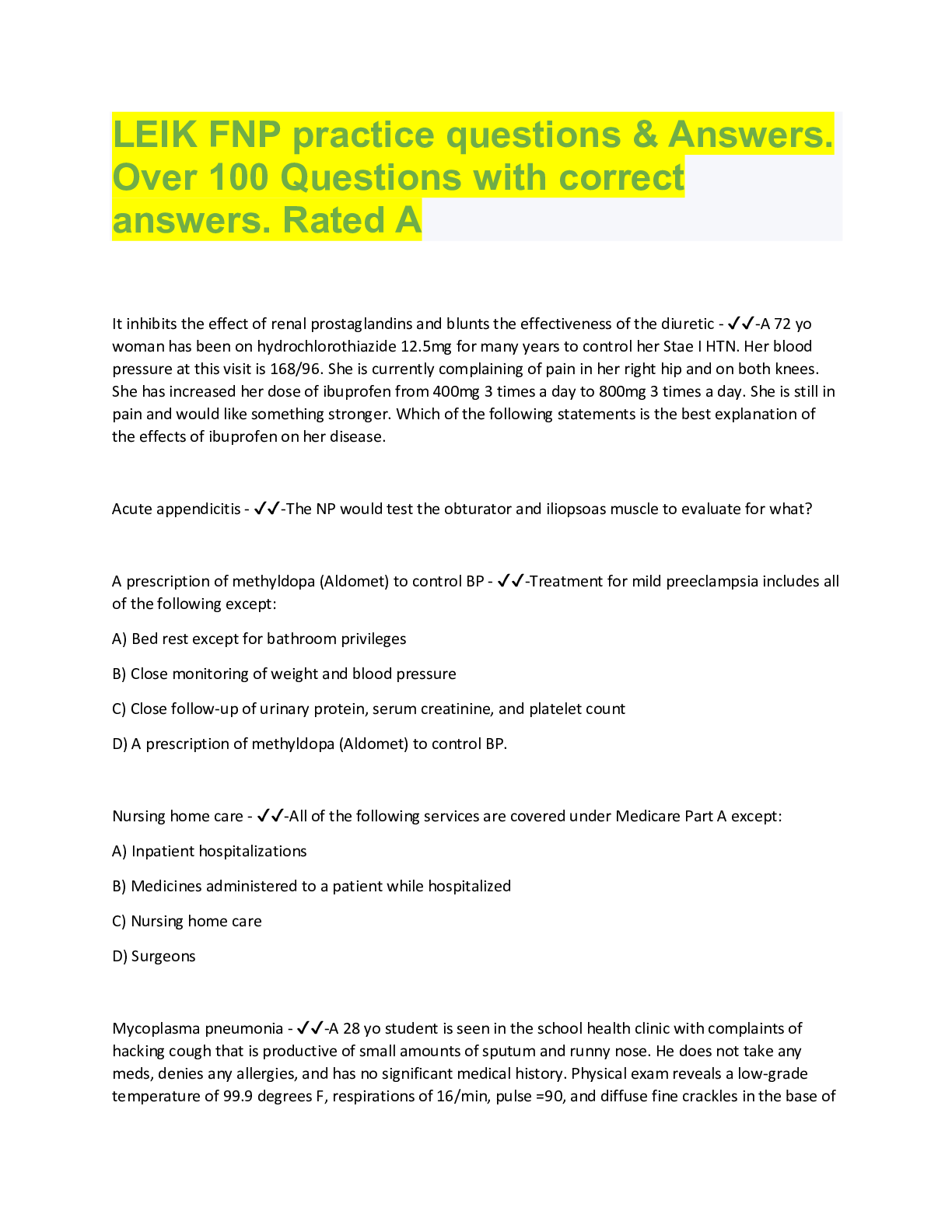
The nurse practitioner would test the obturator and iliopsoas muscle to evaluate for:
A) Cholecystitis
B) Acute appendicitis
C) Inguinal hernia
D) Gastriculcer ✔✔B) Acute appendicitis.
Signs and symptoms of an acute abdomen include invol- untary guarding, rebound tenderness,
boardlike abdomen, and a positive obtu- rator and psoas sign. A positive obturator sign occurs
when pain is elicted by internal rotation of the right hip from 90 degrees hip/knee flexion. The
psoas sign is positive when pain occurs with passive extension of the thigh while the patient is
lying on his/her side with knees extended, or when pain occurs with active flexion of his/her
thigh at the hip.
Treatment for mild preeclampsia includes all of
[Show More]