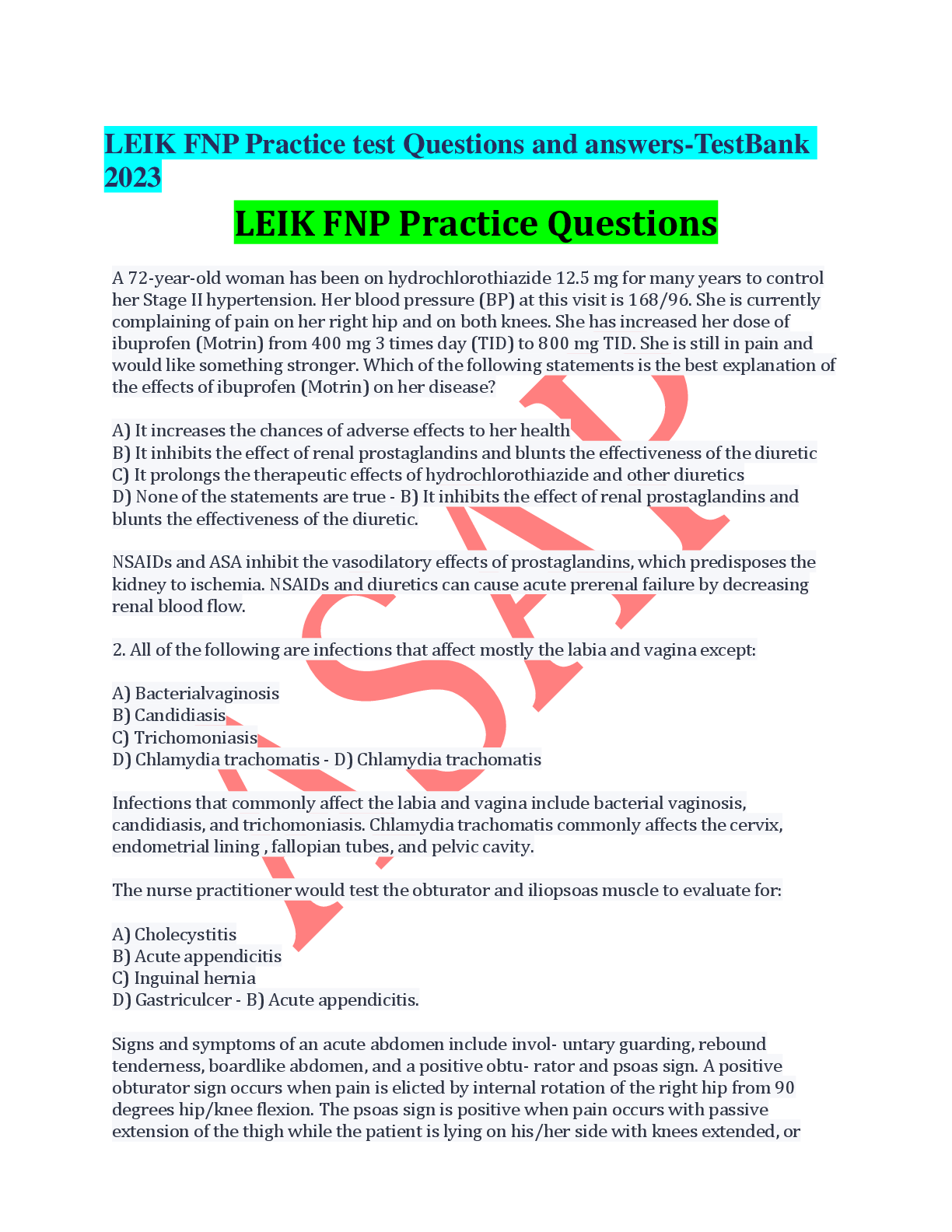
LEIK FNP Practice Questions &Answers.
100% Accurate, Graded A+.
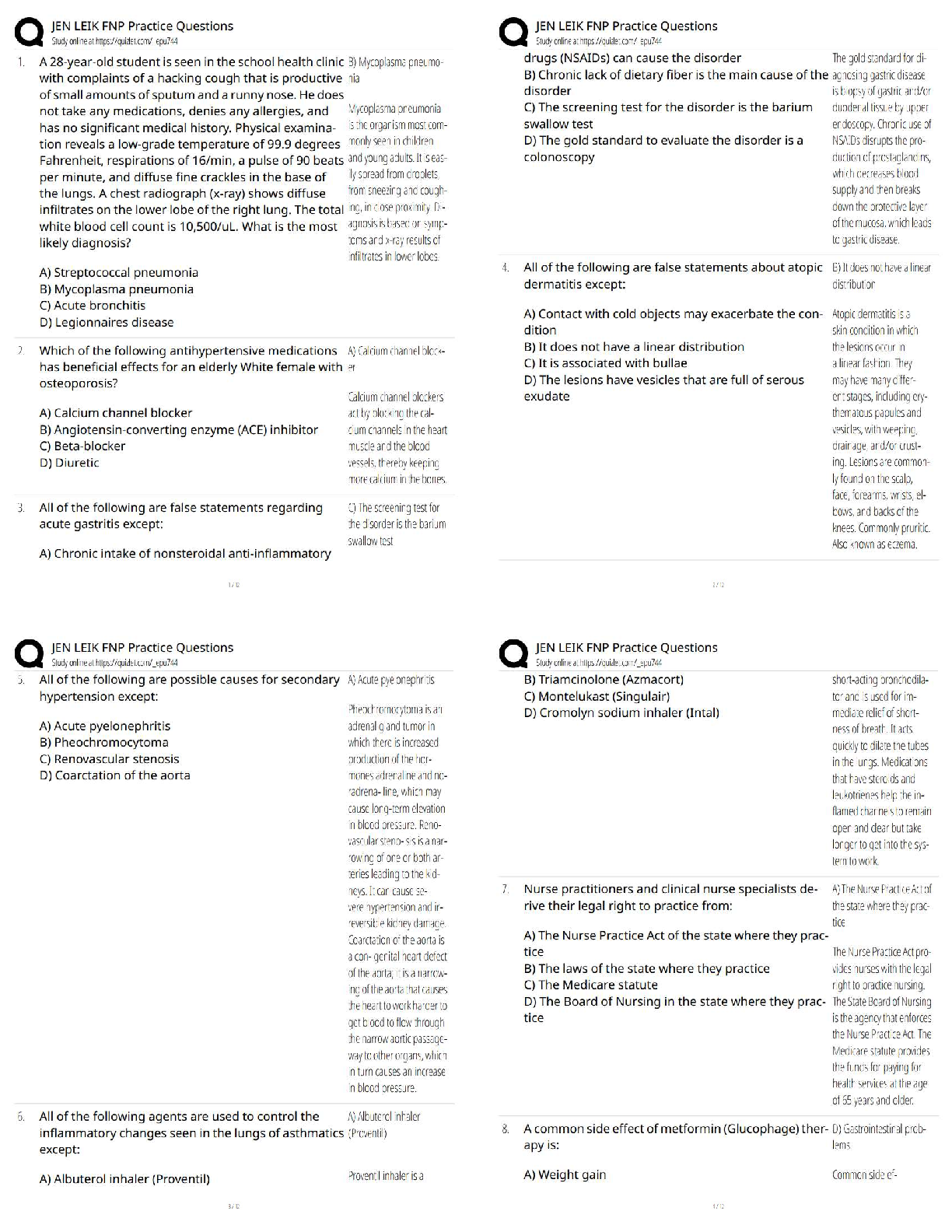
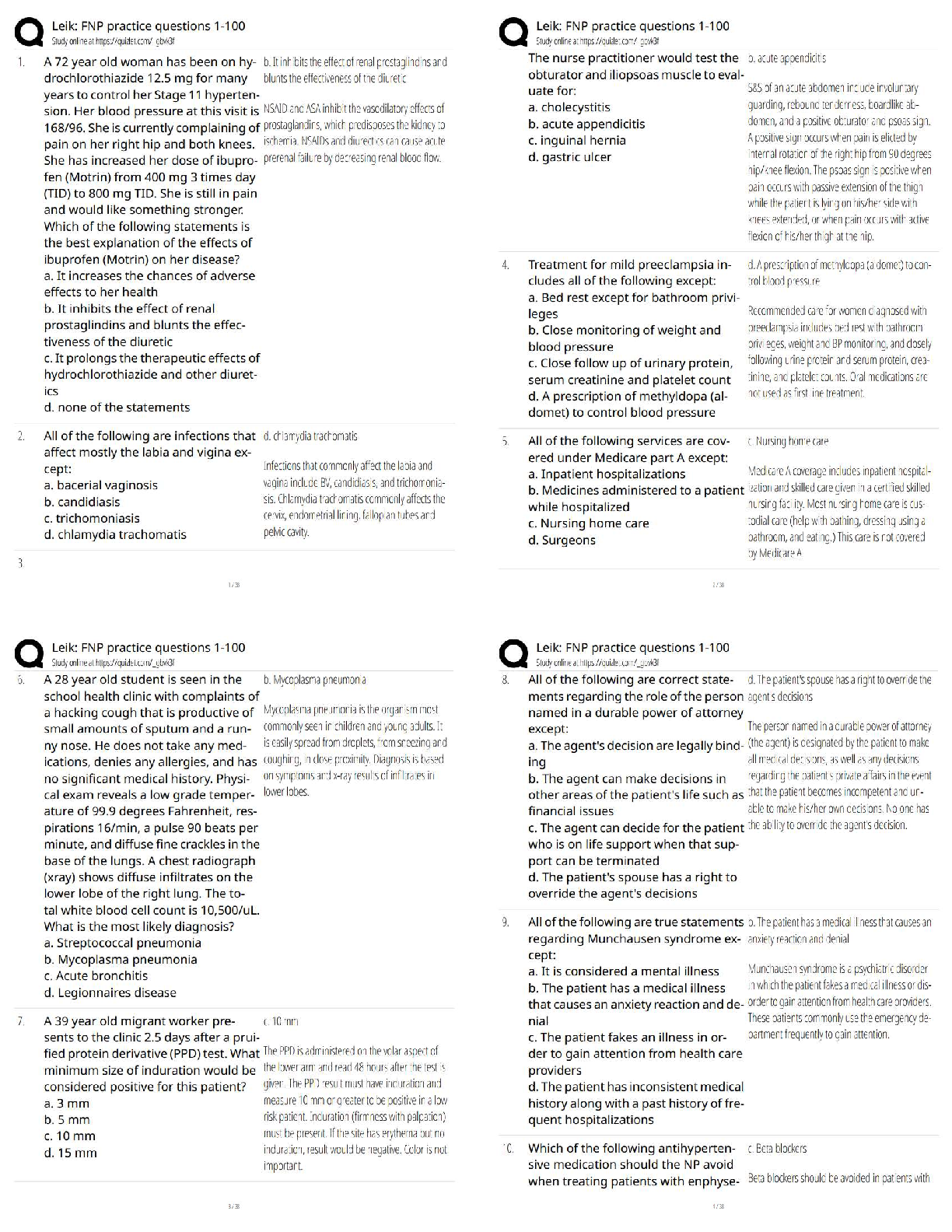
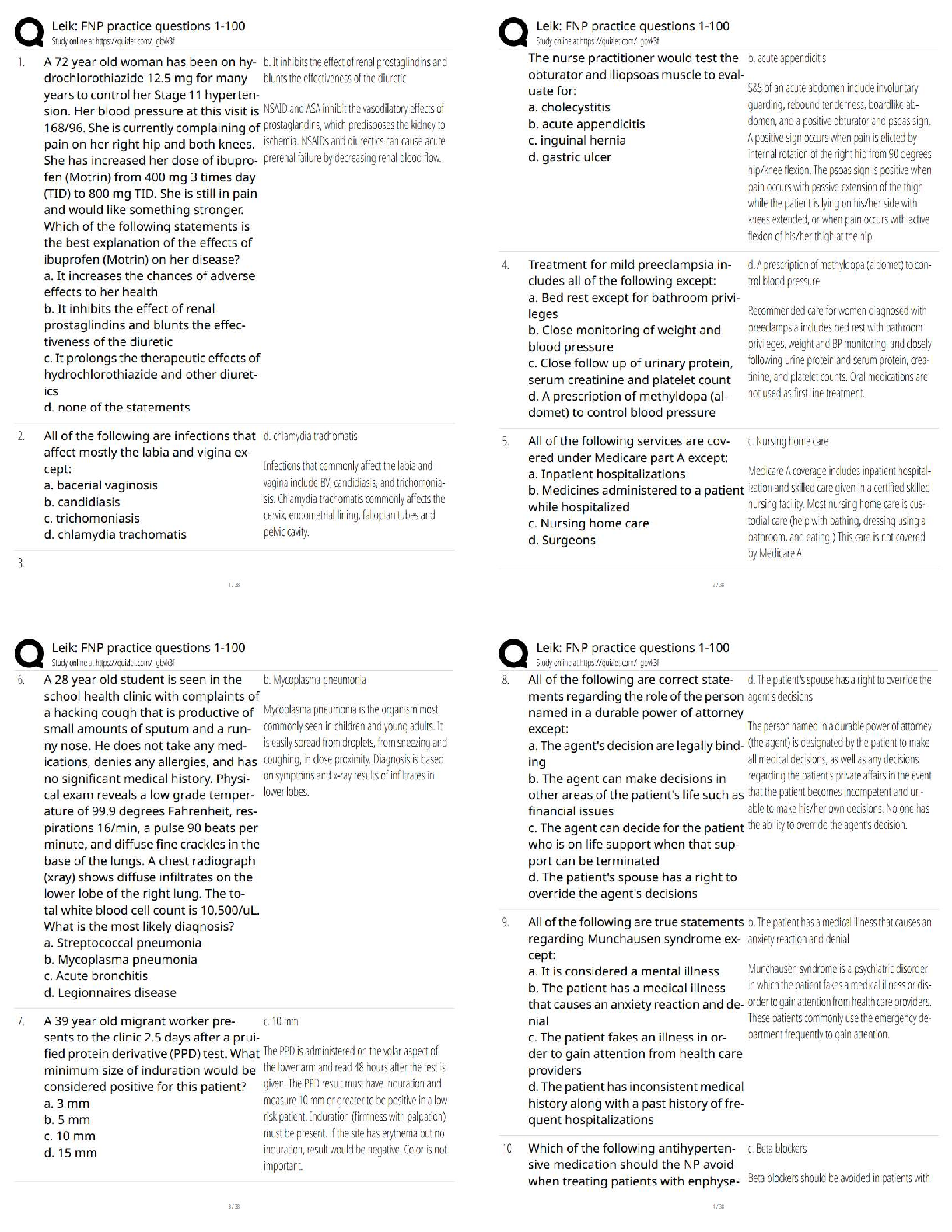
A 72-year-old woman has been on hydrochlorothiazide 12.5 mg for many years to control her Stage II
hypertension. Her blood pressure (BP) at this visit
...
LEIK FNP Practice Questions &Answers.
100% Accurate, Graded A+.
A 72-year-old woman has been on hydrochlorothiazide 12.5 mg for many years to control her Stage II
hypertension. Her blood pressure (BP) at this visit is 168/96. She is currently complaining of pain on her
right hip and on both knees. She has increased her dose of ibuprofen (Motrin) from 400 mg 3 times day
(TID) to 800 mg TID. She is still in pain and would like something stronger. Which of the following
statements is the best explanation of the effects of ibuprofen (Motrin) on her disease?
A) It increases the chances of adverse effects to her health
B) It inhibits the effect of renal prostaglandins and blunts the effectiveness of the diuretic
C) It prolongs the therapeutic effects of hydrochlorothiazide and other diuretics
D) None of the statements are true - ✔✔B) It inhibits the effect of renal prostaglandins and blunts the
effectiveness of the diuretic.
NSAIDs and ASA inhibit the vasodilatory effects of prostaglandins, which predisposes the kidney to
ischemia. NSAIDs and diuretics can cause acute prerenal failure by decreasing renal blood flow.
2. All of the following are infections that affect mostly the labia and vagina except:
A) Bacterialvaginosis
B) Candidiasis
C) Trichomoniasis
D) Chlamydia trachomatis - ✔✔D) Chlamydia trachomatis
Infections that commonly affect the labia and vagina include bacterial vaginosis, candidiasis, and
trichomoniasis. Chlamydia trachomatis commonly affects the cervix, endometrial lining , fallopian tubes,
and pelvic cavity.
The nurse practitioner would test the obturator and iliopsoas muscle to evaluate for:
A) Cholecystitis
B) Acute appendicitis
C) Inguinal hernia
D) Gastriculcer - ✔✔B) Acute appendicitis.
Signs and symptoms of an acute abdomen include invol- untary guarding, rebound tenderness, boardlike
abdomen, and a positive obtu- rator and psoas sign. A positive obturator sign occurs when pain is elicted
by internal rotation of the right hip from 90 degrees hip/knee flexion. The psoas sign is positive when
pain occurs with passive extension of the thigh while the patient is lying on his/her side with knees
extended, or when pain occurs with active flexion of his/her thigh at the hip.
Treatment for mild preeclampsia includes all of the following except:
A) Bed rest except for bathroom privileges
B) Close monitoring of weight and blood pressure
C) Close follow-up of urinary protein, serum creatinine, and platelet count
D) A prescription of methyldopa (Aldomet) to control blood pressure - ✔✔D) A prescription of
methyldopa (Aldomet) to control blood pressure
Recommended care for women diagnosed with preeclampsia includes bed rest with bath- room
privileges, weight and BP monitoring, and closely following urine protein and serum protein, creatinine,
and platelet counts. Oral medications are not used as first-line treatment.
All of the following services are covered under Medicare Part A except:
A) Inpatienthospitalizations
B) Medicines administered to a patient while hospitalized
C) Nursing home care
D) Surgeons - ✔✔C) Nursing home care
Medicare A coverage includes inpatient hospitalization and skilled care given in a certified skilled nursing
facility. Most nursing home care is custodial care (help with bathing, dressing, using a bathroom, and
eating). This care is not covered by Medicare A.
A 28-year-old student is seen in the school health clinic with complaints of a hacking cough that is
productive of small amounts of sputum and a runny nose. He does not take any medications, denies any
allergies, and has no significant medical history. Physical examination reveals a low-grade temperature
of 99.9 degrees Fahrenheit, respirations of 16/min, a pulse of 90 beats per minute, and diffuse fine
crackles in the base of the lungs. A chest radiograph (x-ray) shows diffuse infiltrates on the lower lobe of
the right lung. The total white blood cell count is 10,500/uL. What is the most likely diagnosis?
A) Streptococcal pneumonia
B) Mycoplasma pneumonia
C) Acute bronchitis
D) Legionnaires disease - ✔✔B) Mycoplasma pneumonia
Mycoplasma pneumonia is the organism most com- monly seen in children and young adults. It is easily
spread from droplets, from sneezing and coughing, in close proximity. Diagnosis is based on symptoms
and x-ray results of infiltrates in lower lobes.
A 39-year-old migrant worker presents to the clinic 2.5 days after a purified protein derivative (PPD)
test. What minimum size of induration would be considered posi- tive for this patient?
A) 3 mm B) 5 mm C) 10 mm D) 15 mm - ✔✔C) 10 mm
The PPD is administered on the volar aspect of the lower arm and read 48 hours after the test is given.
The PPD result must have induration and measure 10 mm or greater to be positive in a low-risk patient.
Induration (firmness with palpation) must be present. If the site has erythema but no induration, result
would be negative. Color is not important.
All of the following are correct statements regarding the role of the person named in a durable power of
attorney except:
A) The agent's decisions are legally binding
B) The agent can make decisions in other areas of the patient's life such as financial
issues
C) The agent can decide for the patient who is on life support when that life support
can be terminated
D) The patient's spouse has a right to override the agent's decisions - ✔✔D) The patient's spouse has a
right to override the agent's decisions
The person named in a durable power of attorney (the agent) is designated by the patient to make all
medical decisions, as well as any decisions regarding the patient's private affairs in the event that the
patient becomes incompetent and unable to make his/her own decisions. No one has the ability to
override the agent's decision.
All of the following are true statements regarding Munchausen syndrome except:
A) It is considered a mental illness
B) The patient has a medical illness that causes an anxiety reaction and denial
C) The patient fakes an illness in order to gain attention from health care providers
D) The patient has an inconsistent medical history along with a past history of
frequent hospitalizations - ✔✔B) The patient has a medical illness that causes an anxiety reaction and
denial
Munchausen syndrome is a psychiatric disorder in which the patient fakes a medical illness or disorder
to gain attention from health care provid- ers. These patients commonly use the emergency department
frequently to gain attention.
Which of the following antihypertensive medications should the nurse practitioner avoid when treating
patients with emphysema?
A) Calcium channel blockers
B) Angiotensin-converting enzyme (ACE) inhibitors
C) Beta-blockers
D) Diuretics - ✔✔C) Beta-blockers
Beta-blockers should be avoided in patients with a history of emphysema. Studies have shown evidence
of a reduction in forced expiratory volume in 1 second (FEV1), increased airway hyperresponsiveness,
and inhibition of bronchodilator response to beta agonists in patients receiving non-selective beta�blockers and high doses of cardioselective beta-blockers.
A 30-year-old chef complains of pruritic hives over her chest and arms but denies difficulty swallowing
or breathing. She reports a family history of allergic rhinitis and asthma. Which of the following
interventions is most appropriate?
A) Perform a complete and thorough history
B) Prescribe an oral antihistamine such as diphenhydramine 25 mg PO QID
C) Give an injection of epinephrine 1:1000 intramuscularly stat
D) Call 911 - ✔✔A) Perform a complete and thorough history
Prior to prescribing medications, a complete and thorough history must be performed to determine
possible causes of hives. The patient denied difficulty with swallowing and breathing, so there was no
medical emergency to require calling 911.
Which of the following findings is most likely in young primigravidas with pregnancy-induced
hypertension?
A) Abdominal cramping and constipation
B) Edema of the face and the upper extremities
C) Shortness of breath
D) Dysuria and frequency - ✔✔B) Edema of the face and the upper extremities
Common signs and symptoms of pregnancy-induced hypertension include edema of the face and the
upper extremities, weight gain, blurred vision, elevated BP, proteinuria, and headaches.
Which of the following symptoms is associated with B12 deficiency anemia?
A) Spoon-shaped nails and pica
B) An abnormal neurological exam
C) A vegan diet
D) Tingling and numbness of both feet - ✔✔D) Tingling and numbness of both feet
Vitamin B12 deficiency anemia can cause nerve cell damage if not treated. Symptoms of B12 deficiency
anemia may include tingling or numbness in fingers and toes, difficulty walking, mood changes or
depression, memory loss, disorientation, and dementia.
A second triple screen on a 35-year-old primigravida reveals abnormally low lev- els of the alpha
fetoprotein and estriol and high levels of human chorionic gonad- otropin. Which of the following
interventions is the best choice for this patient?
A) Order an ultrasound
B) Order a computed tomography (CT) scan of the abdomen
C) Order a 24-hour urine for protein clearance
D) Assess for a history of illicit drug or alcohol use - ✔✔A) Order an ultrasound
Abnormally low levels of alpha fetoprotein and estriol and high levels of human chorionic gonadotropin
are abnormal during pregnancy. An ultrasound should be ordered to further evaluate the fetus for
characteristics of Down syndrome and/or fetal demise.
All of the following are true statements about diverticula except:
A) Diverticula are located in the colon
B) A low-fiber diet is associated with the condition
C) Most diverticula in the colon are infected with gram-negative bacteria
D) Supplementingwithfibersuchaspsyllium(Metamucil)isrecommended - ✔✔C) Most diverticula in the
colon are infected with gram-negative bacte-
ria
Diverticuli in the colon can be infected with both gram-negative and gram- positive bacteria.
Patients who are diagnosed with gonorrhea should also be treated for which of the following infections?
A) Chancroid
B) Chlamydia trachomatis
C) Herpes genitalis
D) PID (pelvic inflammatory disease) - ✔✔B) Chlamydia trachomatis
When diagnosed with gonorrhea, the patient should also be treated for Chlamydia trachomatis.
Kyphosis is a late sign of:
A) Old age
B) Osteopenia
C) Osteoporosis
D) Osteoarthritis - ✔✔C) Osteoporosis
Kyphosis is a curvature of the spine that causes a rounding of the back, which leads to a slouching
posture. Severe thinning of the bones (osteoporosis) contributes to this curvature in the spine.
Symptoms that may occur with severe cases of kyphosis include difficulty breathing, fatigue, and back
pain.
A 35-year-old primigravida who is at 28 weeks of gestation is expecting twins. What would you would
expect her alpha fetoprotein (AFP) values to be?
A) Normal
B) Higher than normal
C) Lower than normal
D) None of the above - ✔✔B) Higher than normal
Alpha fetoprotein is produced in the fetal and maternal liver. Higher levels of alpha fetoprotein are
commonly seen in multiple gestations due to the growing fetuses and enlargement of the livers.
Which of the following antihypertensive medications has beneficial effects for an elderly White female
with osteoporosis?
A) Calcium channel blocker
B) Angiotensin-converting enzyme (ACE) inhibitor
C) Beta-blocker
D) Diuretic - ✔✔A) Calcium channel blocker
Calcium channel blockers act by blocking the cal- cium channels in the heart muscle and the blood
vessels, thereby keeping more calcium in the bones.
The Lachman maneuver is used to detect which of the following?
A) Knee instability
B) Nerve damage of the knee due to past knee injuries
C) The integrity of the patellar tendon
D) Tears on the meniscus of the knee - ✔✔A) Knee instability
The Lachman maneuver is a test performed to assess for knee instability. Knee instability indicates a tear
of the anterior cruciate ligament.
When an adolescent male's penis grows more in length than width, at which of the following Tanner
stages is he classified?
A) Tanner Stage II
B) Tanner Stage III
C) Tanner Stage IV
D) Tanner Stage V - ✔✔B) Tanner Stage III
Tanner Stage III in males consists of penis lengthening and darker, coarse pubic hair, which begins to curl
Fetal TORCH infections can cause microcephaly, mental retardation, hepatospleno- megaly, and
intrauterine growth retardation. The acronym TORCH stands for:
A) Toxoplasma gondii, other infections, rubella, cytomegalovirus, and herpes
B) Toxic shock syndrome, ocular infections, rubella, cytomegalovirus, and herpes
zoster
C) Tetanus, ophthalmic infections, roseola, cancer, and head abnormalities
D) Toxins, other infections, roseola, candidiasis, and head abnormalities - ✔✔A) Toxoplasmagondii,
other infections, rubella, cytomegalovirus, and herpes
The acronym TORCH stands for Toxoplasma gondii, other infections, rubella, cytomegalovirus, and
herpes. Although several of the conditions listed in the other answer options can also cause fetal
problems, they are not included in the TORCH acronym.
Human papilloma virus (HPV) infection of the larynx has been associated with:
A) Laryngeal neoplasia
B) Esophageal stricture
C) Cervical cancer
D) Metaplasia of esophageal squamous cells - ✔✔A) Laryngeal neoplasia
HPV infection of the larynx has been associated with laryngeal neoplasia; HPV infection of the cervix is
associated with cervical cancer.
Mr. Brown is a 65-year-old carpenter complaining of morning stiffness and pain in both his hands and
right knee upon awakening. He feels some relief after warming up. On exam, the nurse notices the
presence of Heberden's nodes. Which of the fol- lowing is most likely?
A) Osteoporosis
B) Rheumatoid arthritis
C) Degenerative joint disease
D) Reiter's syndrome - ✔✔C) Degenerative joint disease
Heberden's nodes are commonly seen in degenerative joint disease. Heberden's nodes are bony nodules
located on the distal interphalangeal joints (DIPs).
What does a positive posterior drawer sign in a 10-year-old soccer player signify?
A) An abnormal knee
B) Instability of the knee
C) A large amount of swelling on the knee
D) An injury of the meniscus - ✔✔B) Instability of the knee
The drawer sign is performed on the knee or ankle to assess for knee instability. The affected knee will
have more laxity when compared to the unaffected knee.
A multigravida who is at 28 weeks of gestation has a fundal height of 29 cm. Which of the following is
the best recommendation for this patient?
A) Advise the mother that her pregnancy is progressing well
B) Order an ultrasound of the uterus
C) Refer her to an obstetrician for an amniocentesis
D) Recommend bed rest with bathroom privileges - ✔✔A) Advise the mother that her pregnancy is
progressing well
From 20-35 weeks' gestation, fundal height should equal weeks gestation. If greater than 2 cm within
the gestational week of pregnancy, further testing should be performed to evaluate fetal growth
A multigravida who is at 34 weeks of gestation wants to know at what level her uterine fundus should
be. The best answer is to advise the mother that her fun- dus is:
A) Midway between the umbilicus and the lower ribs
B) At the level of the umbilicus
C) From 33 to 35 cm
D) From 32 to 34 cm - ✔✔C) From 33 to 35 cm
After 20 weeks gestation, fundal height in centimeters should measure approximately the same as the
number of weeks of gestation
Which of the following laboratory tests is used in primary care to evaluate renal function?
A) Electrolyte panel
B) Creatinine
C) Alkaline phosphatase
D) Blood urea nitrogen (BUN) to creatinine ratio - ✔✔B) Creatinine
Serum creatinine is measured to evaluate renal function. Creatinine is the end product of creatine
metabolism. Creatinine clearance is not affected by fluid or dietary intake of meat.
All of the following are false statements regarding acute gastritis except:
A) Chronic intake of nonsteroidal anti-inflammatory drugs (NSAIDs) can cause the disorder
B) Chronic lack of dietary fiber is the main cause of the disorder
C) The screening test for the disorder is the barium swallow test
D) The gold standard to evaluate the disorder is a colonoscopy - ✔✔C) The screening test for the
disorder is the barium swallow test
The gold standard for diagnosing gastric disease is biopsy of gastric and/or duodenal tissue by upper
endoscopy. Chronic use of NSAIDs disrupts the production of prostaglandins, which decreases blood
supply and then breaks down the protective layer of the mucosa, which leads to gastric disease.
Signs and symptoms of depression include all of the following except:
A) Anhedonia and changes in appetite
B) Decreased energy and irritability
C) Apathy and low self-esteem
D) Apraxia and fatigue - ✔✔D) Apraxia and fatigue
Apraxia is a disorder of the nervous system in which the brain is affected and the patient is unable to
move the arms/legs when asked to do so. Common signs of depression include anhedonia (loss of
interest in activities that the patient finds pleasurable), unintentional weight loss or gain, fatigue, change
in appetite, insomnia or hypersomnia, feelings of guilt and worthlessness, and recurrent thoughts of
suicide.
Which of the following is an accurate description of eliciting for Murphy's sign?
A) Upon deep inspiration by the patient, palpate firmly in the right upper quad- rant of the abdomen
below the costovertebral angle
B) Bend the patient's hips and knees at 90 degrees, then passively rotate hip exter- nally, then internally
C) Ask the patient to squat, then place the stethoscope on the apical area
D) Press into the abdomen deeply, then release it suddenly - ✔✔A) Upon deep inspiration by the
patient, palpate firmly in the right upper quad- rant of the abdomen below the costovertebral angle
Murphy's sign is positive if pain occurs when performing RUQ palpation while the patient takes a deep
inspiration, causing the patient to abruptly stop the deep breath due to pain. As the liver is palpated, it
will descend and push up against the inflamed gallbladder and cause sharp pain (cholecystitis).
A 28-year-old multipara who is at 32 weeks of gestation presents to your office complaining of a sudden
onset of small amounts of bright red vaginal bleeding. She has had several episodes and appears
anxious. On exam, her uterus is soft to palpation. Which of the following is most likely?
A) Placenta abruptio
B) Placenta previa
C) Acute cervicitis
D) Molar pregnancy (hydatidiform mole) - ✔✔B) Placenta previa
Placenta previa occurs when abnormal implantation of the placenta occurs. A common symptom of
placenta previa is painless, bright red bleeding.
Epidemiologic studies show that Hashimoto's disease occurs most commonly in:
A) Middle-aged to older women
B) Smokers
C) Obese individuals
D) Older men - ✔✔A) Middle-aged to older women
Hashimoto's disease commonly occurs in middle-aged to older women.
A 48-year-old woman is told by a physician that she is starting menopause. All of the following are
possible findings except:
A) Hot flashes
B) Irregular menstrual periods
C) Severe vaginal atrophic changes
D) Cyclic mood swings - ✔✔C) Severe vaginal atrophic changes
As women reach menopause, changes that may occur include hot flashes, irregular menstrual periods,
and cyclic mood swings. Vaginal changes, such as dryness and thinning, may also begin to occur
A 63-year-old patient with a 10-year history of poorly controlled hypertension presents with a cluster of
physical exam findings. Which of the following indicate target organ damage commonly seen in
hypertensive patients?
A) Pedal edema, hepatomegaly, and enlarged kidneys
B) Hepatomegaly, AV nicking, bibasilar crackles
C) Renal infection, S3, neuromuscular abnormalities
D) Glaucoma, jugular vein atrophy, heart failure - ✔✔B) Hepatomegaly, AV nicking, bibasilar crackles
With long-term, uncontrolled hypertension, organ damage may occur. Organs commonly affected
include: brain (stroke), eyes (retinopathy, AV nicking, bleeding, blindness), heart (heart dis- ease, left
ventricular hypertrophy, MI, and/or CHF), and kidneys (renal failure, proteinuria).
A 30-year-old primigravida is diagnosed with a possible threatened abortion. The result of the urine
pregnancy test is positive. Which of the following statements is true regarding a threatened abortion?
A) Vaginal bleeding and cramping are present, but the cervix remains closed
B) Vaginal bleeding and cramping are present along with a dilated cervix
C) The fetus and placenta are all expelled
D) The products of conception and the placenta remain inside the uterus along
with a dilated cervix - ✔✔A) Vaginal bleeding and cramping are present, but the cervix remains closed
Threatened abortion is defined as vaginal bleeding and cramping with- out the presence of cervical
dilation.
A 30-year-old female who is sexually active complains of a large amount of milk- like vaginal discharge
for several weeks. A microscopy slide reveals a large amount of squamous epithelial cells that have
blurred margins. Very few white blood cells are seen. The vaginal pH is at 6.0. What is most likely?
A) Trichomonas infection
B) Bacterial vaginosis
C) Candidal infection
D) A normal finding - ✔✔B) Bacterial vaginosis
Bacterial vaginosis is a bacterial infection of the vagina. Signs and symptoms include copious off-white to
gray discharge with foul odor without vaginal erythema or irritation. Wet prep will show positive for clue
cells. When performing a wet prep, the "whiff test" will be positive for a strong "fishy" odor when
vaginal discharge is mixed with one drop of KOH.
The Pap smear result on a 20-year-old sexually active student who uses condoms inconsistently shows a
large amount of inflammation. Which of the following is the best follow-up action?
A) The NP needs to do cervical cultures to verify the presence of gonorrhea
B) Prescribe metronidazole vaginal cream for the patient over the phone
C) Call the patient and tell her she needs a repeat Pap smear in 6 months
D) Advise the patient to use a Betadine douche at bedtime x 3 days - ✔✔A) The NP needs to do cervical
cultures to verify the presence of gonor�rhea
Cultures should be taken at the time of the Pap smear, as the patient may not return for later diagnostic
testing.
While performing a Pap smear on a postmenopausal patient, several areas of flat white skin lesions that
are irregularly shaped are found on the patient's labia. The patient reports that the lesions are
extremely itchy and have been present for several years without much change. Which condition is best
described?
A) Chronic scabies infection
B) Lichen sclerosus
C) Chronic candidal vaginitis
D) A physiologic variant found in some older women - ✔✔B) Lichen sclerosus
Lichen sclerosus is a disease of the skin, in which white spots appear on the skin and change over time. It
is most commonly seen in the genital and rectal areas, but can appear in other areas. The spots are
usually shiny and smooth and can eventually spread into patches. The skin appears thin and crinkled.
Then the skin tears easily, and bright red or purple bruises are common. Sometimes, the skin becomes
scarred. If the disease is a mild case, there may be no symptoms
The heart sound S2 is caused by:
A) Closure of the atrioventricular valves
B) Closure of the semilunar valves
C) Opening of the atrioventricular valves
D) Opening of the semilunar valves - ✔✔B) Closure of the semilunar valves
The heart sound S2 is caused by closure of the semilunar valves.
A pelvic exam on a woman who is 12 weeks pregnant would reveal that her uterus is located at which of
the following areas?
A) Between the umbilicus and the suprapubic bone
B) Just rising above the suprapubic bone
C) Between the suprapubic bone and the xiphoid process
D) Between the umbilicus and the xiphoid proces - ✔✔B) Just rising above the suprapubic bone
At 12 weeks gestation, the uterus measures approximately the size of a grapefruit, which would be felt
just above the suprapubic bone on bimanual exam.
All of the following are covered under Medicare Part B except:
A) Persons age 65 years or older
B) Durable medical equipment
C) Mammograms annually starting at age 50
D) Anesthesiologist's services - ✔✔D) Anesthesiologist's services Medicare Part B covers: 1) outpatient
physician visits, labs, x-rays; 2) durable medical equipment; 3) mammograms/colonoscopy after age 50
years annually; 4) rehabilitation. Anesthesiologist's services are covered by Medicare Part A.
All of the following patients are at higher risk for suicide except:
A) A 66-year-old White male whose wife of 40 years recently died
B) A high school student with a history of bipolar disorder
C) A depressed 45-year-old female with family history of suicide
D) A 17-year-old teen who has only 1 close friend in school - ✔✔D) A 17-year-old teen who has only one
close friend in school Risk factors for suicide include: 1) elderly white males (especially after the death of
a spouse); 2) past history of suicide; 3) family history of suicide; 4) plans for use of a lethal weapon such
as a gun or knife; 5) female gender has a higher attempt rate, but males have a higher success rate; 6)
personal history of bipolar disorder or depression.
A 70-year-old male patient complains of a bright red spot in his left eye for 2 days. He denies eye pain,
visual changes, or headaches. He has a new onset of cough from a recent viral upper respiratory
infection. The only medicine he is on is Bayer aspirin 1 tablet a day. Which of the following is most
likely?
A) Corneal abrasion
B) Acute bacterial conjunctivitis
C) Acute uveitis
D) Subconjunctival hemorrhage - ✔✔D) Subconjunctival hemorrhage
Subconjunctival hemorrhage is a benign disorder that occurs from an increase in intraocular pressure
that may be caused by coughing, vomiting, forceful exerrtion in labor during childbirth, straining while
having a bowel movement, weight lifting, or lifting a heavy object.
Which of the following is appropriate follow-up for this 70-year-old patient?
A) Referral to an optometrist
B) Referral to an ophthalmologist
C) Advise the patient that it is a benign condition and will resolve spontaneously
D) Prescribe an ophthalmic antibiotic solution - ✔✔C) Advise the patient that it is a benign condition and
will resolve spontaneously
A subconjunctival hemorrhage is a benign disorder that resolves without any treatment
Jason, an 8-year-old with type 1 diabetes, is being seen for a 3-day history of fre- quency and nocturia.
He denies flank pain and is afebrile. The urinalysis result is negative for blood and nitrites but is positive
for a large amount of leukocytes and ketones. He has a trace amount of protein. Which of the following
is the best test to order initially?
A) Urine for culture and sensitivity
B) 24-hour urine for protein and creatinine clearance
C) 24-hour urine for microalbumin
D) An intravenous pyelogram - ✔✔A) Urine for culture and sensitivity
An 8-year-old male patient with the diagnosis of diabetes has a high risk of urinary tract infections. A
large amount of leukocytes in the urinalysis is abnormal and he has been having symptoms of frequency
and nocturia for the past 3 days. The urine culture would be ordered because he has a high risk of
infection. The urine culture and sensitivity (C&S) is the best evaluation for diagnosing a urinary tract
infection.
All of the following are not recommended for the outpatient treatment of mild preeclampsia except:
A) Severe sodium restriction
B) Restrict fluid intake to less than 1 liter per 24 hours
C) Aldomet (methyldopa) 250 mg PO (orally) BID
D) Bed rest on the left side with bathroom privileges - ✔✔D) Bed rest on the left side with bathroom
privileges
Outpatient treatment for mild pre-eclampsia includes bed rest on the left lateral side with bathroom
privileges.
The best test for diagnosing congenital glaucoma is which of the following?
A) Fluorescein staining
B) Tonometry
C) Snellen vision exam
D) The refractive index - ✔✔B) Tonometry
A tonometer is used to measure the intraocular pressure (IOP) of the eye to screen for glaucoma.
Normal range IOP is 10-22 mm Hg.
Rocky Mountain spotted fever is caused by the bite of the:
A) Mosquito
B) Tick
C) Insect
D) Flea - ✔✔B) Tick
Rocky Mountain spotted fever is caused by a tick bite from a tick that was infected with the parasite
Rickettsia rickettsii. The mortality rate is 1%-7% if left untreated.
All of the following are false statements about atopic dermatitis except:
A) Contact with cold objects may exacerbate the condition
B) It does not have a linear distribution
C) It is associated with bullae
D) The lesions have vesicles that are full of serous exudate - ✔✔B) It does not have a linear distribution
Atopic dermatitis is a skin condition in which the lesions occur in a linear fashion. They may have many
different stages, including erythematous papules and vesicles, with weeping, drainage, and/or crusting.
Lesions are commonly found on the scalp, face, forearms, wrists, elbows, and backs of the knees.
Commonly pruritic. Also known as eczema.
A mother brings in her 4-year-old daughter who just started attending preschool. She tells the nurse
practitioner that her child is complaining of burning and itching in both eyes along with a runny nose.
During the physical exam, the child's eyes appear injected bilaterally. The throat is red and her inferior
nasal turbinates are swollen. Which of the following is most likely?
A) Herpes keratitis
B) Corneal ulcer
C) Viral conjunctivitis
D) Bacterial conjunctivitis - ✔✔C) Viral conjunctivitis
Viral conjunctivitis is inflammation of the conjunctiva with common complaints of red, itchy eyes,
without signs of infection.
A sexually active woman is complaining of amenorrhea and vaginal spotting. On exam, her left adnexa is
tender and cervical motion tenderness is positive. Which test should the nurse practitioner initially
order?
A) Flat plate of the abdomen
B) Complete blood count (CBC) with white cell differentials
C) Urine pregnancy test
D) Pelvic ultrasound - ✔✔C) Urine pregnancy test
A urine pregnancy test should be performed to rule out miscarriage and/or tubal pregnancy.
A toddler with congenital heart disease is seen for a 1-week history of facial and lower-extremity edema
accompanied by shortness of breath. The child's mother reports that the child's appetite has been poor.
The chest x-ray reveals that the child has congestive heart failure (CHF). Which of the following heart
sounds are found in these patients?
A) S1 and S2
B) S1, S2, and S3
C) S1, S2, and S4
D) Still's murmur and S4 - ✔✔B) S1, S2, and S3
Congestive heart failure is the inability of the heart to pump a sufficient amount of blood to the organs
to meet the body's requirements. It is common to hear S1, S2, and S3 heart sounds on exam. Common
signs and symptoms include fatigue, shortness of breath with activity, and edema of lower extremities.
A 53-year-old crossing guard complains of twisting his right knee while working that morning. The knee
is swollen and tender to palpation. The nurse practitioner diagnoses a Grade II sprain. The initial
treatment plan includes which of the following?
A) Application of cold packs the first 24 hours followed by applications of low heat at bedtime
B) Elevation of the affected limb and intermittent applications of cold packs for the next 48 hours
C) Rechecking the knee in 24 hours and isometric exercises
D) The application of an Ace bandage to the affected kne - ✔✔B) Elevation of the affected limb and
intermittent applications of cold packs for the next 48 hours
Elevation of the injured knee above the heart will reduce the amout of swelling that can occur. Use of
ice packs immediately after the injury is most effective and will reduce swelling in the tissue. Ice the
affected area for 15 minutes at a time intermittently to prevent frostbite and further damage to tissue.
Allowing 30-45 minutes between icings of the limb is recommended.
Erythromycin 200 mg with sulfisoxazole 600 mg suspension (Pediazole) is contraindicated in which of
the following conditions?
A) G6PD deficiency anemia
B) Lead poisoning
C) Beta thalassemia minor
D) B12 deficiency anemia - ✔✔A) G6PD deficiency anemia
Glucose-6-phosphate dehydrogenase (G6PD) defi- ciency is a hereditary condition that occurs when the
red blood cells break down, causing hemolysis, due to a missing or lack of a sufficient enzyme that is
needed to help the red blood cells work efficiently. Certain foods and medications may trigger this
reaction and hemolysis will occur. Some of these medications include antimalarial drugs, aspirin,
nitrofurantoin, NSAIDs, quinidine, quinine, and sulfa medications.
The mother of an 11-year-old boy with sickle cell anemia calls on the phone complaining that her son
woke up because of a painful penile erection that will not go away. The nurse practitioner's most
appropriate intervention is:
A) Insert a Foley catheter and measure the child's intake and output for the next 24 hours
B) Insert a Foley catheter to obtain a specimen for a urinalysis and urine for C&S (culture and sensitivity)
C) Recommend an increase in the child's fluid intake
D) Recommend immediate referral to the ER - ✔✔D) Recommend immediate referral to the ED
Priapism (painful penile erection not related to sexual activity) is a true urologic emergency that may
lead to permanent erectile dysfunction and penile necrosis if not treated appropriately. It can be
associated with a number of medical conditions (sickle cell anemia, leukemia, or spinal cord injury)
and/or some pharmacologic agents
A positive Coombs test on an Rh-negative pregnant woman means:
A) The mother has autoantibodies against Rh-positive red blood cells (RBCs)
B) The fetus has autoantibodies against maternal RBCs
C) The mother does not have Rh factor against fetal RBCs
D) The fetus does not have RBC autoantibodies - ✔✔A) The mother has autoantibodies against Rh�positive red blood cells
(RBCs)
The mother's autoantibodies can attack the fetus's Rh-positive red blood cells and cause destruction of
these cells, which can cause severe anemia and com- plications in the fetus. Today this is preventable
with the administration of anti- RhD immunoglobulin (Rho(D) immune globulin) to an Rh-negative
mother at 28 weeks gestation and after birth if the newborn is Rh positive.
Folic acid supplementation is recommended for women who are planning pregnancy in order to:
A) Prevent renal agenesis
B) Prevent anencephaly
C) Prevent kidney defects
D) Prevent heart defects - ✔✔B) Prevent anencephaly
Folic acid supplementation during pregnancy has been shown to decrease the risk of neural tube defects
of the fetus
All of the following are possible causes for secondary hypertension except:
A) Acute pyelonephritis
B) Pheochromocytoma
C) Renovascular stenosis
D) Coarctation of the aorta - ✔✔A) Acute pyelonephritis
Pheochromocytoma is an adrenal gland tumor in which there is increased production of the hormones
adrenaline and noradrena- line, which may cause long-term elevation in blood pressure. Renovascular
steno- sis is a narrowing of one or both arteries leading to the kidneys. It can cause severe hypertension
and irreversible kidney damage. Coarctation of the aorta is a con- genital heart defect of the aorta; it is a
narrowing of the aorta that causes the heart to work harder to get blood to flow through the narrow
aortic passageway to other organs, which in turn causes an increase in blood pressure.
Fitz-Hugh-Curtis syndrome is associated with which following infection?
A) Syphilis
B) Chlamydia trachomatis
C) Herpes genitalis
D) Lymphogranuloma venereum - ✔✔B) Chlamydia trachomatis
Fitz-Hugh-Curtis is a complication of having pelvic inflammatory disease that was caused by a vaginal
infection, such as gonorrhea or Chlamydia trachomatis. This causes inflammation and infection in the
pelvic cavity. Left untreated, this infection can cause adhesions that stretch from the peritoneum to the
liver.
A nursing home resident reports to his physician that his previous roommate was recently started on
tuberculosis treatment. A Mantoux test and chest x-ray are ordered for the patient. What is the
minimum size of induration considered positive for this patient?
A) 3 mm
B) 5 mm
C) 10 mm
D) 15 mm - ✔✔B) 5 mm
To perform the Mantoux test, a dose of 5 tuberculin units in 0.1 mL solution is injected intradermally
into the forearm and read 48 to 72 hours later. Results are measured by the size of the induration, not
ery- thema. Standard results of 10 mm or less are considered negative for a low- risk population. For a
high-risk population, such as a recent exposure, 5 mm of induration or greater is a positive result.
In small children with acquired immunodeficiency syndrome (AIDS), which of the following vaccines is
contraindicated?
A) Diphtheria and tetanus (Td)
B) Hepatitis B and mumps
C) Varicella
D) Td and oral polio - ✔✔C) Varicella
The data regarding efficacy of the varicella vaccine are insufficient; therefore, varicella vaccine is
contraindicated in HIV-infected individuals.
A 44-year-old female who is undergoing treatment for infertility complains of not having a menstrual
period for a few months. The night before, she started spotting and is now having cramp-type pains in
her pelvic area. Her blood pressure (BP) is 160/80, the pulse rate is 110, and she is afebrile. Her labs
reveal a mild anemia with mild leukocytosis. On pelvic exam, the uterine fundus is found above the
symphy- sis pubis. The cervical os is dilated at 3 cm. Which of the following is most likely?
A) Inevitable abortion
B) Threatened abortion
C) Incomplete abortion
D) Acute pelvic inflammatory disease - ✔✔A) Inevitable abortion
Inevitable abortion is defined as vaginal bleeding with pain and cervical dilation and/or effacement.
Threatened abortion is defined as vaginal bleeding with absent or minimal pain and a closed, long, and
thick cervix. Incomplete abortion is moderate to diffuse vaginal bleeding, with the passage of tissue and
painful uterine cramping or contractions. Acute pelvic inflammatory disease is a sudden onset of
inflammation and pain that affects the pelvic area, cervix, uterus, and ovaries, which is caused by
infection.
A 14-year-old female who is sexually active is brought in by her mother for an immunization update.
According to the mother, her daughter had 1 dose of hepatitis B vaccine. Which of the following
vaccines would you administer at this visit?
A) Td and hepatitis B
B) DTaP (diphtheria, tetanus, acellular pertussis) and hepatitis B
C) Hepatitis B only
D) MMR (measles, mumps, rubella) and Td - ✔✔A) Td and hepatitis B
The CDC recommends Td and hepatitis B for 14-year-old females. It is recommended for her to continue
the hepatitis series, which includes a total of 3 injections.
An Rh-negative pregnant woman with negative rubella titers should be vaccinated at what time period
in pregnancy?
A) She can be vaccinated at any time in her pregnancy
B) During the second trimester
C) During the third trimester
D) During the postpartum period - ✔✔D)During the post partum period
Rubella should be administered to the woman during the postpartum period. Rubella is contraindicated
during pregnancy.
Medicare Part B will pay for all of the following services except:
A) Outpatient physician visits that are medically necessary
B) Durable medical equipment
C) Outpatient laboratory and radiology tests
D) Eyeglasses and routine dental care - ✔✔D) Eyeglasses and routine dental care
Medicare Part B covers: 1) outpatient physician visits, labs, x-rays; 2) durable medical equipment; 3)
mammograms/ colonoscopy after age 50 years annually; and 4) rehabilitation.
Which of the following is used to screen for color blindness in a 7-year-old boy?
A) Snellen chart
B) Ishihara chart
C) Cover/uncover test
D) Red reflex - ✔✔B) Ishihara chart
The Ishihara chart is used for screening for color blindness.
A 67-year-old retired clerk presents with complaints of shortness of breath and weight gain over a 2-
week period. A nonproductive cough accompanies her symptoms. The lung exam is positive for fine
crackles in the lower lobes with no wheezing. The exam is positive for egophony. Which of the following
conditions is most likely?
A) Acute exacerbation of asthma
B) Left-heart failure
C) Right-heart failure
D) Chronic obstructive pulmonary disease - ✔✔B) Left-heart failure
Signs and symptoms of left-heart failure include tachypnea, labored breathing, and rales or crackles in
the lower bases of the lungs, which can develop into pulmonary edema.
Which of the following drugs is most likely to relieve the patient's symptoms?
A) Atenolol (Tenormin)
B) Trimethoprim/sulfamethoxazole (Bactrim DS)
C) Furosemide (Lasix)
D) Hydrocodone/guaifenesin syrup (Hycotuss) - ✔✔C) Furosemide (Lasix)
Lasix would be used to help remove the extra fluid load.
A patient has recently been diagnosed with migraine headache with aura. She wants advice on what she
should eliminate from her diet to reduce her risk of headaches. The best response is to advise this
patient to avoid:
A) Foods with aspartame (Equal) because they can trigger migraines
B) Foods with monosodium glutamate because they promote diuresis
C) Foods with garlic because they promote hypertension
D) Foods with nitrates because they do not induce flushing - ✔✔A) Foods with aspartame (Equal)
because they can trigger migraines
Dietary triggers for migraine headaches include foods that contain aspartame, tyramine, nitrites, MSG,
and/or red wine. These foods are thought to cause a change in the blood vessels and increased blood
flow to the brain.
A patient with a history of mitral valve prolapse (MVP) is requesting prophylaxis before her dental
surgery. Which of the following would you prescribe this patient?
A) Amoxicillin a half hour before and 2 hours after the procedure
B) Amoxicillin 1 hour before the procedure
C) Amoxicillin 1 hour before and 3 hours after the procedure
D) Prophylaxis is not recommended for this patient - ✔✔D) Prophylaxis is not recommended for this
patient
The American Heart Association does not recommend routine antibiotic prophylaxis prior to dental
procedures except for patients who are at high risk for bacterial endocarditis (a prosthetic cardiac valve,
previous history of bacterial endocarditis, congenital heart defects, etc.).
Koplik's spots are associated with:
A) Poxvirus infections
B) Measles
C) Kawasaki's disease
D) Reye's syndrome - ✔✔B) Measles
Signs and symptoms of the measles include fever over 101°F, coryza, cough, conjunctivitis, rash, and
Koplik's spots on buccal mucosa.
Stella, a new mother, complains to you that she has been feeling irritable and jittery almost daily for the
past few months. She complains of frequent palpitations and more frequent bowel movements along
with weight loss. Her BP is 160/70, her pulse is 110, and she is afebrile. All of the following conditions
should be considered in the differential diagnosis for this patient except:
A) Mitral regurgitation
B) Graves' disease
C) Generalized anxiety disorder
D) Illicit drug use - ✔✔A) Mitral regurgitation
Signs and symptoms of mitral regurgitation do not include frequent bowel movements with weight loss.
An elderly patient with a productive cough and fever is diagnosed with pneumonia. All of the following
organisms are capable of causing community-acquired pneumonia except:
A) Haemophilus influenzae
B) Mycoplasma pneumoniae
C) Treponema pallidum
D) Streptococcus pneumoniae - ✔✔C) Treponema pallidum
Treponema pallidum is a gram-negative spirochete bacterium that causes syphilis
Human chorionic gonadotropin (hCG) is produced by the:
A) Placenta
B) Hypothalamus
C) Anterior pituitary
D) Ovaries - ✔✔A) Placenta
HCG is produced by the placenta.
The majority of serum alpha fetoprotein is produced by the:
A) Fetal liver
B) Mother's liver
C) Placenta
D) Fetal neural tube - ✔✔A) Fetal liver
Serum alpha fetoprotein is produced by the fetal liver.
Stella works in the housekeeping department of a hospital. She presents to the employee health clinic
with a complaint of a needlestick to her left thumb. The needle was in one of the garbage bags from the
emergency room. The patient had a little bleeding that stopped spontaneously. Which of the following is
the next step?
A) Order an enzyme-linked immunosorbent assay (ELISA) test as soon as possible
B) Recommend a tetanus booster in 1 week
C) Offer the patient hepatitis B immunoglobulin
D) Order a chest x-ray - ✔✔A) Order an enzyme-linked immunosorbent assay (ELISA) test as soon as
possible
Employee health clinic protocols for needlesticks recommend ordering an ELISA test as soon as possible
to establish baseline blood work for the employee.
An elderly woman has been on digoxin (Lanoxin) for 10 years. Her electrocardio- graph (EKG) is showing
a new onset of atrial fibrillation. Her pulse is 64/min. She denies syncope and dizziness. Which of the
following interventions is most appropriate?
A) Order an electrolyte panel and a digoxin level
B) Order a serum thyroid-stimulating hormone (TSH), digoxin level, and an electrolyte panel
C) Order a serum digoxin level and decrease her digoxin dose by half while waiting for results
D) Discontinue the digoxin and order another 12-lead EKG - ✔✔B) Order a serum thyroid-stimulating
hormone (TSH), digoxin level, and an electrolyte panel
Obtaining baseline blood work to evaluate for causes of new- onset atrial fibrillation is recommended
prior to decreasing or stopping medications. Thyroid disease is a common cause of new-onset atrial
fibrillation.
You note the following result on a routine urinalysis of a 37-year-old primigravida who is at 30 weeks of
gestation. Leukocyte = trace, nitrite = negative, protein = 2 +, blood = negative. Her weight has increased
by 5 lbs during the past week. Which of the following is most likely?
A) HELLP syndrome
B) Pregnancy-induced hypertension (preeclampsia)
C) Eclampsia of pregnancy
D) Primary hypertension - ✔✔B) Pregnancy-induced hypertension (preeclampsia)
The classic triad of symptoms of preeclampsia includes hypertension, edema (weight gain), and
proteinuria.
The nurse practitioner who suspects that one of her hypertensive patients has Cushing's syndrome
would expect to find which of the following laboratory results?
A) Hyponatremia
B) Hypoglycemia
C) Elevated serum cortisol levels
D) Decreased urine 17-ketosteroids - ✔✔C) Elevated serum cortisol levels
Elevated serum cortisol levels are seen with Cushing's syndrome.
The first teeth to erupt during infancy are which of the following?
A) First molars
B) Second molars
C) Incisors
D) Canines - ✔✔C) Incisors
The incisors are the first teeth to erupt during infancy.
The positive signs of pregnancy include:
A) Palpation of the fetus and auscultation of the fetal heart tones by the nurse practitioner
B) Palpation of the fetus and a positive quantitative serum pregnancy test
C) Fetal heart tones and a positive quantitative serum pregnancy test
D) Fetal heart tones and feeling of movement of the baby by the mother - ✔✔A) Palpation of the fetus
and auscultation of the fetal heart tones by the nurse practitioner
Presumptive signs of pregnancy are symptoms experienced by the woman, such as amenorrhea, breast
tenderness, nausea/vomiting, fatigue, and increased urinary frequency. Probable signs of pregnancy are
signs detected by the examiner, such as an enlarged uterus. Positive signs of pregnancy are direct
evidence of pregnancy such as audible fetal heart tones or cardiac activity on ultrasound.
Chadwick's sign is characterized by:
A) Softening of the cervix
B) Blue coloration of the cervix and vagina
C) Softening of the uterine isthmus
D) Nausea and vomiting during the first trimester of pregnancy - ✔✔B) Blue coloration of the cervix and
vagina
Chadwick's sign is defined as a bluish discoloration of the cervix and vagina. These changes are caused
by the increased vascularity and congestion in the pelvic area during pregnancy.
A college student has recently been informed that he has an HPV (human papilloma virus) infection on
the shaft of his penis. Which of the following may reveal subclinical lesions on the penile skin?
A) Perform a KOH (potassium hydroxide) exam
B) Scrape off some of the affected skin and send it for a culture and sensitivity
C) Apply acetic acid to the penile shaft and look for acetowhite changes
D) Order a serum herpes virus titer - ✔✔C)Apply acetic acid to the penile shaft and look for acetowhite
changes
Lesions of HPV infection will turn white with application of acetic acid.
Carol M. is a 40-year-old bank teller who has recently been diagnosed with obsessive-compulsive
disorder by her therapist. Her symptoms would include:
A) Ritualistic behaviors that the patient feels compelled to repeat
B) Attempts to ignore or suppress the repetitive behaviors, which increase anxiety
C) Frequent intrusive and repetitive thoughts and impulses
D) All of the above - ✔✔D) All of the above
Signs and symptoms of obsessive-compulsive disorder include ritualistic behaviors that are repeated,
increased anxiety with attempting to ignore repetitive behaviors, and frequent intrusive and repetitive
thoughts and impulses.
Which of the following medications is indicated for the treatment ofobsessive-compulsive disorder?
A) Paroxetine (Paxil CR)
B) Haldoperidol (Haldol)
C) Lorazepam (Xanax)
D) Imipramine (Elavil - ✔✔A) Paroxetine (Paxil CR)
Antidepressants are the most common medications used for OCD. Those antidepressants that are
approved for OCD by the Food and Drug Administration (FDA) include clomipramine (Anafranil), fluvox�amine (Luvox), fluoxetine (Prozac), paroxetine (Paxil, Pexeva), and sertraline (Zoloft).
You would advise an 18-year-old female student who has been given a booster dose of MMR at the
college health clinic that:
A) She might have a low-grade fever during the first 24 to 48 hours
B) She should not get pregnant within the next 4 weeks
C) Her arm will be very sore on the injection site for 24 to 48 hours
D) Her arm will have some induration on the injection site in 24to48hours - ✔✔B) She should not get
pregnant within the next 4 weeks
MMR should not be administered to women known to be pregnant. In addition, women should be
counseled to avoid becoming pregnant for 28 days following vaccination.
Jean, a 68-year-old female, is suspected of having Alzheimer's disease. Which of the following is the best
initial method for assessing the condition?
A) Computed tomography scan of the brain
B) Mini Mental Status Exam
C) Obtain the history from the patient, friends, and family members
D) EEG (electroencephalography) - ✔✔B) Mini Mental Status Exam
Begin with administering the MMSE for a baseline assessment, followed by taking a history from the
patient and others.
A 55-year-old woman who has type 2 diabetes is concerned about her kidneys. She has a history of 3
urinary tract infections within the past 8 months. She denies dysuria and frequency at this visit. Which of
the following is the best initial course to follow?
A) Recheck the patient's urine and order a urine for culture and sensitivity
B) Order an IVP (intravenous pyelogram)
C) Advise the patient to follow up with a urologist
D) Evaluate the patient for a possible kidney infection - ✔✔A) Recheck the patient's urine and order a
urine for culture and sensitivity
A urinary tract infection is defined as the presence of 100,000 organisms per mL of urine in
asymptomatic patients or greater than 100 organisms per mL or urine with pyuria (more than 7
WBCs/mL) in a symptomatic patient
A nurse practitioner is giving dietary counseling to a male alcoholic who has recently been diagnosed
with folic acid deficiency anemia. Which of the following foods should the nurse practitioner
recommend to this patient?
A) Tomatoes, oranges, and bananas
B) Cheese, yogurt, and milk
C) Lettuce, beef, and dairy products
D) Spinach, liver, and whole wheat bread - ✔✔D) Spinach, liver, and whole wheat bread
Foods that are higher in folic acid include spinach, liver, and whole wheat bread.
The ELISA and Western Blot tests are both used to test for HIV. Which of the following statements is
correct?
A) It is a test to detect viral RNA
B) A positive ELISA screening does not mean the person has HIV infection
C) It is a test to detect viruses
D) It is a diagnostic test for the AIDS virus - ✔✔B)A positive ELISA screening does not mean the person
has HIV infection
The ELISA test is always followed by a Western blot test to confirm diagnosis.
Hegar's sign is considered a:
A) Positive sign of pregnancy
B) Probable sign of pregnancy
C) Presumptive sign of pregnancy
D) Problem in pregnancy - ✔✔B) Probable sign of pregnancy
Hegar's sign is softening of the lower portion of the uterus and is considered a probable sign of
pregnancy.
When palpating a woman who is at 20 weeks of gestation, the nurse practitioner should be able to feel
the uterine fundus at what level?
A) Just rising above the level of the pubic symphysis
B) Between the pubic symphysis and the umbilicus
C) At the level of the umbilicus
D) Above the level of the umbilicus - ✔✔C) At the level of the umbilicus
Uterine growth at 12 weeks gestation, palpable just above the symphysis pubis; 20 weeks gestation, at
the level of the umbilicus; after this, measurements in cm should approximately equal weeks of
gestation.
A 67-year-old female with a 50 pack/year history of smoking presents for a routine annual physical
examination. She complains of being easily short of breath and is frequently fatigued. Physical
examination reveals diminished breath sounds, hyperresonance, and hypertrophied respiratory
accessory muscles. Her CBC results reveal that her hematocrit level is slightly elevated. Her pulmonary
function test (PFT) results show increased total lung capacity. What is the most likely diagnosis for this
patient?
A) Bronchogenic carcinoma
B) COPD (chronic obstructive pulmonary disease)
C) Chronic bronchitis
D) Congestive heart failure - ✔✔B) COPD (chronic obstructive pulmonary disease)
Common complaints and signs/symptoms of COPD include shortness of breath, fatigue, chronic cough,
wheezing, difficulty performing tasks and speaking, pursed-lip breathing, digital clubbing, diminished
breath sounds, use of accessory muscles, and polycythemia due to chronic hypoxia. Pulmonary function
tests/ spirometry include forced expira- tory volume, forced vital capacity, and FEV1/FVC ratios.
Your patient of 10 years, Mrs. Leman, is concerned about her most recent diagnosis. She was told by her
dermatologist that she has an advanced case of actinic keratosis. Which of the following is the best
explanation for this patient?
A) It is a benign condition
B) It is a precancerous lesion and should be followed up with her dermatologist
C) Apply hydrocortisone cream 1% BID for 2 weeks and most of it will go away
D) It is important for her to follow up with an oncologist - ✔✔B) It is a precancerous lesion and should
be followed up with her dermatologist
Actinic keratosis is a small, raised skin lesion from having been in the sun for a long period of time. Some
actinic keratoses may develop into skin cancer; therefore, further evaluation is needed to determine if
removal is required.
Patient confidentiality is breached when:
A) Medical information is given to a spouse
B) Records are subpoenaed
C) Reports are sent to the Public Health Department
D) Records are released to insurance companies - ✔✔A) Medical information is given to a spouse
Patient confidentiality is breached when medical information is given to a spouse or any other individual
without consent of the patient.
A 25-year-old woman's last menstrual period was 6 weeks ago. She is complaining of nausea with
vomiting in the morning and fatigue. Her breasts feel bloated. The nurse practitioner suspects that she is
pregnant. Her symptoms would be considered:
A) Positive signs of pregnancy
B) Probable signs of pregnancy
C) Presumptive signs of pregnancy
D) Possible signs of pregnancy - ✔✔C) Presumptive signs of pregnancy
Presumptive signs of pregnancy are symptoms experienced by the woman, such as amenorrhea, breast
tenderness, nausea/ vomiting, fatigue, and increased urinary frequency.
A 55-year-old male patient describes to you an episode of chest tightness in his substernal area that
radiated to his back while he was jogging. It was relieved immediately when he stopped. Which of the
following conditions does this best describe?
A) Angina pectoris
B) Acute myocardial infarction
C) Gastroesophageal reflux disease
D) Acute costochondritis - ✔✔A) Angina pectoris
Symptoms of angina pectoris include a pressing, squeezing, or crushing pain, usually in the chest or back,
arms, neck, or ear lobes. Weakness, fatigue, and shortness of breath and pain radiating in the arms,
shoulders, jaw, neck, and/or back may also occur. Angina pectoris is most commonly brought on by
physical exertion, but can also be triggered by stress and other stressors to the body.
Which of the following would you recommend to this 55-year-old patient?
A) Start an exercise program by starting with walking instead of jogging
B) Consult with a cardiologist for further evaluation
C) Consult with a gastroenterologist to rule out acute cholecystitis
D) Take ibuprofen (Advil) 600 mg for pain every 4 to 6 hours PRN - ✔✔B) Consult with a cardiologist for
further evaluation
Physical assessment and examination by a cardiologist are advised to rule out cardiac problems and
deter- mine the safety of physical exercise.
Carol, a 73-year-old patient, complains of episodic vertigo, slight confusion, and weakness that last
nearly an hour each time. Movement does not worsen the vertigo. She "rests" and her symptoms
subside, but she is puzzled because the weakness "jumps from side to side," sometimes on the right and
sometimes on the left of her body. Her symptoms suggest:
A) Benign paroxysmal positional vertigo
B) Ménière's disease
C) TIA (transient ischemic attack)
D) CVA (cerebrovascular accident) - ✔✔C) TIA (transient ischemic attack)
Transient ischemic attack (TIA) is caused by vascular occlusion. Symptoms of a TIA usually last less than 1
hour; however, the symptoms may also be permanent. Common signs/symptoms include neurologic
deficits, vertigo, confusion, weakness, hemiparesis, temporary monocular blindness, ataxia, and
diplopia.
All of the following measures have been found to help lower the risk of osteoporosis except:
A) Drinking organic juice
B) Eating low-fat dairy foods
C) Performing weight-bearing exercises
D) Vitamin D supplementation - ✔✔A) Drinking organic juice
Vitamin D levels must be sufficient for the body to absorb calcium. Eating foods high in vitamin D and
calcium along with calcium and vitamin D supplements are advised to protect the bones and prevent
bone loss. Performing weight-bearing exercises daily also increases bone strength.
A 28-year-old male nurse of Hispanic descent reports a history of a cold that resolved 2 weeks ago
except for a dry cough and pain over his right cheek that worsens when he bends down. The patient
denies fever. He tells the employee health nurse practitioner that he is very allergic to both cephalexin
(Keflex) and erythromycin. The vital signs show that the patient's temperature is 99.2 degrees
Fahrenheit, a pulse of 72 beats per minute, and a respiratory rate of 12 breaths per minute. Which of
the following conditions is most likely?
A) Acute sinusitis
B) Acute bronchitis
C) Fever secondary to the previous viral URI (upper respiratory infection)
D) Munchausen's syndrome - ✔✔A) Acute sinusitis
Acute sinusitis symptoms include cough, facial pain, and low-grade fever.
A 38-year-old multigravida who is at 32 weeks of gestation calls the family nurse practitioner
complaining of bright red vaginal bleeding. There is no watery dis- charge. She complains that her uterus
feels hard and is very painful. Which of the following conditions is most likely?
A) Placenta previa
B) Placenta abruptio
C) A molar pregnancy
D) An ectopic pregnancy - ✔✔B) Placenta abruptio
Abruptio placenta symptoms are bright red vaginal bleeding, board-like uterus on palpation, and pain.
However, there can be concealed hemorrhage and the patient may not have vaginal bleeding. Placenta
previa is painless bleeding. Ectopic and molar pregnancy would not progress to 32 weeks gestation
The Jarisch-Herxheimer reaction is best described as:
A) An immune-mediated reaction precipitated by the destruction of a large number of spirochetes due
to an antibiotic injection
B) Severe chills and elevated blood pressure
C) Caused by infection with either Chlamydia trachomatis or gonorrheal infection of the liver capsule
D) Associated with certain viral illnesses - ✔✔A) An immune-mediated reaction precipitated by the
destruction of a large number of spirochetes due to an antibiotic injection
The Jarisch-Herxheimer reaction is defined as an immune-mediated reaction precipitated by the
destruction of a large number of spirochetes due to the antibiotic injection.
During a breast exam of a 30-year-old nulliparous female, the nurse practitioner palpates several
rubbery mobile areas of breast tissue. They are slightly tender to palpation. Both breasts have
symmetrical findings. There are no skin changes or any nipple discharge. The patient is expecting her
menstrual period in 5 days. Which of the following would you recommend?
A) Referral to a gynecologist for further evaluation
B) Tell her to return 1 week after her period so her breasts can be rechecked
C) Advise the patient to return in 6 months to have her breasts rechecked
D) Schedule the patient for a mammogram - ✔✔B)Tell her to return 1 week after her periods so her
breasts can be rechecked
Prior to having menses, women will experience breast changes of tenderness with palpation, with
symmetrical soft, mobile areas of breast tissue that are benign. Her symptoms should improve after her
menses and repeating the exam in 1 week would be recommended.
When evaluating the blood pressure on both the arms and legs of an infant who has a diagnosis of
coarctation of the aorta, which of the following is the correct finding?
A) The blood pressure is higher in the arms than in the legs
B) Only the diastolic blood pressure is higher in the legs than in the arms
C) The blood pressure is higher in the legs than the arms
D) The blood pressure is lower in both arms than in the legs - ✔✔A) The blood pressure is higher in the
arms than in the legs
In coarctation of the aorta, blood pressure is higher in the arms than in the legs due to the narrowing in
the aorta. Blood pressure must rise to get adequate blood flow to the lower extremities; therefore, the
blood pressure above the coarctation rises to compensate for this.
Which of the following should you expect to find on a wet-mount slide of a patient diagnosed with
bacterial vaginosis?
A) Tzanck cells
B) A large amount of leukocytes and epithelial cells
C) A large amount of bacteria coating the squamous cells and very few leukocytes
D) Epithelial cells and a small amount of blood
108 - ✔✔C) A large amount of bacteria coating the squamous cells and very few leukocytes
Results of the wet mount for bacterial vaginosis include bacteria coating the squamous cells (clue cells)
and very few leukocytes or RBCs
A 40-year-old woman is in the office complaining of palpitations and some light headedness for the past
6 months. These are random episodes. The nurse practitioner notices a mid-systolic click with a late
systolic murmur that is best heard in the apical area during auscultation of the chest. The NP would
suspect:
A) Atrial fibrillation
B) Sinus arrhythmia
C) Mitral stenosis
D) Mitral valve prolapse - ✔✔D) Mitral valve prolapse
Mitral valve prolapse occurs when the mitral valve does not close all the way, causing a late systolic
murmur heard best in the apical area during auscultation of the chest. Symptoms patients may
experience at times include palpitations and dizziness.
Your 35-year-old patient is being worked up for microscopic hematuria. All of the following are
differential diagnoses of microscopic hematuria except:
A) Kidney stones
B) Bladder cancer
C) Acute pyelonephritis
D) Renal stenosis - ✔✔D) Renal stenosis
Renal stenosis is a narrowing of the renal artery. No blood would be noted on exam. Evidence of blood
in the urine can be seen with kidney stones, bladder cancer, and acute pyelonephritis.
During a routine physical exam of an elderly woman, a triangular thickening of the bulbar conjunctiva on
the temporal side is noted to be encroaching on the cornea. She denies any eye pain or visual changes.
Which of the following is most likely?
A) Corneal arcus
B) Pterygium
C) Pinguecula
D) Chalazion - ✔✔B) Pterygium
Pterygium is a triangular growth on the white part of the eye that also extends onto the cornea. Corneal
arcus is a ring around the edge of the cornea. Chalazion is a stye in the eye that may cause pain and
swelling. Pinguecula is a benign growth on the conjuctiva caused by the degeneration of its collagen
fibers. Thick, yellow fibers may be seen.
Mr. Jones, who has been on pravastatin (Pravachol) 20 mg at bedtime for the past few months,
complains of lately feeling extremely fatigued. The patient also noticed that his urine has been a darker
color during the past 2 weeks. Which of the following is the best treatment plan to follow?
A) Discontinue his pravastatin and order a liver function profile
B) Continue the pravastatin but on half the dose
C) Schedule him for a complete physical exam
D) Schedule him for a liver function profile - ✔✔A) Discontinue his pravastatin and order a liver function
profile
Side effects of statin drugs include myalgia, fatigue, and elevated liver enzymes. Routine labs should
include liver enzymes to assess the effects on the liver.
Jane, a young primigravida, reports to you that she is starting to feel the baby's movements in her
uterus. This is considered to be which of the following?
A) Presumptive sign
B) Probable sign
C) Positive sign
D) Possible sign - ✔✔B) Probable sign
Probable signs of pregnancy are symptoms of pregnancy that are felt by the woman.
A 14-year-old teen is worried that she has not started to menstruate like most of her friends. During the
gynecological examination, the nurse practitioner tells the mother, who is in the room with the patient,
that her daughter is starting Tanner Stage II. What are the physical exam findings during this stage?
A) Breast buds and some straight pubic hair
B) Fully developed breasts and curly pubic hair
C) Breast tissue with the areola on a separate mound with curly pubic hair
D) No breast tissue and no pubic hair - ✔✔A) Breast buds and some straight pubic hair
Tanner Stage II in females includes breast buds and few straight, fine pubic hairs.
The Phalen test is used to evaluate:
A) Inflammation of the median nerve
B) Rheumatoid arthritis
C) Degenerative joint changes
D) Chronic tenosynovitis - ✔✔A) Inflammation of the median nerve
The Phalen test is used to identify inflammation of the median nerve seen with carpal tunnel syndrome.
Phalen's test is performed by examining the wrist with full flexion of the wrist for 60 seconds. Positive
findings are reproduction of the symptoms such as numbness and tin- gling of the thumb, index finger,
and middle finger areas.
Physiologic anemia of pregnancy is due to:
A) An increase in the cardiac output at the end of the second trimester
B) A physiologic decrease in the production of RBCs in pregnant women
C) An increase of up to 50% of the plasma volume in pregnant women
D) An increase in the need for dietary iron in pregnancy - ✔✔C)An increase of up to 50% of the plasma
volume in pregnant women
Physiologic anemia of pregnancy is caused by the increased volume of plasma during pregnancy when
compared to the production of RBCs.
All of the following are implicated in causing chronic cough except:
A) Chronic bronchitis
B) Allergic rhinitis
C) Acute viral upper respiratory infection
D) Gastroesophageal reflux disease - ✔✔C) Acute viral upper respiratory infection
Chronic cough can be caused by chronic bronchitis, allergic rhinitis, and GERD.
Which of the following is a true statement regarding the effect of aspirin on platelet function?
A) The effect on platelets is reversible
B) The effect on platelets is reversible and lasts only 1 week
C) It has a minimal effect on platelet function
D) The effect on platelet function is irreversible and lasts 15 to 20 days - ✔✔D) The effect on platelet
function is irreversible and lasts 15 to 20 days
The use of aspirin affects the platelet function, is irreversible, and can last up to 15-20 days
All of the following agents are used to control the inflammatory changes seen in the lungs of asthmatics
except:
A) Albuterol inhaler (Proventil)
B) Triamcinolone (Azmacort)
C) Montelukast (Singulair)
D) Cromolyn sodium inhaler (Intal) - ✔✔A) Albuterol inhaler (Proventil)
Proventil inhaler is a short-acting bronchodilator and is used for immediate relief of shortness of breath.
It acts quickly to dilate the tubes in the lungs. Medications that have steroids and leukotrienes help the
inflamed channels to remain open and clear but take longer to get into the system to work.
Rovsing's sign is associated with which of the following?
A) An acute abdomen, such as during a ruptured appendix
B) Knee instability
C) Damage to the meniscus of the knee
D) Acute cholelithiasis - ✔✔A) An acute abdomen, such as during a ruptured appendix
Rovsing's sign identifies an acute abdomen, such as acute appendicitis. Rovsing's maneuver is per�formed with the patient in the supine position, palpating deep into the left lower quadrant of the
abdomen and having referred pain to the right lower quadrant.
Which of the following is contraindicated in the care of pregnant women with placenta previa?
A) Echocardiogram
B) Intravaginal ultrasound
C) Abdominal ultrasound
D) Pelvic ultrasound - ✔✔B) Intravaginal ultrasound
No type of vaginal exam should be performed in patients diagnosed with placenta previa. Intravaginal
ultrasound and pelvic exams are contraindicated
A patient is positive for anti-HCV (hepatitis C virus antibody). What is the next step to further evaluate
this patient?
A) Refer the patient to a gastroenterologist
B) Order a hepatitis C PCR (polymerase chain reaction) test
C) Order a hepatitis B comprehensive panel
D) The patient is immune to hepatitis C and no further testing is indicated - ✔✔B) Order a hepatitis C
PCR (polymerase chain reaction) test
When a patient tests positive for anti-HCV (hepatitis C virus antibody), labs ordered should include
hepatitis C PCR to further evaluate the patient.
A 62-year-old female complains of chronic severe low back pain. She also reports mild episodes of fecal
incontinence and numbness to her lower legs over the past week. You would suspect which of the
following?
A) Fracture of the lower spine
B) A herniated disc
C) Cauda equina syndrome
D) Ankylosing spondylitis - ✔✔C) Cauda equina syndrome
Cauda equina syndrome is a surgical emergency. Signs and symptoms include a change in bowel and
bladder control (incontinence). Acute pressure on the sacral nerve root causes inflammatory and
ischemic changes to the nerve and can lead to permanent nerve damage.
A 40-year-old White female with a BMI (body mass index) of 32 complains of col- icky pain in the right
upper quadrant of her abdomen that gets worse if she eats fried food. During the physical exam, the
nurse practitioner presses deeply on the left lower quadrant of the abdomen. After releasing her hand,
the patient complains of pain on the right side of the lower abdomen. What is the name of this finding?
A) Rebound tenderness
B) Rovsing's sign
C) Murphy's sign
D) Psoas test - ✔✔B) Rovsing's sign
Rovsing's sign is referred pain to the opposite side of the abdomen after release of palpation.
124. Which of the following viral infections is associated with occasional abnormal forms of lymphocytes
during an acute infection?
A) Cytomegalovirus (CMV)
B) Epstein-Barr virus (EBV)
C) Human papilloma virus (HPV)
D) Coxsackie virus - ✔✔B) Epstein-Barr virus (EBV)
A test for an acute infection of the Epstein-Barr virus will show abnormal forms of lymphocytes.
A faun tail nevus is a sign of which of the following?
A) Down syndrome
B) Infantile scoliosis
C) Congenital heart disease
D) Spina bifida - ✔✔D) Spina bifida
A faun tail nevus is an abnormal tuft of hair in the lumbosacral area, which can be a sign of spina bifida.
Jenny, a 21-year-old, complains to you of a 1-week episode of dysuria, frequency, and a strong odor to
her urine. This is her second episode of the year. What is the most appropriate follow-up for this
patient?
A) Order a urinalysis and urine for culture and sensitivity (C&S) and treat the patient with antibiotics
B) Order a urine C&S and hold treatment until you get the results from the lab
C) Treat the patient with a 7-day course of antibiotics and order a urine for culture
and sensitivity (urine C&S) now and after she completes her antibiotics
D) Treat the patient with a stronger drug such as ofloxacin (Floxin) for 10 days - ✔✔A) Order a urinalysis
and urine for culture and sensitivity (C&S) and treat the patient with antibiotics
The best treatment for this patient is to order the urinalysis and urine C&S to identify the organism
causing the infection. Treatment may begin while waiting for the culture results. However, occasionally
treatment may have to be changed after the culture/sensitivity results return, due to resistance to the
antibiotic used.
Café-au-lait spots look like tan-to-light brown stains that have irregular borders. They can be located
anywhere on the body. Which of the following is a correct statement?
A) They are associated with neurofibromatosis or von Recklinghausen's disease
B) They may be considered as precancerous after a biopsy
C) They are more common in darker-skinned children
D) They are associated with Wilson's disease - ✔✔A) They are associated with neurofibromatosis or von
Recklinghausen's disease
Café-au-lait spots are caused by an increase in melanin content, often with the presence of giant
melanosomes. They have irregular borders and vary in color from light to dark brown.
Neurofibromatosis causes tumors to grow in the nervous system, and these tumors commonly cause
skin changes that are seen as café-au-lait spots.
During the eye exam of a 50-year-old hypertensive patient who is complaining of an onset of a severe
headache, you find that the borders of the disc margins on both eyes are blurred. What is the name of
this clinical finding?
A) Normal optic disc
B) Optic neuropathy
C) Papilledema
D) Hypertensive retinopathy - ✔✔C) Papilledema
Papilledema is defined as having optic disc swelling that is caused by increased intracranial pressure. It is
commonly seen in both eyes and can develop over a time period of hours or weeks. Headache is a
common complaint.
A high school teacher complains of a dry cough for the past 6 weeks. It worsens when he is supine. He
has episodes of heartburn, which he self-treats with an over- the-counter (OTC) antacid. He chews mints
for his "bad breath." Which of the fol- lowing is a possible cause for this patient's cough?
A) Asthma
B) Gastroesophageal reflux
C) Pneumonia
D) Chronic postnasal drip - ✔✔B) Gastroesophageal reflux
GERD is a condition in which food comes up from the stomach/esophagus due to a weak sphincter. It
usually worsens with lying down and can cause a cough and esophageal irritation if not treated.
The red reflex is elicited by shining a light in the eyes of the infant at an angle with the light about 15 in.
away. The nurse practitioner is screening for?
A) Cataracts
B) Strabismus
C) Blindness
D) The blinking response - ✔✔A) Cataracts
Screening for cataracts is performed by shining a light into the eyes at an angle, approximately 15 inches
away. If the red reflex is not elicited, then cataracts are present.
A 44-year-old patient with Down syndrome starts to develop impaired memory and difficulty with his
usual daily life routines. He is having problems functioning at the job that he has done for the past 10
years. The physical exam and routine labs are all negative. The vital signs are normal. His appetite is
normal. The most likely diagnosis is:
A) Tic douloureux
B) A stroke
C) Alzheimer's disease
D) Delirium - ✔✔C) Alzheimer's disease
Delirium is an acute decline in mental status and is temporary. Common causes are fever, shock, drugs,
alcohol, and dehydration. Alzheimer's disease is a permanent change to the brain that causes short-term
memory loss, agnosia, apraxia, and aphasia. In this case, the patient's physical exam is normal; however,
he is having memory loss and difficulty working and carrying out his normal tasks
Which of the following findings is associated with the chronic use of chewing tobacco?
A) Cheilosis and xerostomia
B) Glossitis
C) A geographic tongue
D) Leukoplakia and oral cancer - ✔✔D) Leukoplakia and oral cancer
The chronic use of tobacco increases the risk of oral cancer and leukoplakia. Cheilosis is skin
fissures/maceration in the corner of the mouth, most commonly caused by anemia, bacterial infection,
vitamin deficiencies, or oversalivation.
Which of the following is recommended treatment for erythema migrans or early Lyme disease?
A) Doxycycline (Vibramycin) 100 mg PO BID x 21 days
B) Ciprofloxacin (Cipro) 250 mg PO BID x 14 days
C) Erythromycin (E-mycin) 333 mg PO TID x 10 days
D) Dicloxacillin 500 mg PO BID x 10 days - ✔✔A) Doxycycline (Vibramycin) 100 mg PO BID x 21 days
The CDC-recom- mended treatment for erythema migrans or Lyme disease is doxycycline 100 mg PO BID
x 21 days.
Nurse practitioners and clinical nurse specialists derive their legal right to practice from:
A) The Nurse Practice Act of the state where they practice
B) The laws of the state where they practice
C) The Medicare statute
D) The Board of Nursing in the state where they practice - ✔✔A) The Nurse Practice Act of the state
where they practice
The Nurse Practice Act provides nurses with the legal right to practice nursing. The State Board of
Nursing is the agency that enforces the Nurse Practice Act. The Medicare statute provides the funds for
paying for health services at the age of 65 years and older.
You are checking a 75-year-old woman's breast during an annual gynecologi- cal exam. The left nipple
and areola are scaly and reddened. The patient denies pain and pruritis. She has noticed this scaliness
on her left nipple for the past 8 months. Her dermatologist gave her a potent topical steroid, which she
used twice a day for 1 month. The patient never went back for the follow-up. She still has the rash and
wants an evaluation. Which of the following is the best intervention for this patient?
A) Prescribe another potent topical steroid and tell the patient to use it twice a day for 4 weeks
B) Order a mammogram and refer the patient to a breast surgeon
C) Advise her to stop using soap on both breasts when she bathes to avoid drying
up the skin on her areolae and nipples
D) Order a sonogram and fine-needle biopsy of the breast - ✔✔B) Order a mammogram and refer the
patient to a breast surgeon
A scaly, reddened rash on the breast that does not resolve after a few weeks of medical treatment may
indicate breast cancer. She should have a mammogram performed and see a breast surgeon for
evaluation and treatment.
The following children are considered at higher risk for tuberculosis (TB) except:
A) A child who has recently been diagnosed with leukemia
B) An infant whose family is homeless
C) A child who was born in Japan
D) A Hispanic child with asthma who is using a steroid inhaler - ✔✔C) A child who was born in Japan
Risk factors for tuberculosis include compromised immune system, high-risk populations (minorities,
foreign-born people, prisoners, nursing home residents, indigents, migrant workers and health care
providers). Steroid therapy and blood disorders also increase the risk of TB.
During a sports physical exam of a 14-year-old high school athlete, the nurse practitioner notices a split
of the S2 component of the heart sound during deep inspiration. She notes that it disappears upon
expiration. The heart rate is regular and no murmurs are auscultated. Which of the following is correct?
A) This is an abnormal finding and should be evaluated further by a cardiologist
B) A stress test should be ordered
C) This is a normal finding in some young athletes
D) An echocardiogram should be ordered - ✔✔C) This is a normal finding in some young athletes
It is common to hear a split of the S2 over the pulmonic area of the heart with inspiration as long as it
disappears with expiration, with no other abnormal symptoms. This is caused by split- ting of the aortic
and pulmonic components.
Mrs. J. L. is a 55-year-old female with a body mass index (BMI) of 24 and a history of asthma. She has
hypertension that has been under control with hydrochlorothiazide 12.5 mg PO daily. Her total
cholesterol is 230 g/dl. How many risk factors for coronary heart disease (CAD) does she have?
A) 1 risk factor
B) 2 risk factors
C) 3 risk factors
D) 4 risk factors - ✔✔C) 3 risk factors
Risk factors for coronary heart disease include hypertension, hypercholesterolemia, and women 55
years of age and older
A common side effect of metformin (Glucophage) therapy is:
A) Weight gain
B) Lactic acidosis
C) Hypoglycemic episodes
D) Gastrointestinal problems - ✔✔D) Gastrointestinal problems
Common side effects of metformin include diarrhea/gastrointestinal problems.
While doing a cardiac exam on a 45-year-old male, you note an irregular rhythm with a pulse rate of 110
beats per minute. The patient is alert and is not in distress. What is the most likely diagnosis?
A) Atrial fibrillation
B) Ventricular fibrillation
C) Cardiac arrhythmia
D) First-degree right bundle branch block - ✔✔A) Atrial fibrillation
Atrial fibrillation is chaotic electrical activity of the heart, caused by several ectopic foci in the atria
without any signs of distress.
The following are patients who are at high risk for complications due to urinary tract infections. Who
does not belong in this category?
A) A 38-year-old diabetic patient with a HbA1C of 7.5%
B) A woman with a history of rheumatoid arthritis who is currently being treated with a regimen of
methotrexate and low-dose steroids
C) A 21-year-old woman who is under treatment for 2 sexually transmitted infections
D) Pregnant women - ✔✔C) A 21-year-old woman who is under treatment for 2 sexually transmitted
infections
Risk factors for complications due to urinary tract infection include pregnancy, diabetes, and steroid
therapy.
A 68-year-old woman with hypertension and diabetes is seen by the nurse practitioner for a dry cough
that worsens at night when she lies in bed. She has shortness of breath, which worsens when she exerts
herself. The patient's pulse rate is 90/min and regular. The patient has gained 6 lbs over the past 2
months. She is on a nitro- glycerine patch and furosemide daily. The best explanation for her symptoms
is:
A) Kidney failure
B) Congestive heart failure
C) ACE inhibitor-induced coughing
D) Thyroid disease - ✔✔B) Congestive heart failure
Signs and symptoms of congestive heart failure (CHF) include dyspnea on exertion, edema, fatigue,
hemoptysis, cough, orthopnea, hypertension, and nocturnal dyspnea.
A nurse practitioner is doing a funduscopic exam on a 35-year-old female during a routine physical
exam. He notices that she has sharp disc margins and a yellowish- orange color in the macular area. The
ratio of veins to arteries is 3:2. What is the next most appropriate action?
A) Advise the patient that she had a normal exam
B) Advise the patient that she had an abnormal exam
C) Refer the patient to the emergency room
D) Refer the patient to an ophthalmologist - ✔✔A) Advise the patient that she had a normal exam
A normal funduscopic exam would include sharp disc margins, with the macula appearing yellow-orange
in color. The ratio comparing the artery to vein width is 2:3.
During a sports physical, you note that the vision of an 18-year-old male athlete is 20/30 in both eyes.
Which of the following statements is true?
A) The patient can see at 20 ft what a person with normal vision can see at 30 ft
B) The patient can see at 30 ft what a person with normal vision can see at 20 ft
C) The patient cannot engage in contact sports
D) The patient needs to be referred to an ophthalmologist - ✔✔A) The patient can see at 20 ft what a
person with normal vision can see at 30 ft
When vision results are 20/30 in both eyes, this means that the patient can see at 20 ft what a person
with normal vision can see at 30 ft.
Carol, a 30-year-old type 2 diabetic, is on regular insulin and lente insulin in the morning and in the
evening. She denies changes in her diet or any illness, but recently started attending aerobic classes in
the afternoon. Because of her work- outs, her blood sugars have dipped below 50 mg/ dL very early in
the morning.
Her fasting blood sugar before breakfast is now elevated and higher than normal. Which of the following
is best described?
A) Somogyi phenomenon
B) Dawn phenomenon
C) Raynaud's phenomenon
D) Insulin resistance - ✔✔A) Somogi phenomenon
The Somogi phenomenon is when nocturnal hypoglycemia (2 a.m to 3 a.m.) stimulates the liver to
produce glucagon to raise the blood sugar. The fasting blood glucose levels will be elevated from this
glucagon production.
A 40-year-old female is positive for anti-hepatitis C virus (HCV). Which test is appropriate for follow-up?
A) HCV RNA
B) HCV antibodies
C) HCV core antigen
D) Hepatitis C surface antigen - ✔✔A) HCV RNA
HCV RNA is performed following a positive anti-hepatitis C virus test.
When the nurse practitioner is evaluating a patient for intermittent claudication, he/she would first:
A) Order a venogram
B) Order T.E.D. anti-embolism stockings
C) Check the ankle and brachial blood pressure before and after exercise
D) Check the pedal and posterior tibial pulses - ✔✔C) Check the ankle and brachial blood pressure
before and after excercise
Initial evaluation for intermittent claudication would include checking the ankle and brachial blood
pressure before and after exercise.
All of the following drugs can interact with theophylline (Theo-24) except:
A) Erythromycin
B) Montelukast (Singulair)
C) Phenytoin sodium (Dilantin)
D) Cimetidine (Tagamet) - ✔✔B)Montelukast(Singulair)
Medications that are contraindicated with theophylline include erythromycin, phenytoin sodium, and
cimetidine.
You note a high-pitched and blowing pansystolic murmur in a 70-year-old male. It is Grade II/VI and is
best heard at the apical area. Which of the following is most likely?
A) Ventricular septal defect
B) Tricuspid regurgitation
C) Mitral regurgitation
D) Mitral stenosis - ✔✔C) Mitral regurgitation
Mitral regurgitation is best heard at the apical area, and manifests as a high-pitched, blowing pansystolic
murmur.
The cover/uncover test is a screening tool for:
A) Color blindness
B) Strabismus
C) Visual acuity
D) Cataracts - ✔✔B) Strabismus
The cover/uncover test screens for strabismus. Color blindness is evaluated by using the Ishihara tool.
Visual acuity is evaluated using the Snellen chart. Cataracts are screened by using the ophthalmoscope
and shining a light into the eyes at an angle, approximately 15 inches away. If the red reflex is not
elicited, then cataracts are present
The mother of a 4-week-old infant is concerned that her infant's eyes are crossed for a few seconds
occasionally. The nurse practitioner would:
A) Recommend referral to a pediatric ophthalmologist
B) Advise the mother that this is a normal finding in infants up to 2 months of age
C) Recommend that multivitamin supplements be given to the infant daily
D) Educate her on how to patch the infant's eye every 4 hours - ✔✔B) Advise the mother that this is a
normal finding in infants up to 2 months of age
Infants' eyes commonly cross over at times, and this is a normal finding up to 2 months of age.
All of the following are factors important in determining the peak expiratory flow volume except:
A) Weight
B) Height
C) Age
D) Gender - ✔✔A) Weight
Peak expiratory flow volume is determined by using height, gender, and age.
You are reviewing a Pap smear report on a 25-year-old female. Which of the following cells should be on
a Pap smear to be classified as a satisfactory specimen?
A) Clue cells and endometrial cells
B) Vaginal cells and cervical cells
C) Squamous epithelial cells and endocervical cells
D) Leukocytes and RBCs - ✔✔C) Squamous epithelial cells and endocervical cells
Squamous epithelial cells and endocervical cells must be obtained when performing a Pap smear to be
considered satisfactory to evaluate the cells from the endocervix.
When assessing a patient suspected of having vertigo, which description provided by the patient is most
consistent with the diagnosis?
A) A sensation of imbalance while walking
B) A sensation of spinning or rotating
C) A sensation of "passing out"
D) A sensation of lightheadedness when changing positions from reclining to standing - ✔✔B) A
sensation of spinning or rotating
Vertigo is defined as having a sensation of spinning or rotating
A 56-year-old man complains of episodes of lancinating pain that shoots up to his right cheek when he
eats or drinks. He has stopped drinking cold drinks because of the pain. Which of the following is most
likely?
A) Trigeminal neuralgia
B) Cluster headache
C) Acute sinusitis
D) Sinus headache - ✔✔A) Trigeminal neuralgia
Pain shooting up the right cheek with food or drink is seen with trigeminal neuralgia.
What does a KOH (potassium hydroxide) prep help the nurse practitioner diagnose?
A) Herpes zoster infections
B) Yeast infections
C) Herpes simplex infections
D) Viral infections - ✔✔B) Yeast infections
The KOH prep test is performed by placing a sample of dis- charge on a glass slide, with one drop of
potassium hydroxide and a coverslip on top to evaluate for yeast infections. Budding spores and
pseudohyphae will be seen with Candida, with a pH of 3.5-4.5.
All of the following are considered selective serotonin reuptake inhibitors (SSRIs) except:
A) Imipramine (Elavil)
B) Fluoxetine (Prozac)
C) Sertraline (Zoloft)
D) Paroxetine (Paxil CR) - ✔✔A) Imipramine (Elavil)
Prozac, Zoloft, and Paxil CR are selective serotonin reuptake inhibitors. Elavil is a tricyclic antidepressant.
All of the following tests require the patient's voice to perform correctly except:
A) Egophony
B) Tactile fremitus
C) Whispered pectoriloquy
D) Auscultation - ✔✔D) Auscultation
Egophony, tactile fremitus, and whispered pectoriloquy require the patient to speak. Auscultation is
listening to an organ with the use of a stethoscope.
While checking for the red reflex on a 3-year-old boy during a well child visit, a white reflection is seen
on the child's left pupil. Which of the following conditions should be ruled out?
A) Unilateral strabismus
B) Unilateral cataracts
C) Retinoblastoma of the left eye
D) Color blindness of the left eye - ✔✔C) Retinoblastoma of the left eye
Retinoblastoma is a rare type of cancer in which a cancerous tumor of the retina is present. This is
diagnosed by noting a pupil that appears white or has white spots on it. One or both eyes may be
affected. It is often seen in photographs, where there will be a white glow in the eye instead of the usual
"red eye" noted in pictures from the flash.
All of the following infections are reportable diseases except:
A) Lyme disease
B) Gonorrhea
C) Nongonococcal urethritis
D) Syphilis - ✔✔C) Nongonococcal urethritis
The public health department requires all agencies to report Lyme disease, gonorrhea, and syphilis.
Statistics of these reportable diseases are kept in each state.
A menopausal woman with osteopenia is attending a dietary education class. Which of the following
foods are recommended?
A) Yogurt and sardines
B) Spinach and red meat
C) Cheese and red meat
D) Low-fat cheese and whole grain - ✔✔A) Yogurt and sardines
Postmenopausal women are advised to increase their dietary intake of calcium and vitamin D to help
protect their bones from osteope- nia/osteoporosis. Foods that are high in calcium and vitamin D
include yogurt and sardines.
A patient who is on warfarin sodium (Coumadin) is advised to avoid eating large amounts of leafy green
vegetables because:
A) The high Vitamin K levels will increase bleeding time
B) They have too much ascorbic acid, which can interact with the medicine
C) The high fiber content will decrease the absorption of the Coumadin
D) The vitamins in the vegetables will bind and inactivate Coumadin - ✔✔A) The high Vitamin K levels
will increase bleeding time
Foods containing Vitamin K may enhance the anticoagulation effect of Coumadin, thus increasing
bleeding time.
You are following up a 65-year-old male who has been on a new prescription of fluvastatin (Lescol) for 6
weeks. During a follow-up visit, he reports feeling extremely fatigued and having dark-colored urine. He
denies any generalized muscle soreness. Which of the following is the most appropriate treatment plan?
A) Order a CBC with differential
B) Order a liver function profile
C) Recommend an increase in fluid intake and rest
D) Order a urine for C&S test - ✔✔B) Order a liver function profile
Statin medications, such as Lescol, can affect liver function and increase liver enzymes, as well as cause
the patient to feel weak, fatigued, and have muscle aches. Therefore, checking the liver function profile
is recommended.
Which of the following diagnoses is most likely in this patient?
A) Rhabdomyolysis
B) Acute drug-induced hepatitis
C) Acute mononucleosis
D) A major depressive episode - ✔✔B) Acute drug-induced hepatitis
Liver enzymes, such as ALT and AST, can be elevated with the use of medications, such as statin
medications. High liver enzymes can cause an acute drug-induced hepatitis.
What would you advise him regarding his fluvastatin (Lescol) prescription?
A) Continue taking the medicine until the lab results are available
B) Take half the usual daily dose until the lab results are available
C) Take the medicine every other day instead of daily until the lab results are available
D) Stop taking the medicine until the lab results are available - ✔✔D) Stop taking the medicine until the
lab results are available
When liver enzymes are affected by medications, such as statin medications, the patient is advised to
stop taking the medicine until the lab results are available.
All of the following children are within the parameters of normal growth and development for their age
group except:
A) A 2-month-old who coos and smiles
B) A 14-month-old who understands complex commands
C) A 20-month-old who can walk without support
D) A 3-year-old who can speak in three- to four-word sentences - ✔✔B) A 14-month-old who
understands complex commands
A 14-month-old child should developmentally be able to say "mama" and "dada," know his own name,
and know at least 2-4 words. A 2-year-old is able to understand simple commands.
You are reviewing the bilirubin level on a 3-day-old full-term neonate. You note that it is 10 mg/dL. The
infant has a slight yellow color to his skin, mucous membranes, and sclera. The infant is feeding well, is
not irritable, and has 8 to 10 wet diapers per day. Which of the following is a true statement?
A) Keep on monitoring the infant's bilirubin level until it returns back to normal in about 1 week
B) Recommend that the infant be treated with phototherapy 10 minutes a day until the bilirubin level is
back down to a normal range
C) Refer the infant to a neonatologist as soon as possible
D) Refer the infant to the neonatal intensive care unit - ✔✔A) Keep on monitoring the infant's bilirubin
level until it returns back to normal in about 1 week
Bilirubin is excreted through the urine and feces. Increased fluids and wetting 8-10 diapers a day is
sufficient fluid intake/excretion to help bring down the bilirubin level. Levels should continue to be
monitored and should improve in approximately 1 week.
All of the following statements are correct regarding the Td vaccine except:
A) Fever occurs in up to 80% of the patients
B) A possible side effect is induration on the injection site
C) The Td is given every 10 years
D) The DPT and DT should not be given beyond the seventh birthday - ✔✔A) Fever occurs in up to 80%
of the patients
Side effects of the Td vaccine include induration at the injection site. Td is given in adults every 10 years.
The DPT and DT should not be given beyond 7 years of age. Fever may occur, but studies do not support
80% of patients having fever.
Which of the following is recommended by JNC 7 as first-line treatment for hypertension in patients
with microalbuminuria?
A) Angiotensin-converting enzyme (ACE) inhibitors
B) Diuretics
C) Calcium channel blockers
D) Beta-blockers - ✔✔A) Angiotensin-converting enzyme (ACE) inhibitors
First line of treatment for hypertension in patients with microalbuminuria is ACE inhibitors. ACE
inhibitors are renal protective.
A woman is being evaluated by the nurse practitioner for complaints of dyspareunia. A microscopy slide
reveals a large number of atrophic squamous epithelial cells. The vaginal pH is 4.0. There are very few
leukocytes and no RBCs are seen on the wet smear. Which of the following is most likely?
A) Atrophic vaginitis
B) Bacterial vaginosis
C) Trichomoniasis
D) This is a normal finding - ✔✔A) Atrophic vaginitis
Symptoms of atrophic vaginitis include painful intercourse, atrophic squamous epithelial cells, and a
decrease in pH. Vaginal atrophy is caused by lack of or imbalance of estrogen. Normal pH of the vagina is
4.0-5.0 (acidic).
A test called the visual fields by confrontation is used to evaluate for:
A) Peripheral vision
B) Central distance vision
C) Narrow-angle glaucoma
D) Accommodation - ✔✔A) Peripheral vision
The visual fields of confrontation test is used to evaluate peripheral vision. The Snellen chart is used to
measure central distance vision. A tonometer is used to assess for glaucoma. The ophthalmoscope is
used to assess for cataracts.
The following skin findings are considered macules except:
A) A freckle
B) Petechiae
C) Acne
D) A flat, 0.5-cm brown birthmark - ✔✔C) Acne
A macule is a flat, non-raised lesion on the skin. Acne lesions are pap- ules because they consist of
raised, erythemic lesions on the skin. A freckle, petechiae, and a flat birthmark are all considered
macules.
Clara is a 20-year-old college student who reports to the student health clinic with a laceration in her left
hand. She tells the nurse practitioner that she cut her hand while working in her garden. Her last Td
booster was 5.5 years ago. Which of the following is correct?
A) Administer a booster dose of the Td vaccine
B) Administer the Td vaccine and the Td immunoglobulin (HyperTet)
C) Administer Td immunoglobulin (HyperTet) only
D) She does not need any Td immunoglobulin (Hypertet) or a Td booster - ✔✔A) Administer a booster
dose of the Td vaccine
Td booster vaccine is recommended for recent injuries if it has been more than 5 years since the last Td.
The apex of the heart is located at:
A) Second ICS (intercostal space) to the right of the sternal border
B) Second ICS to the left of the sternal border
C) The left lower sternal border
D) The left side of the sternum at the fifth ICS by the midclavicular line - ✔✔D) The left side of the
sternum at the fifth ICS by the midclavicular line
The apex of the heart is located at the left side of the sternum at the fifth ICS by the midclavicular line.
Which of the following statements is false regarding jaundice in breastfed infants?
A) Breastfed infants have a higher incidence of hyperbilirubinemia compared with formula-fed infants
B) The mechanism of breast milk jaundice is still not known
C) Phytotherapy is usually not indicated for these infants
D) It usually starts in the first week of life - ✔✔B) The mechanism of breast milk jaundice is still not
known
Jaundice occurs after the first week of life for breastfed infants. Breastfed infants usually have a higher
incidence of jaundice, and the condition may last for 2-3 weeks. Bilirubin is broken down and excreted in
the urine and stool. The mechanism of breast milk jaundice is still unknown.
Koilonychia is associated with which of the following conditions?
A) Lead poisoning
B) Beta thalassemia trait
C) B12 deficiency anemia
D) Iron-deficiency anemia - ✔✔D) Iron-deficiency anemia
Koilonychia is an abnormal shape of the nail. The nailbed is thin, with irregular edges, and curves inward.
Koilonychia is commonly associated with iron-deficiency anemia.
Which of the following laboratory tests is positive in a large number of patients with systemic lupus
erythematosus?
A) Antinuclear antibody (ANA)
B) Rheumatoid factor
C) Antiparietal antibody
D) Immunoglobulin - ✔✔Antinuclear antibody (ANA)
Screening tests for systemic lupus erythematosus include antinuclear antibody. The rheumatoid factor
test is performed to diagnose rheumatoid arthritis. Antiparietal antibody testing is done to evaluate for
anti- bodies against the parietal cells. The parietal cells make a substance that the body needs to absorb
Vitamin B12. Immunoglobulin testing is done to assess for the amount of antibodies in the blood for a
specific disease.
AllofthefollowingarecorrectstatementsregardingtheS3componentoftheheart sound except:
A) It occurs very early in diastole and is sometimes called an opening snap
B) It is a normal finding in some children, healthy young adults, and athletes
C) It can be a normal variant if heard in a person age 40 or older
D) It signifies CHF (congestive heart failure) - ✔✔C) It can be a normal variant if heard in a person age 40
or older
S3 heart sounds occur early in diastole and are sometimes referred to as an "opening snap." It is a
normal variant in children, healthy young adults, and athletes. Bibasilar crackles in lung bases and the
presence of S3 heart sounds are classic findings of CHF.
A positive straight-leg raising test is indicative of which of the following?
A) Myasthenia gravis
B) Inflammation of the sciatic nerve/herniated disc
C) Multiple sclerosis
D) Parkinson's disease - ✔✔B) Inflammation of the sciatic nerve/herniated disc
To perform the straight- leg test, have the patient lie supine on an exam table. Lift the patient's leg
toward the head while the knee is straight. If the patient experiences sciatic pain when the straight leg is
at an angle of between 30 and 70 degrees, then the test is positive and a herniated disc is likely to be
the cause of the pain. The straight-leg test should be done on the pain-free side first to find out which
range of movement is normal and to enable the patient to distinguish between "normal" stretching of
muscles and a different sort of pain.
Which of the following would you recommend on an annual basis for an elderly type 2 diabetic?
A) Eye exam with an ophthalmologist
B) Follow-up visit with a urologist
C) Periodic visits to an optometrist
D) Colonoscopy - ✔✔A) Eye exam with an ophthalmologist
Elderly patients with type 2 diabetes should have a dilated eye exam done annually by an
ophthalmologist. It is also recommended to see a podiatrist once or twice a year. Preventive care also
includes receiving a flu shot annually, receiving a pneumovax vaccine if over 60 years of age, and taking
a baby aspirin of 81 mg each day.
A 72-year-old female complains to you of a crusty and non-healing small ulcer on her upper lip that she
has had for several years. Which of the following would you recommend?
A) Triamcinolone acetonide (Kenalog) cream BID for 2 weeks
B) Triple antibiotic ointment BID x 2 weeks
C) Hydrocortisone 1% cream BID for 2 weeks
D) The patient needs to be evaluated by a dermatologist - ✔✔D) The patient needs to be evaluated by a
dermatologist
Non healing ulcers of the skin are a risk for skin cancer and should be evaluated by a dermatologist for
treatment.
All of the following statements about phototherapy are correct except:
A) Light from the blue to white spectrum is used
B) It is not always necessary to use a shield for the infant's eyes
C) Unconjugated bilirubin in the skin is converted to a water-soluble nontoxic substance that is excreted
in the bile
D) The infant's eyes should be shielded - ✔✔B) It is not always necessary to use a shield for the infant's
eyes
When using phototherapy, the eyes should always be protected by using a shield or goggles to prevent
damage to the eyes.
Heberden's nodes are commonly found in which of the following diseases?
A) Rheumatoid arthritis
B) Degenerative joint disease
C) Psoriatic arthritis
D) Septic arthritis - ✔✔B) Degenerative joint disease
Heberden's nodes are bony nodules on the distal interphalangeal joints, commonly seen in degenerative
joint disease.
The red blood cells in pernicious anemia will show:
A) Microcytic and hypochromic cells
B) Microcytic and normochromic cells
C) Macrocytic and normochromic cells
D) Macrocytic and hypochromic cells - ✔✔C) Macrocytic and normochromic cells
The blood cells in pernicious anemia will display macrocytic, normochromic cells. RBCs in iron-deficiency
anemia are microcytic and hypochromic.
You notice a medium-pitched harsh systolic murmur during an episodic exam. It is best heard at the
right upper border of the sternum. What is most likely?
A) Mitral stenosis
B) Aortic stenosis
C) Pulmonic stenosis
D) Tricuspid regurgitation - ✔✔B) Aortic stenosis
Aortic stenosis is best heard at the right upper border of the sternum, radiating to the neck with a
medium-pitched systolic murmur. Mitral stenosis is heard at the apex of the heart and sounds like a low�pitched diastolic rumbling murmur. It is suggested that this murmur is heard best with the bell side of
the stethoscope.
A small abscess on a hair follicle on the eyelid is called:
A) Hordeolum
B) Pterygium
C) Pinguecula
D) Ptosis - ✔✔A) Hordeolum
Hordeolum is a painful, acute bacterial infection of the hair follicle on the eyelid. Pinguecula is a
thickening of the bulbar conjunctiva, located on the inner and outer margins of the cornea. Pterygium is
a thickening of the conjunctiva located on the nasal or temporal cornea. Pinguecula and pterygium are
both caused by the UV light of long-term sun exposure. Sunglasses with UV protection are
recommended to prevent damage to the conjunctiva. Ptosis is the drooping of the upper eyelid.
Which of the following is indicated for the prophylactic treatment of migraine headache?
A) Ibuprofen (Motrin)
B) Naproxen sodium (Anaprox)
C) Propranolol (Inderal)
D) Sumatriptan (Imitrex) - ✔✔C)Propranolol (Inderal)
Medications used to prophylactically prevent migraine headaches include beta-blockers (propranolol)
and tricyclic antidepressants (ami- triptyline). Motrin, Anaprox, and Imitrex are all medications used to
treat migraine headache.
A 40-year-old male complains to the nurse practitioner of severe stabbing pains behind his left eye for
the past 2 days. It is accompanied by some nasal congestion and rhinorrhea, which is clear in color. The
patient denies pharyngitis and fever. Which of the following conditions is most likely?
A) Migraine headache with aura
B) Cluster headache
C) Tic douloureux
D) Cranial neuralgia - ✔✔B) Cluster headache
Signs/symptoms of cluster headaches include severe stabbing pain behind the eyes, with nasal
congestion and rhinorrhea. Migraine head- aches with aura include visual changes, such as blind spots or
flashing lights that appear before the onset of the headache. Trigeminal neuralgia (tic douloureux) is a
unilateral headache from compression or inflammation of the trigeminal nerve (cranial nerve 5).
Ken has type 2 diabetes mellitus and a "sensitive stomach." Which medication is least likely to cause him
gastrointestinal distress?
A) Naproxen sodium (Anaprox)
B) Aspirin (Bayer's aspirin)
C) Erythromycin (E-mycin)
D) Sucralfate (Carafate) - ✔✔D) Sucralfate (Carafate)
Naproxen sodium, aspirin, and erythromycin all have gastrointestinal side effects. Sucralfate is used to
protect the stomach lining by building a protective layer over the stomach lining; it allows healing to
occur
All of the following statements are true regarding domestic abuse except:
A) There is no delay in seeking medical treatment
B) The pattern of injuries is inconsistent with the history reported
C) Injuries are usually in the "central" area of the body instead of the extremities
D) Pregnant women have a higher risk of domestic abuse - ✔✔A) There is no delay in seeking medical
treatment
When assessing for domes- tic abuse, the most common body area that is abused is the "swim-suit"
area, which is usually covered by clothing. Suspect abusive relationships when the history is inconsistent
with the injury. Most victims do not seek medical attention until after several episodes of violence.
Studies have shown that the incidence of battery escalates during pregnancy.
A new mother is breast feeding her full-term 4-week-old infant. She wants to know whether she should
give the infant vitamin supplements. The best advice is:
A) Since she is breast feeding, the infant does not need any vitamin supplements until he is at least 6
months of age
B) Breast milk gives the infant all the vitamins he needs until 12 months of age
C) Breastfed infants require iron and Vitamin D supplementation right away
D) BreastfedinfantsrequireironandVitaminEsupplementationat3monthsof
age - ✔✔C) Breastfed infants require iron and Vitamin D supplementation right away
While infants do receive Vitamin D through human milk, the AAP recom- mends a daily supplement of
200 IU Vitamin D for all breastfed infants.
Beta thalassemia minor is considered a:
A) Macrocytic anemia
B) Normocytic anemia
C) Microcytic anemia
D) Hemolytic anemia - ✔✔C) Microcytic anemia
Beta thalassemia minor is a genetic disorder in which the bone marrow produces small, pale RBCs in
which mild hypochromic, microcytic anemia occurs.
Potential complications of mitral valve prolapse (MVP) include all of the following except:
A) Severe mitral regurgitation
B) Endocarditis
C) Increased risk of stroke and TIA
D) Mitral stenosis - ✔✔D) Mitral stenosis
Complications of MVP include mitral regurgitation, endocarditis, and increased risk of stroke and TIAs.
A new patient is complaining of severe pruritus that is worse at night. Several family members also have
the same symptoms. Upon examination, areas of excoriated papules are noted on some of the
interdigital webs of both hands and on the axillae. This finding is most consistent with:
A) Contact dermatitis
B) Impetigo
C) Larva migrans
D) Scabies - ✔✔D) Scabies
The classic symptom of scabies is severe pruritis that worsens at night. The pruritic rash is commonly
seen on the trunk and between the fingers, and appears as excoriated, erythemic papules. Scabies is
contagious and can affect other family members.
An elderly woman with a history of rheumatoid arthritis reports to the nurse practitioner that she had
been taking ibuprofen BID for many years. Which of the following organ systems has the highest risk of
damage from chronic non- steroidal anti-inflammatory drug (NSAID) use?
A) Cardiovascular system
B) Neurological system
C) Gastrointestinal system
D) Renal system - ✔✔D) Renal system
The 2 main adverse drug reactions associated with NSAIDs relate to gastrointestinal (GI) effects and
renal effects of the agents. The main adverse drug reactions associated with use of NSAIDs relate to
direct and indirect irritation of the GI tract. Ulceration risk increases with therapy duration and with
higher doses. NSAIDs can induce 2 different forms of acute kidney injury: hemodynamically mediated,
and acute interstitial nephritis, which is often accompanied by nephrotic syndrome.
Ted, who is 15 years old, has just moved into the community and is staying in a foster home temporarily.
There is no record of his immunizations. His foster mother wants him to be checked before he enters
the local high school. Which of the fol- lowing does this patient n
[Show More]

.png)
.png)