General Science  >  DISCUSSION POST  >  SCI 228 Week 2 Introduction to Carbohydrates and Physical Activity (All)

SCI 228 Week 2 Introduction to Carbohydrates and Physical Activity

Document Content and Description Below

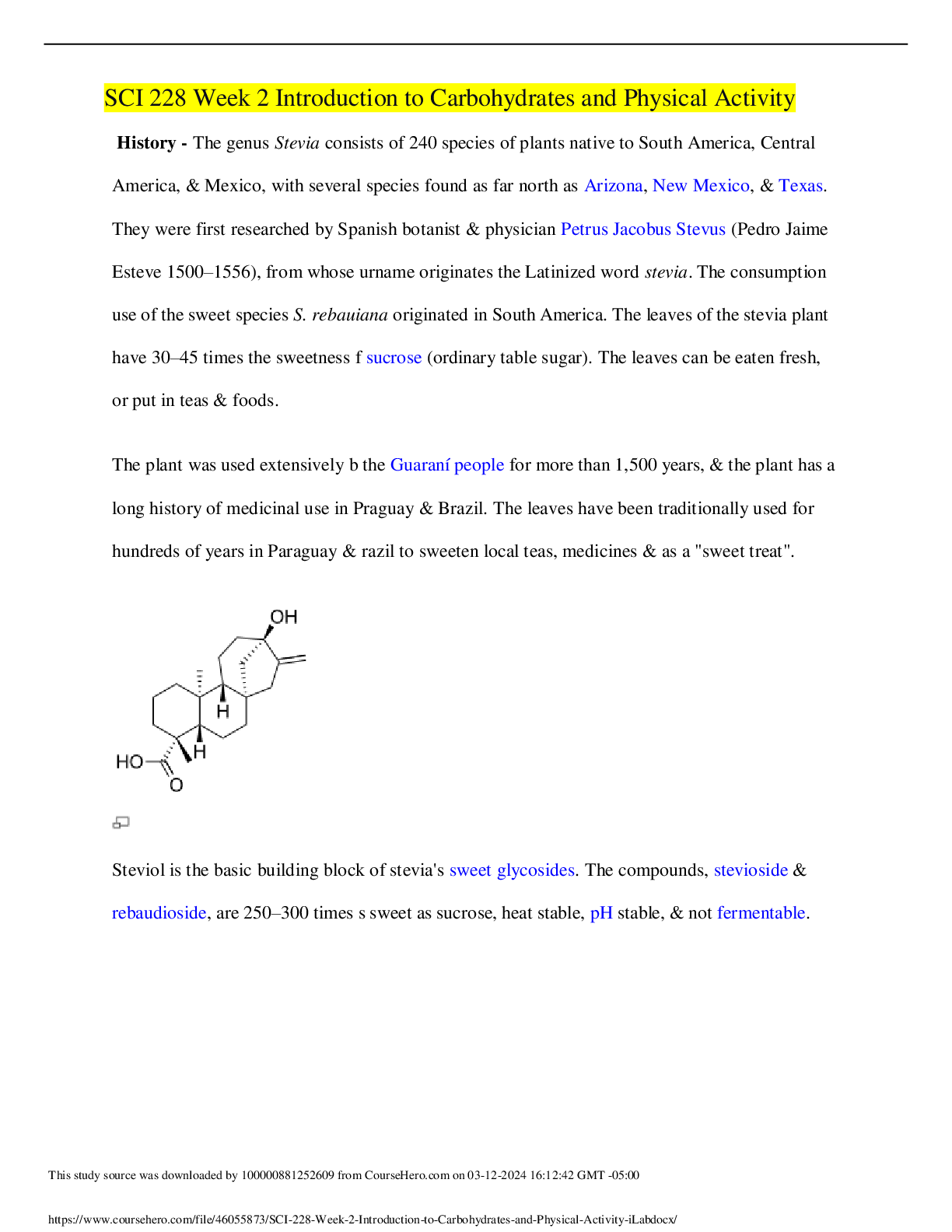
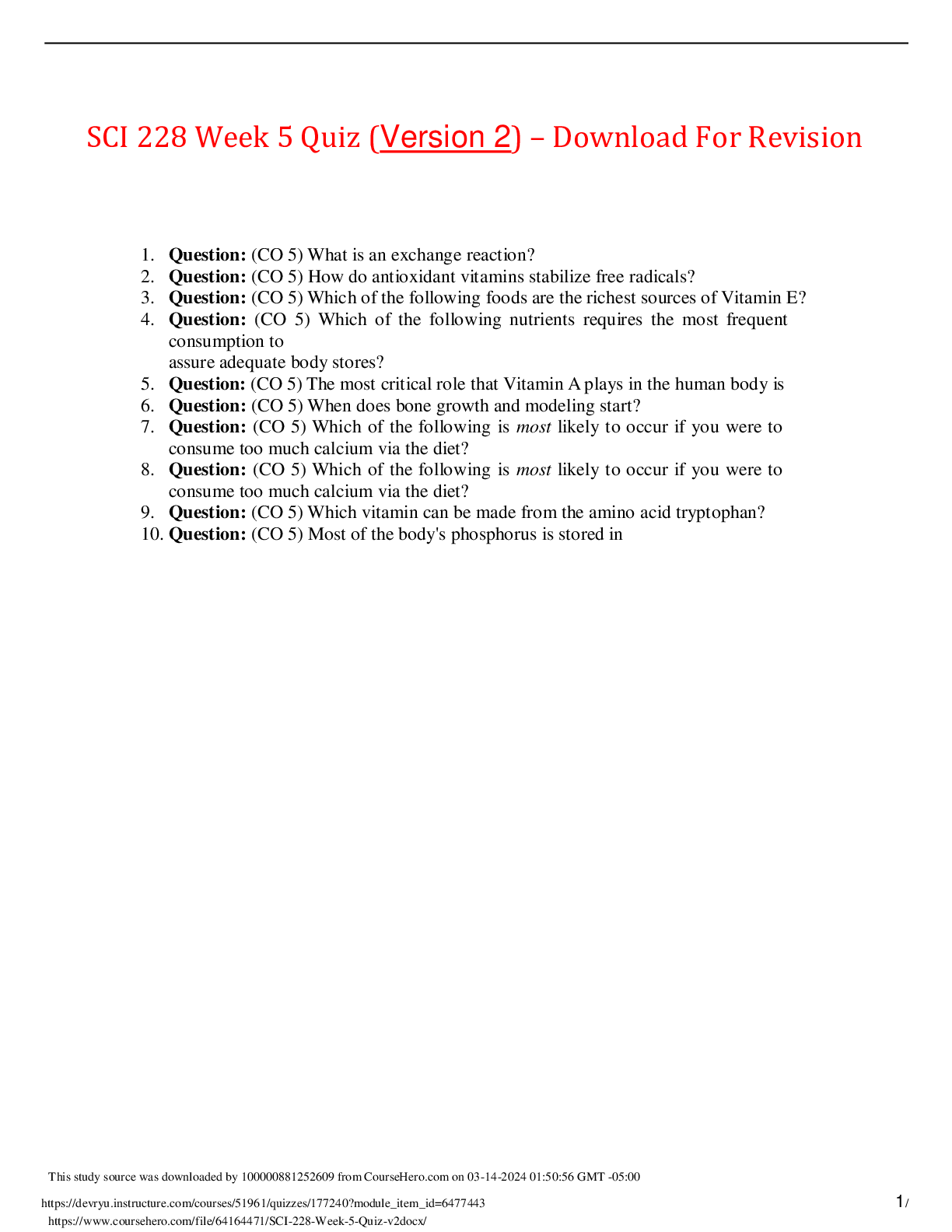
SCI 228 Week 2 Introduction to Carbohydrates and Physical Activity History - The genus Stevia consists of 240 species of plants native to South America, Central America, & Mexico, with several speci ... es found as far north as Arizona, New Mexico, & Texas. They were first researched by Spanish botanist & physician Petrus Jacobus Stevus (Pedro Jaime Esteve 1500–1556), from whose urname originates the Latinized word stevia. The consumption use of the sweet species S. rebauiana originated in South America. The leaves of the stevia plant have 30–45 times the sweetness f sucrose (ordinary table sugar). The leaves can be eaten fresh, or put in teas & foods. The plant was used extensively b the Guaraní people for more than 1,500 years, & the plant has a long history of medicinal use in Praguay & Brazil. The leaves have been traditionally used for hundreds of years in Paraguay & razil to sweeten local teas, medicines & as a "sweet treat". Steviol is the basic building block of stevia's sweet glycosides. The compounds, stevioside & rebaudioside, are 250–300 times s sweet as sucrose, heat stable, pH stable, & not fermentable. Safety - December 2008 the U.S. Food & Drug Administration approved stevia as a general urpose sweetener. Because of its all-natural ingredients, stevia's benefits far outweigh its risks hen it is used as recommended. Stevia has been shown to decrease blood pressure in patients with hypertension. Obesity - According to several studies it was found that the ‘Stevia is an exceptional aid for weight loss because it contains no calories & reduces cravings for food & sweets, chocolates, ats, etc. This effect reduces calories (glucose). SCI 228 Week 3 Quiz 1. (TCO 3) The process of adding hydrogen to an unsaturated fatty acid & creating a more solid fat is called: 2. (TCO3) Which of the following describes lipids? 3. (TCO 6) To facilitate the digestion of dietary fats, the gallbladder stores & releases a substance known s: 4. (TCO 6) Which one of the following foods contains invisible fats? 5. (TCO 6) What element makes protein different from carbohydrates & fat? . (TCO 5) Which of the following statements is FALSE? 7. (TCO 5) Which of the following is NOT typically a nutrient of concern for vegans? 8. (TCO 5) The part of the protein molecule that carries nitrogen is the: 9. (TCO 5) The type of protein-energy malnutrition characterized by a general lack of protein, energy, & utrients in the diet is called: 10. (TCO 5) Which of the following is a genetic disorder resulting in debilitating protein abnormalities? [Show More]

Last updated: 1 year ago

Preview 1 out of 2 pages

Buy Now

Instant download

We Accept:

Payment methods accepted on Scholarfriends (We Accept)
Preview image of SCI 228 Week 2 Introduction to Carbohydrates and Physical Activity document

Buy this document to get the full access instantly

Instant Download Access after purchase

Buy Now

Instant download

We Accept:

Payment methods accepted on Scholarfriends (We Accept)

Reviews( 0 )

$10.00

Buy Now

We Accept:

Payment methods accepted on Scholarfriends (We Accept)

Instant download

Can't find what you want? Try our AI powered Search

54
0

Document information


Connected school, study & course


About the document


Uploaded On

Mar 13, 2024

Number of pages

2

Written in

All

Seller


Profile illustration for Doc.Mukai Edyth
Doc.Mukai Edyth

Member since 2 years

0 Documents Sold

Additional information

This document has been written for:

Uploaded

Mar 13, 2024

Downloads

 0

Views

 54

More From Doc.Mukai Edyth

View all Doc.Mukai Edyth's documents »

Recommended For You

Get more on DISCUSSION POST »
$10.00
What is Scholarfriends

Scholarfriends.com Online Platform by Browsegrades Inc. 651N South Broad St, Middletown DE. United States.

We are here to help

We're available through e-mail, Twitter, Facebook, and live chat.
 FAQ
 Questions? Leave a message!

Follow us on
 Twitter

Copyright © Scholarfriends · High quality services·