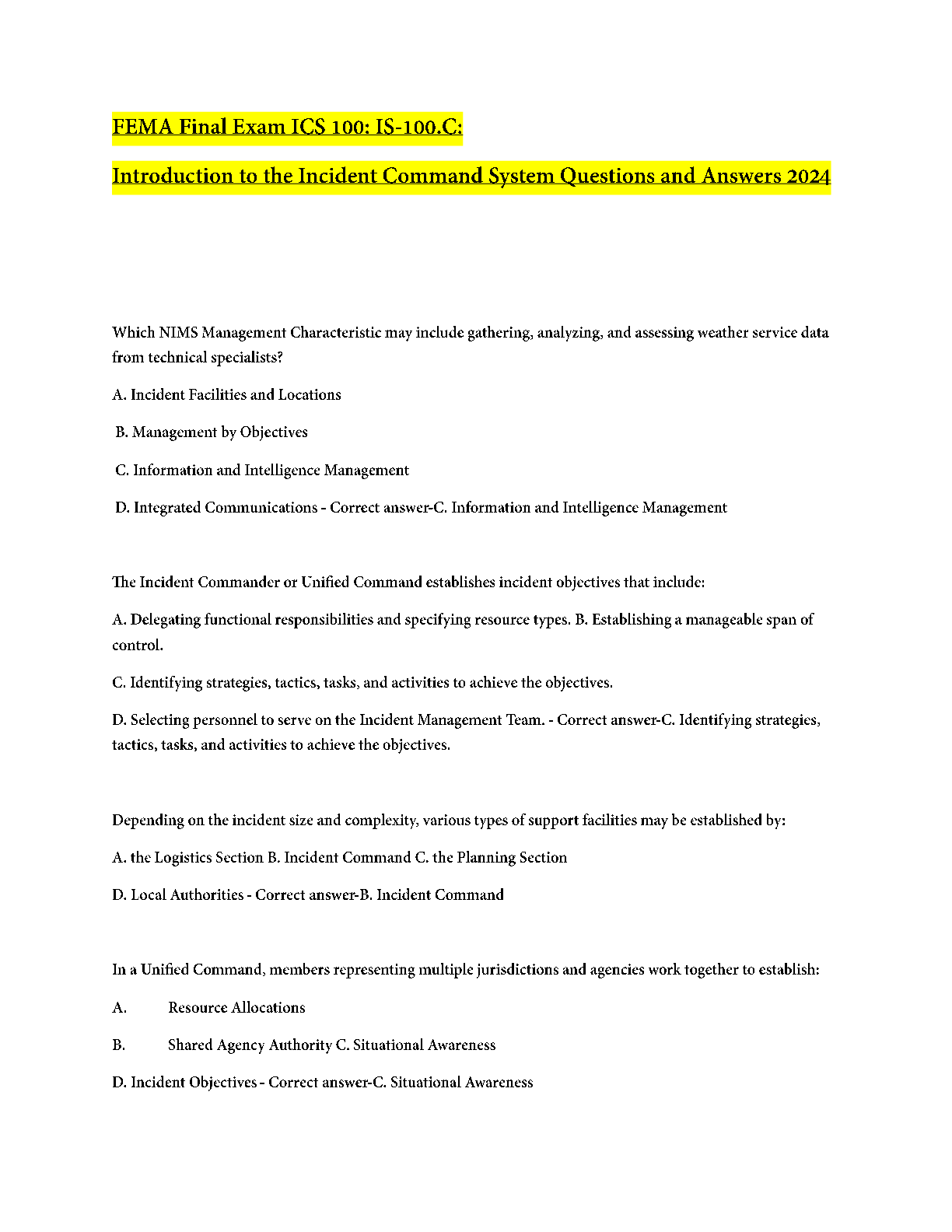
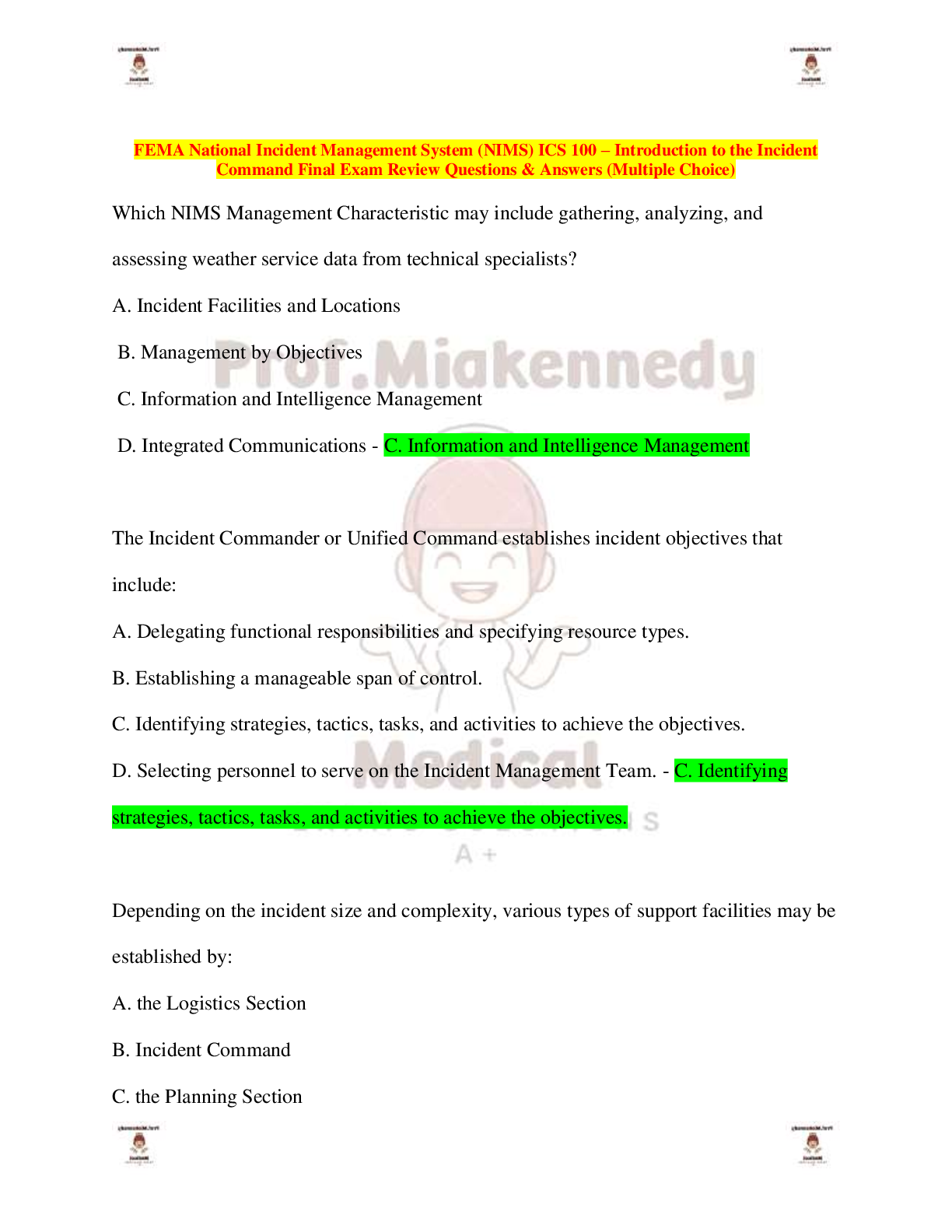
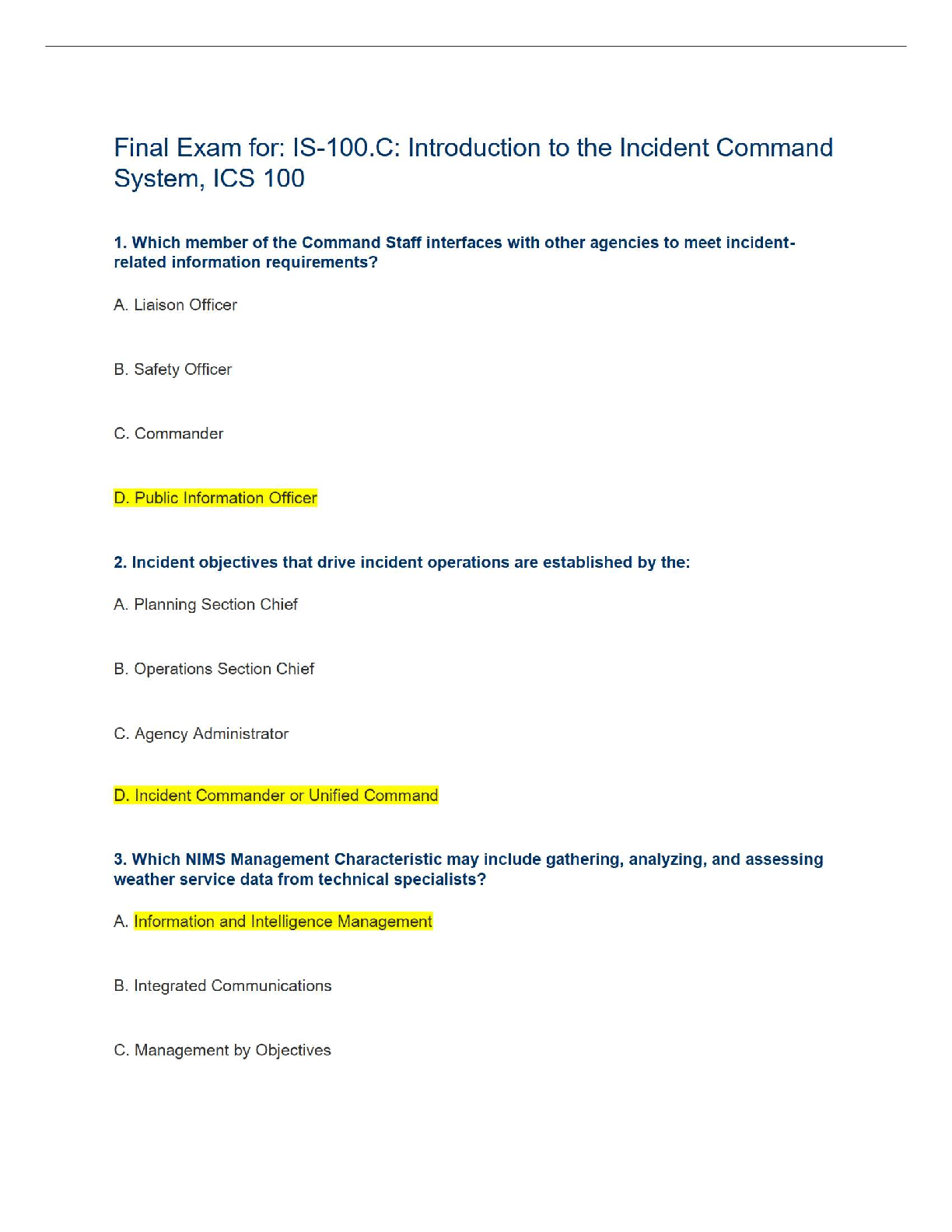
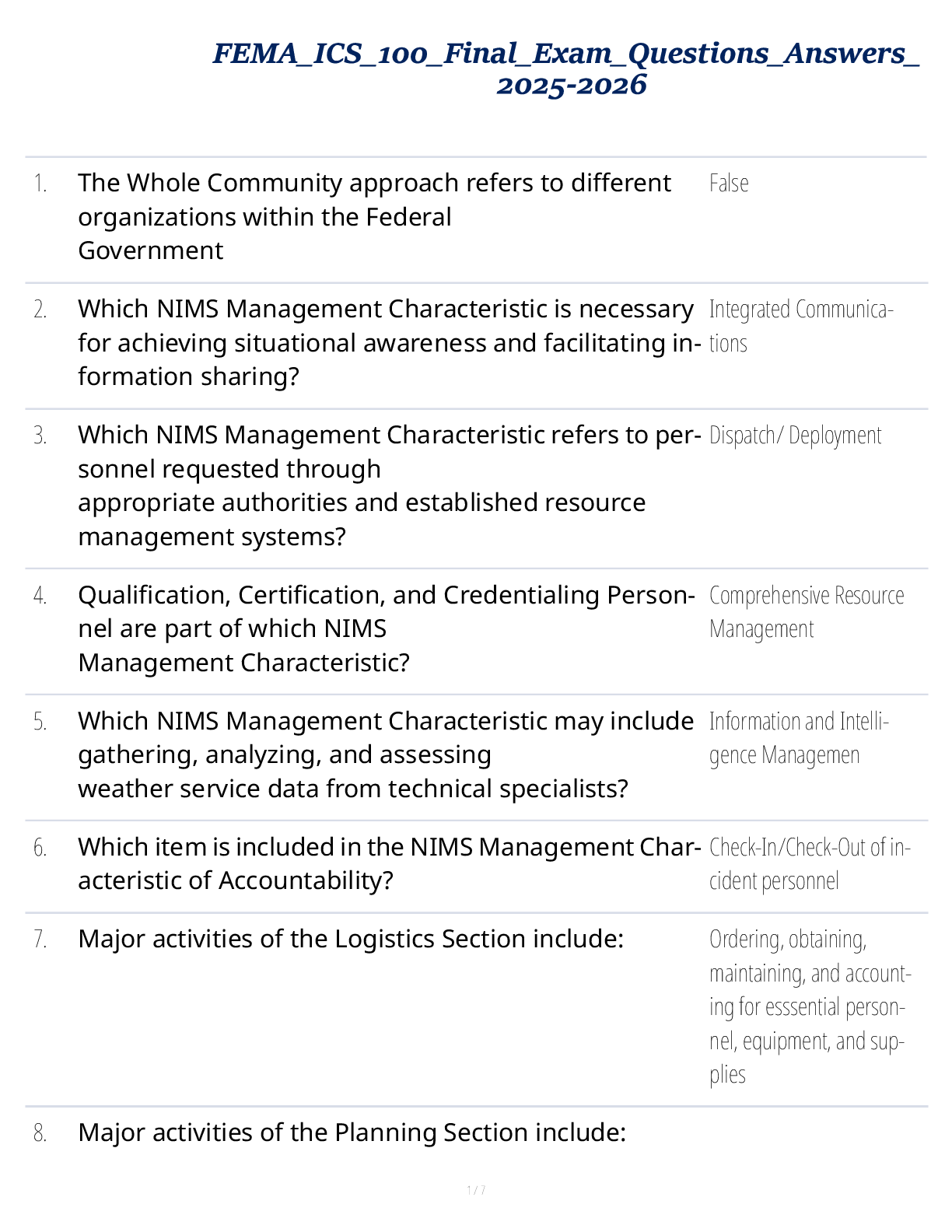
The FEMA IS-100.C Final Exam is an open-book, 25-question test that introduces the Incident Command System (ICS) and its core management principles. To pass and receive your certificate, you must achieve a score of 75% o
...
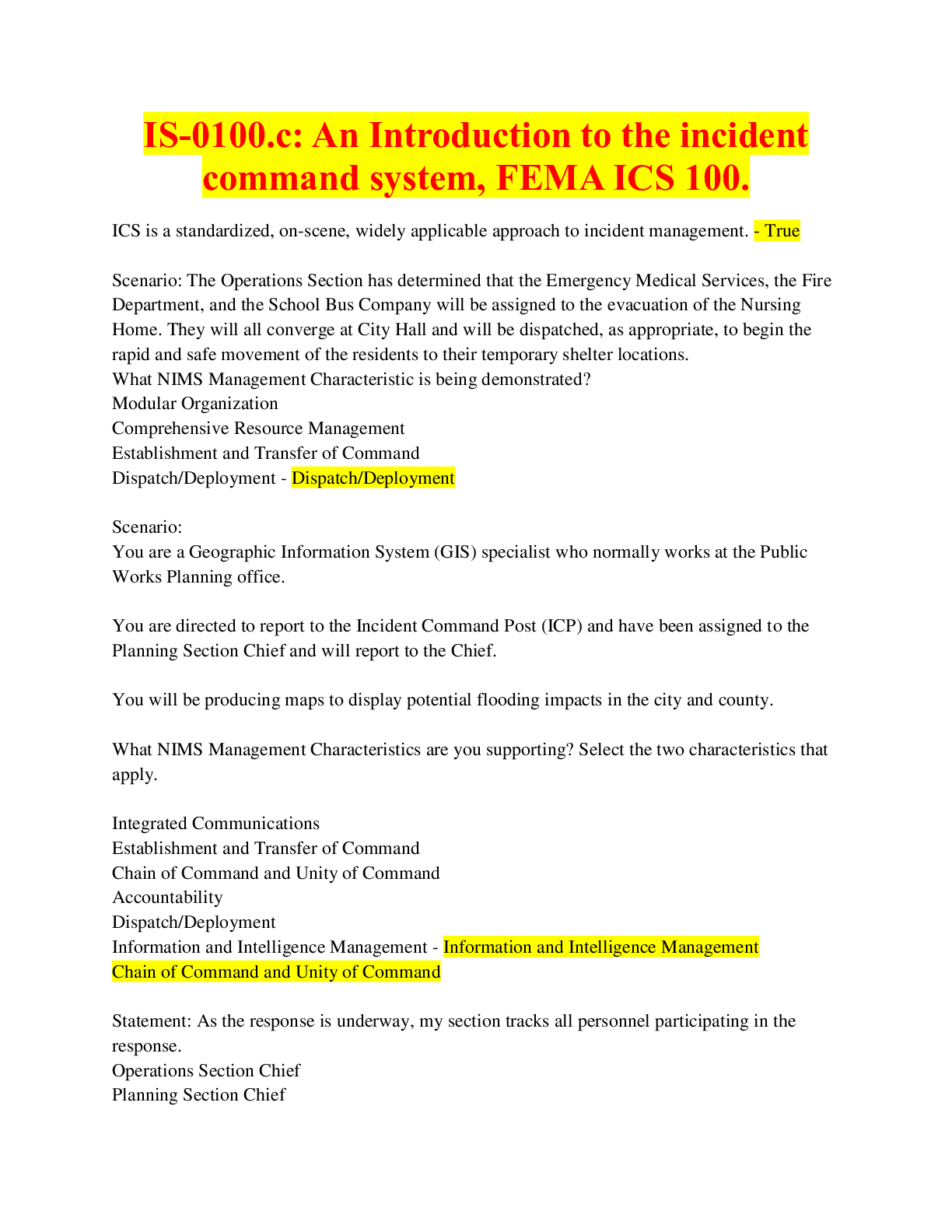
The FEMA IS-100.C Final Exam is an open-book, 25-question test that introduces the Incident Command System (ICS) and its core management principles. To pass and receive your certificate, you must achieve a score of 75% or higher (at least 19 correct answers). [1, 2, 3]
Core ICS Concepts & Common Exam Topics
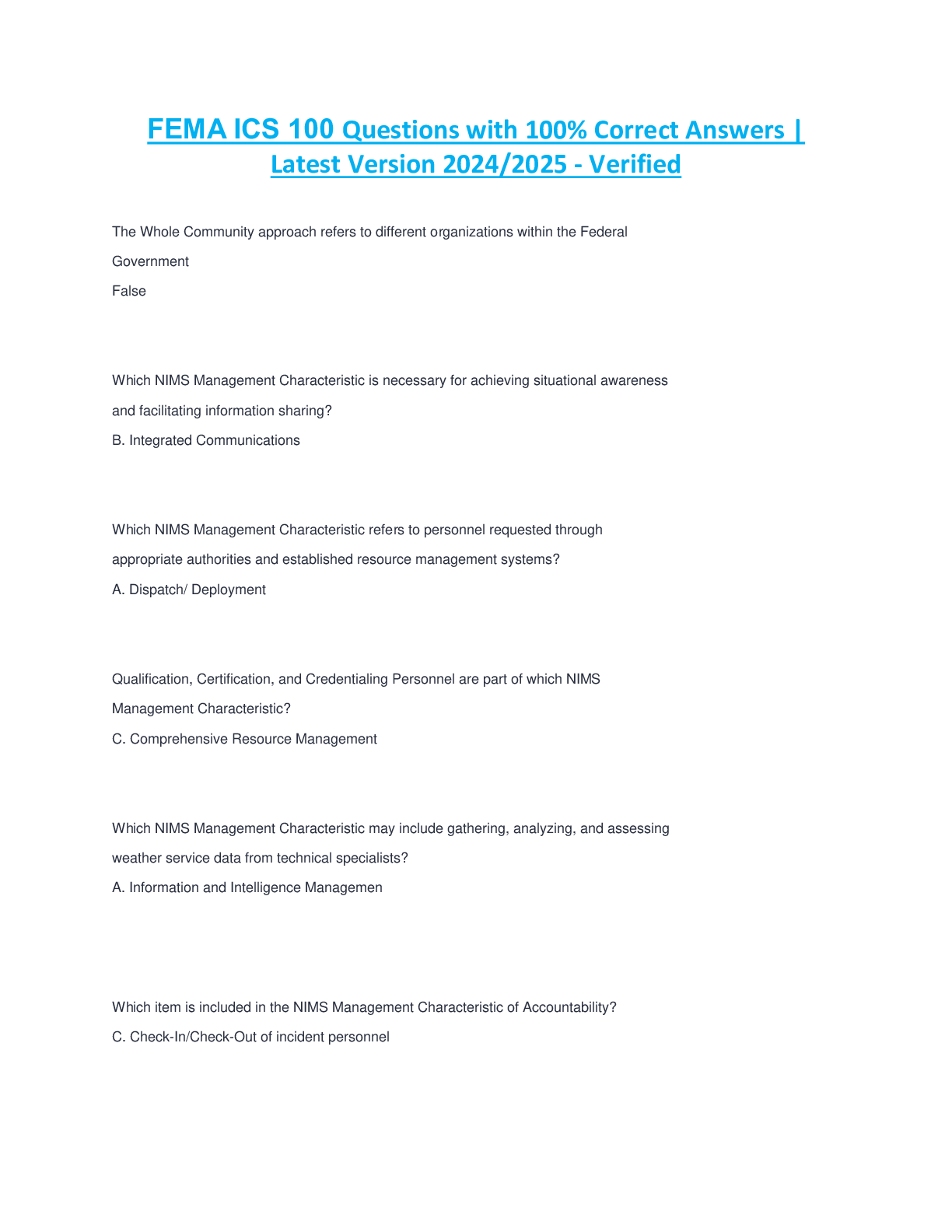
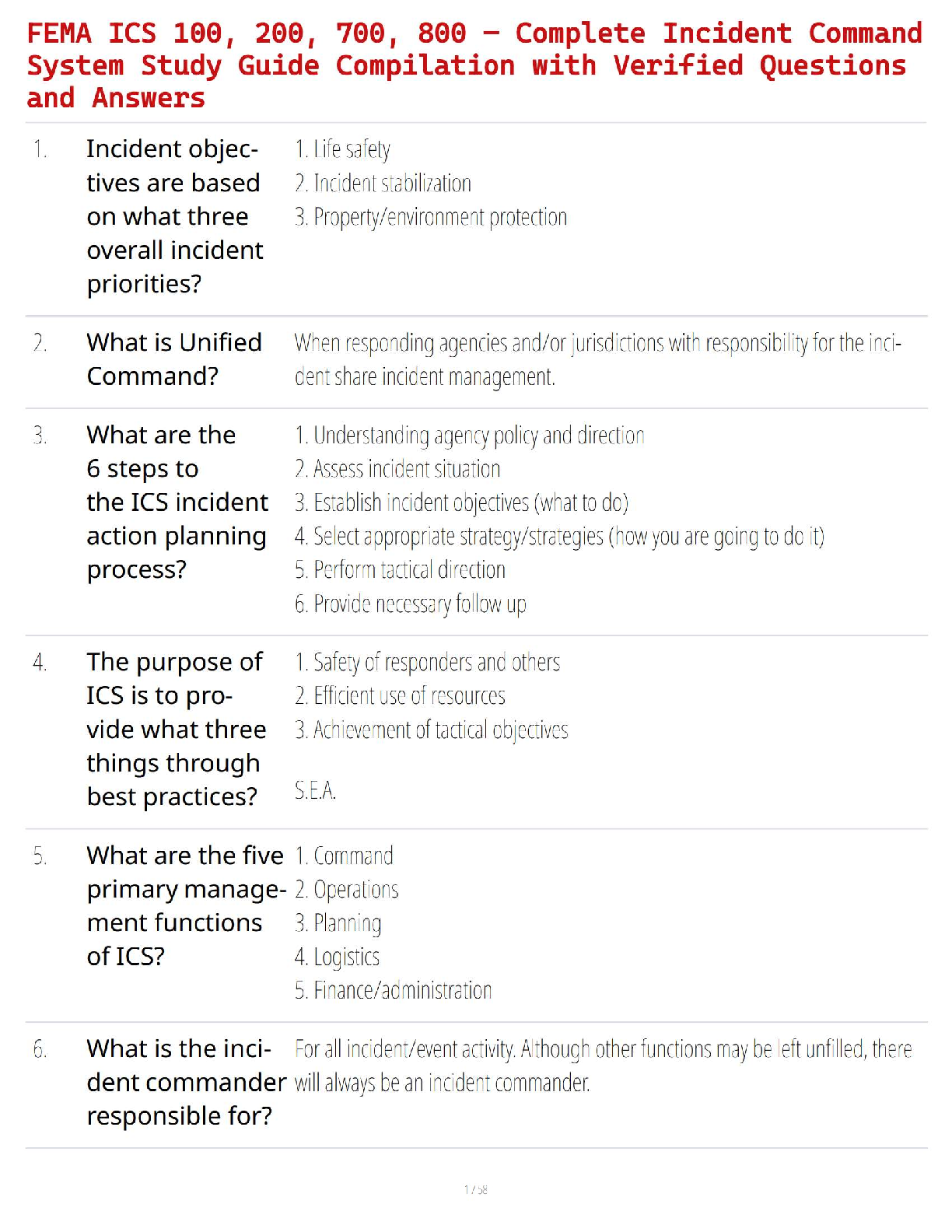
The exam focuses on the 14 NIMS Management Characteristics and the functional structure of the ICS: [1, 2, 3, 4]
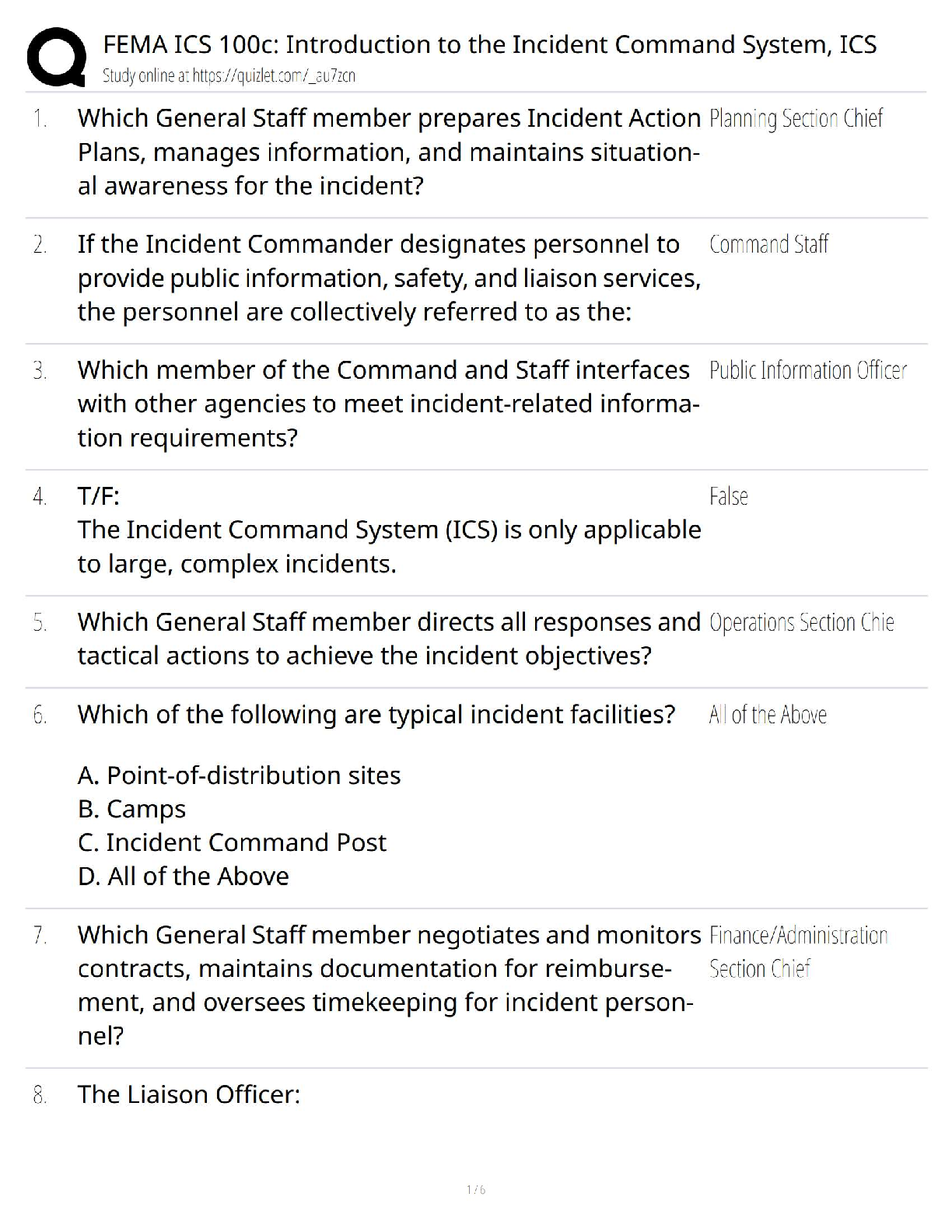
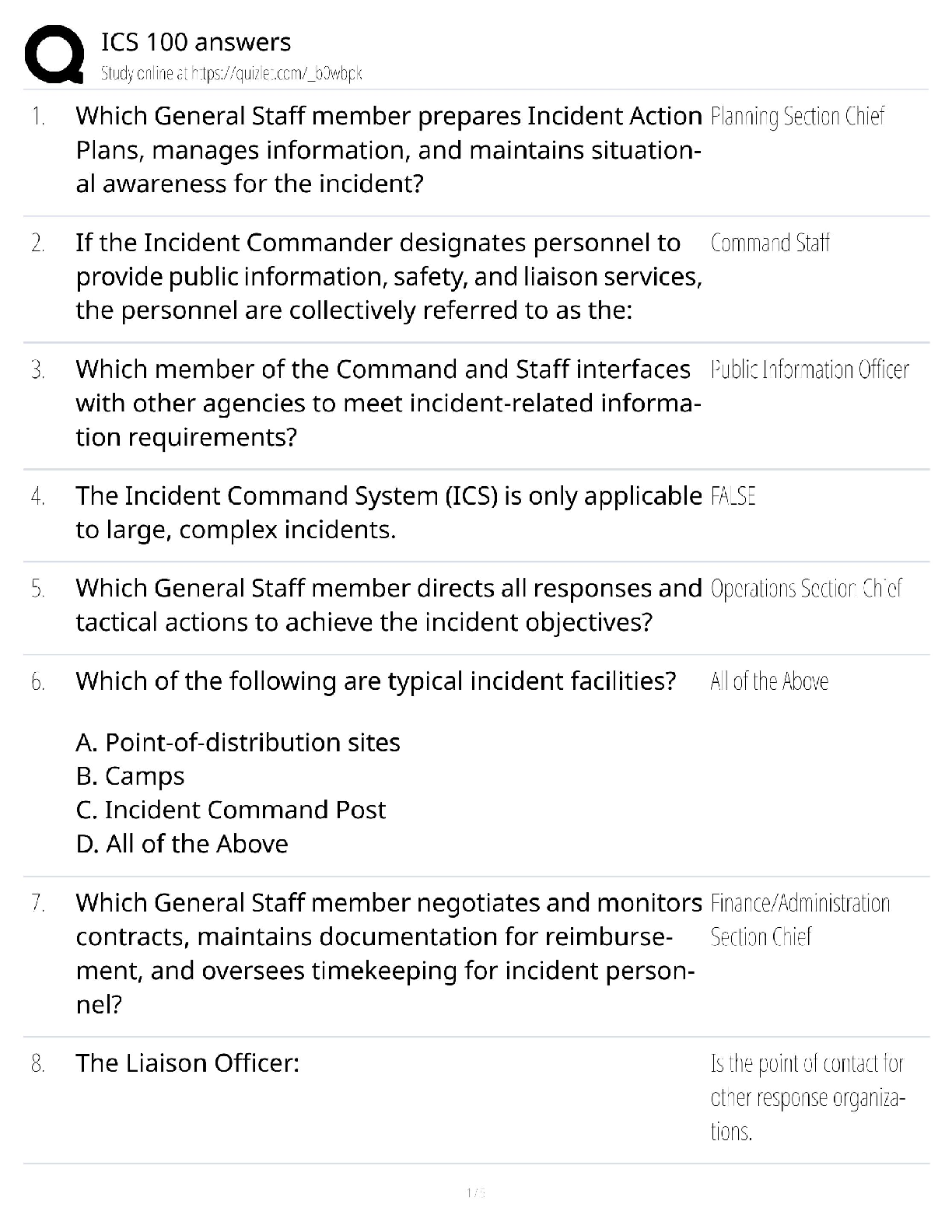
- Command Staff: Includes the Public Information Officer (PIO) (media/public liaison), Safety Officer, and Liaison Officer (point of contact for other agencies).
- General Staff Sections:
- Operations: Directs tactical actions to achieve objectives.
- Planning: Maintains situational awareness, prepares the Incident Action Plan (IAP), and manages documentation.
- Logistics: Provides resources, food, communications, and medical support for personnel.
- Finance/Administration: Monitors costs, procurement, and time recording.
- Manageable Span of Control: Refers to the number of subordinates a supervisor can manage effectively (ideally 1:5).
- Chain of Command & Unity of Command: Ensures every person reports to only one supervisor.
- Transfer of Command: Requires a briefing to ensure the new Incident Commander is fully informed.
- Establishment of Objectives: Incident Commanders or Unified Command identify strategies, tasks, and activities to meet incident goals. [1, 2, 3, 4, 5, 6]
Taking the Exam
- Obtain a FEMA SID: You must have a FEMA Student Identification (SID) number to take the exam. If you don't have one, register at the FEMA SID Management System.
- Access the Course: Visit the FEMA Emergency Management Institute (EMI) to review course materials or start the final exam.
- Use Study Materials: Since it is open-book, you can refer to the IS-100.C Student Manual or provided course summaries during the test. [1, 2, 4, 5]
14 sites
- IS-100.C: Introduction to the Incident Command System, ICS
25 Jun 2018 — Course Overview. ICS 100, Introduction to the Incident Command System, introduces the Incident Command System (ICS) and provides t...
FEMA National Disaster & Emergency Management University (.gov)
- Introduction to the Incident Command System, ICS 100 - TN.gov
Exam Details The Emergency Management Institute's (EMI) Curriculum Standards and Instructional Technology Branch offer the Indepen...
TN.gov
- An Introduction to the Incident Command System, ICS 100
• United States Fire Administration's National Fire Programs Branch The learner must achieve a minimum passing score of 75% on fin...
FEMA.gov
Show all
You can access all official materials for IS-100.C: Introduction to the Incident Command System directly through the FEMA Emergency Management Institute (EMI). [1]
Key Course Materials
The most helpful resources for studying or taking the open-book exam include:
- Complete Course Package: You can download a compressed ZIP file containing all course content for offline study.
- Student Manual: This 200+ page PDF serves as the primary textbook, detailing all seven units of the course, from ICS features to General Staff functions.
- Course Summary: For a quicker review, FEMA provides a summary document (often around 10-15 pages) that highlights essential NIMS management characteristics and organizational roles.
- Interactive Web Course: If you prefer a digital experience, the Interactive Web Based Course includes knowledge checks and visual aids to reinforce concepts. [1, 3, 4, 5, 6, 7, 8]
Additional Resources
- ICS Forms & Job Aids: The ICS Resource Center offers specific documents like the ICS 205 (Communications Plan) and various position-specific task books.
- Spanish Version: The complete course is also available in Spanish as a downloadable ZIP file. [1, 2, 3]
Note: You must have your FEMA Student Identification (SID) ready to submit the final exam after reviewing these materials. [1]
Would you like a breakdown of the seven core units covered in these manuals to help organize your study?
[Show More]