Liberty University CSTU 100 Quiz 6
Results Displayed
Submitted Answers, Feedback
· Question 1
3 out of 3 points
Which century was marked by famine and plague in western Europe?
14th
·
...
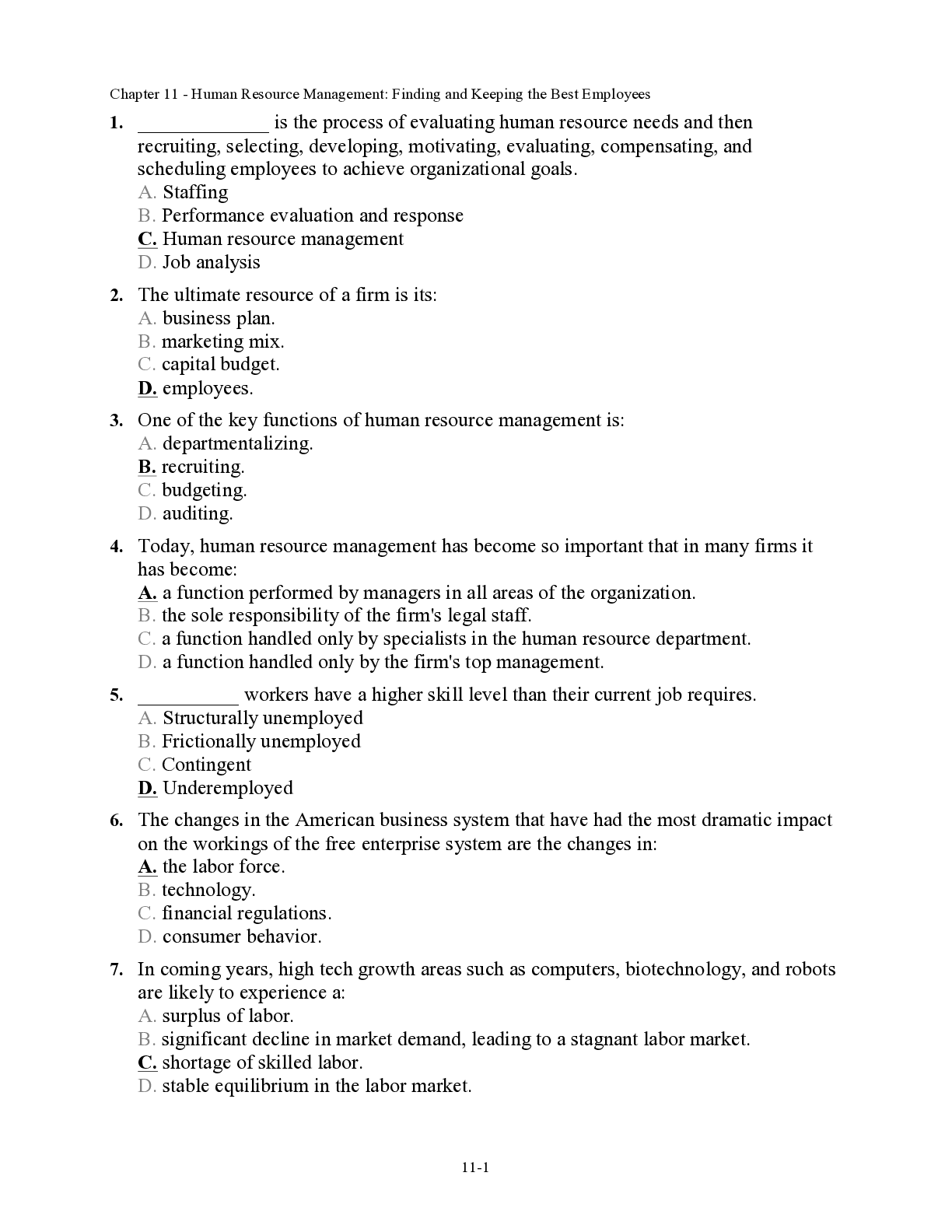
Liberty University CSTU 100 Quiz 6
Results Displayed
Submitted Answers, Feedback
· Question 1
3 out of 3 points
Which century was marked by famine and plague in western Europe?
14th
· Question 2
0 out of 3 points
What century was the Washington National Cathedral built in?
19th
· Question 3
3 out of 3 points
Which of the following was not an outgrowth of the Crusades?
The emergence of European aristocracy
· Question 4
3 out of 3 points
Who was not a Renaissance Author?
Cicero
· Question 5
3 out of 3 points
In philosophy, the synthesis of the High Ages was made by_________ in the 13th century, who merged Christian and Aristotelian thought.
Thomas Aquinas
· Question 6
3 out of 3 points
Coexisting with feudalism on the lowest level of land division was the ___________system.
Manorialism
· Question 7
3 out of 3 points
Consisted a hero of the Renaissance, who wrote Utopia. Lived from 1478-1535.
More
· Question 8
3 out of 3 points
During the 1200’s Popes would employ a military force to combat heresy and use this judicial process to eradicate heresy within the Western culture.
Inquisition
· Question 9
3 out of 3 points
Who gave the Renaissance its first candid picture of human nature with the idealism of medievalism and humanism stripped away.
Machiavelli
· Question 10
3 out of 3 points
This poem is about a warrior from southern Sweden who sails to his uncle’s court in Denmark where he slays the monster, Grendel.
Beowulf
· Question 11
3 out of 3 points
By establishing order and stability in his lands, Charlemagne prepared the basis for a ninth-century flowering of cultural activity often termed the____________.
Carolingian Renaissance
· Question 12
3 out of 3 points
Which word best describes the culture that gave rise to Romanesque architecture?
Synthesis
· Question 13
3 out of 3 points
Who wrote the Canterbury Tales in the 14th century?
Chaucer
· Question 14
3 out of 3 points
Who wished to give the church a new choir and ambulatory, one that would be full of light—symbolic of the presence of God, through Gothic architecture?
Abbot Suger
· Question 15
3 out of 3 points
During this time period there was literature for town dwellers as well as country folks. This type of literature was satirical poems depicting ordinary people in events of everyday life with vigorous and coarse humor while ridiculing conventional morality.
Fabliaux
· Question 16
3 out of 3 points
Who wrote Don Quizote?
Cervantes
· Question 17
3 out of 3 points
Created the statue David and the painted Sistine Chapel?
Michelangelo
· Question 18
3 out of 3 points
A period of Cultural Rebirth in Europe.
Renaissance
· Question 19
3 out of 3 points
Which of these did not contribute to the successes Pepin and Charlemagne?
England’s assistance
· Question 20
3 out of 3 points
Perhaps the best example of the early Gothic style of architecture is found in which city?
Paris
· Question 21
2 out of 2 points
The Black Death that struck Europe killed over 90 % of the population.
False
· Question 22
2 out of 2 points
The heliocentric model of the universe was developed by Bacon.
False
· Question 23
2 out of 2 points
Charlemagne’s brutal reign destroyed much learning and education in Europe.
False
· Question 24
2 out of 2 points
The so-called Children’s Crusade was the only crusade that was “successful” in any meaningful sense.
False
· Question 25
0 out of 2 points
Renaissance intellectuals considered themselves to be both humanists and Christians.
False
· Question 26
0 out of 2 points
The Renaissance could also be known as the age of exploration.
False
· Question 27
2 out of 2 points
Despite the authority of the medieval Catholic church, there was a tremendous amount of diversity within medieval literature.
True
· Question 28
2 out of 2 points
The Carolingians were a great empire but produced very little notable religious or cultural achievements.
False
· Question 29
2 out of 2 points
The Arabic Muslims had destroyed all of the Greek writings of antiquity making it difficult for the Crusaders to find.
False
· Question 30
2 out of 2 points
The history of the Crusades illustrates the principle known as the “law of unintended consequences.”
True
Thursday, September 27, 2018 1:13:04 PM EDT
OK
[Show More]









 midterm help.png)