week one nr508 advanced pharmacology[latest 2020/2021 version]
Document Content and Description Below
WEEK ONE DIS ONE NR508 ADVANCED PHARMACOLOGY 2
week one dis one nr508 advanced pharmacology
Emily, a relatively healthy 5’5”, 32-year-old young woman weighing 190 pounds, presents to
your clinic with hirsutism, anovul
...
[Show More]
Last updated: 3 years ago
Preview 1 out of 8 pages
Instant download
![Preview of week one nr508 advanced pharmacology[latest 2020/2021 version]](https://scholarfriends.com/storage/docx(6).png)
Buy this Document to get the Full Access Instantly
Provided by Students Who Aced it
We Verify Document Content to Gurantee Accuracy
Reviews( 0 )
Document information
Connected school, study & course
About the document
Uploaded On
Jun 21, 2021
Number of pages
8
Written in
All

Additional information
This document has been written for:
Uploaded
Jun 21, 2021
Downloads
0
Views
173
Topic Tags
Recommended For You
Get more on ESSAY »
$25
882 Pages
Lewis Medical Surgical Nursing 11th Edition Test Bank (LATEST...
$25
882 Pages
Lewis Medical Surgical Nursing 11th Edition Test Bank (LATEST...

$20
257 Pages
HESI A2 REVIEW TEST BANK, HESI A2 Anatomy and Physiology, HESI...


$12.5
9 Pages
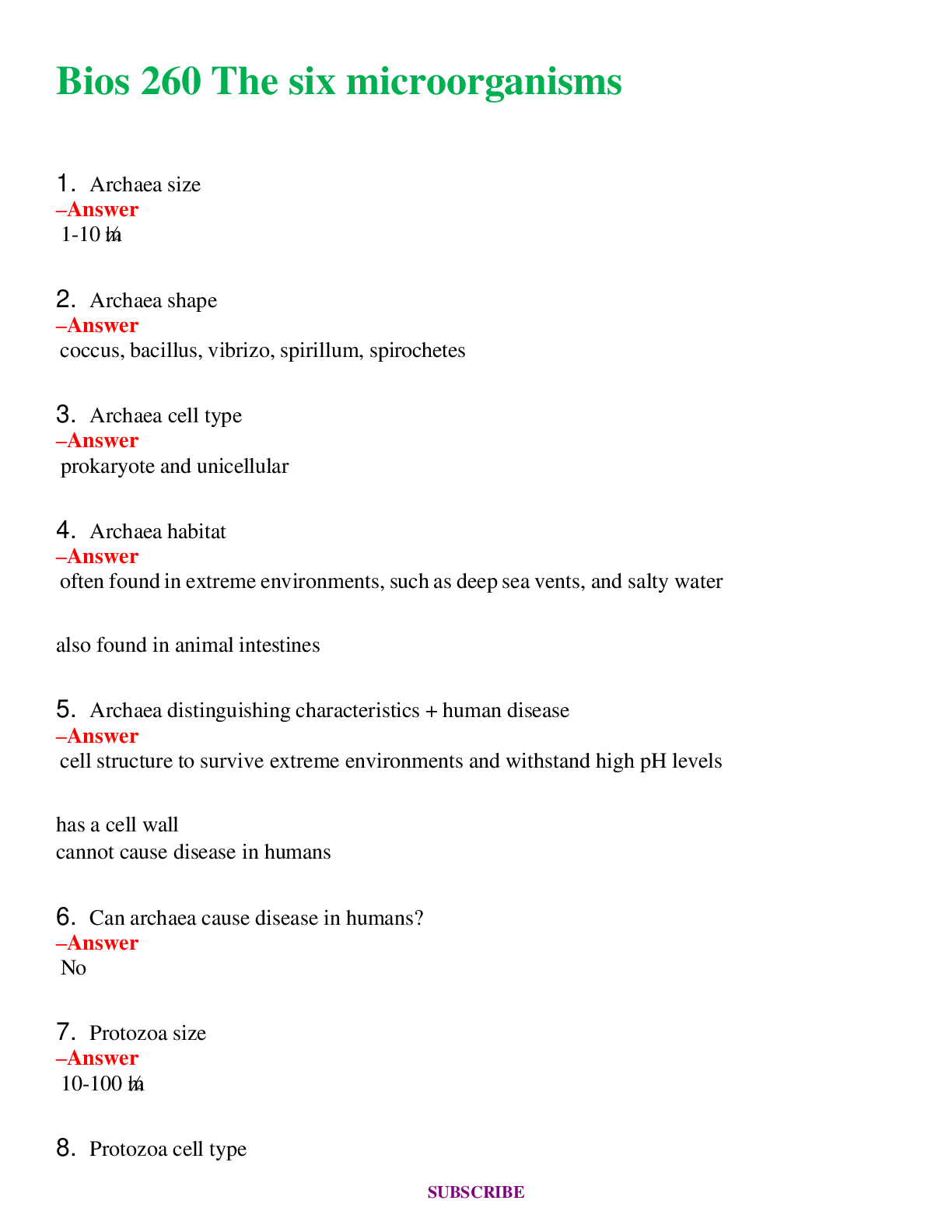
BIOS 260 The six microorganisms Questions and Answers (Verif...
$12.5
12 Pages
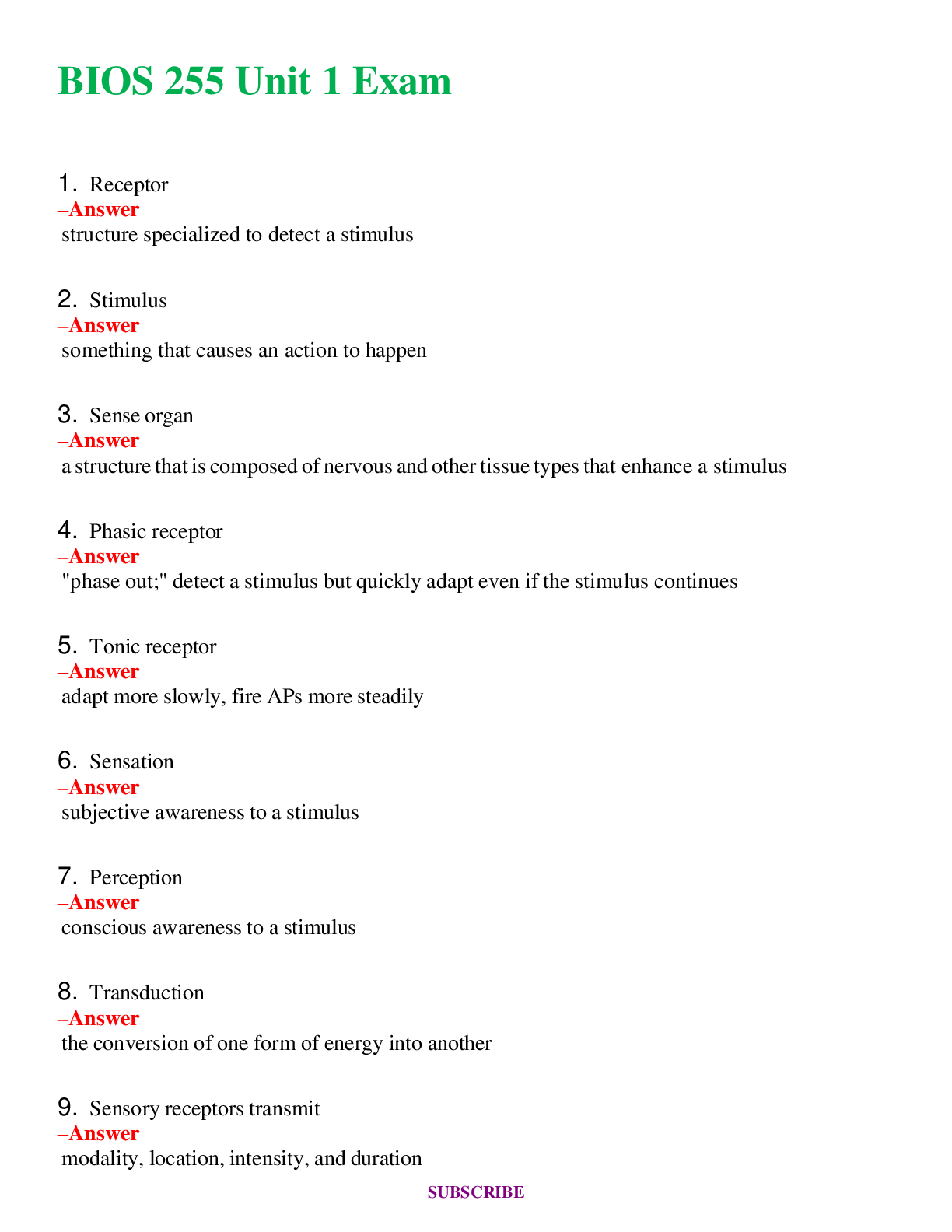
BIOS 255 Unit 1 Exam Questions and Answers (Verified Answer...
$12.5
8 Pages
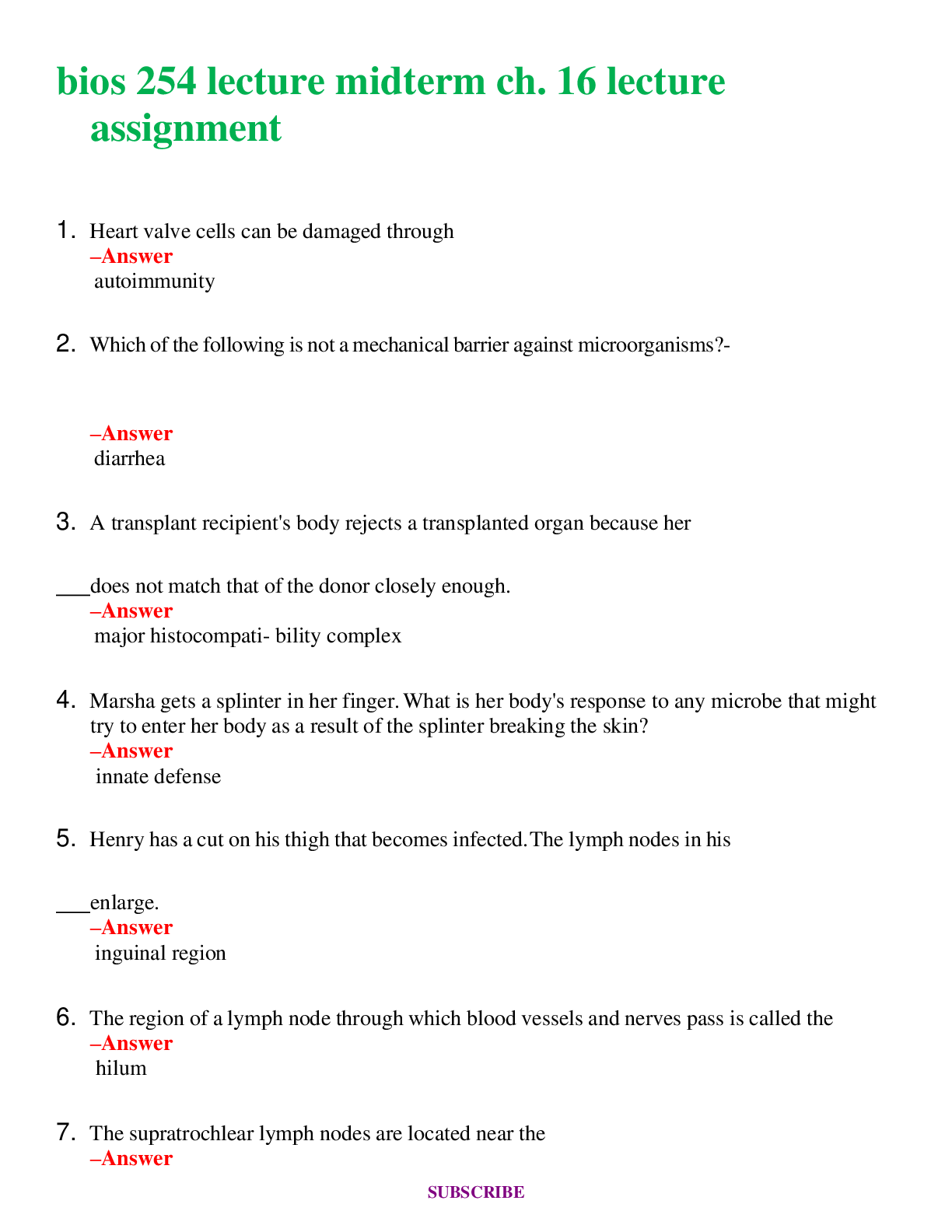
BIOS 254 Lecture Midterm Ch. 16 Lecture Assignment Question...
$19
635 Pages
Test Bank For Community Public Health Nursing Promoting the He...

$100.5
996 Pages



.png)
![Preview of NR 501,APPLICATION OF THEORY Paper II[Chamberlain College of Nursing]](https://scholarfriends.com/storage/APPLICATION_OF_THEORY_Paper__II (1).png)
.png)
![Preview of Applying Nursing Theory to Guide Leadership [complete solution guide rated A]](https://scholarfriends.com/storage/Applying_Nursing_Theory_to_Guide_Leadership_NR501_W6 (1).png)
.png)

