Unit 1: Food Preparation Skills
Food Borne Illnesses
1. Bacterial Infection
o Food poisoning can occur when the food eaten is contaminated with living
pathogenic bacteria
Must eat the bacteria to become ill
Foo
...
Unit 1: Food Preparation Skills
Food Borne Illnesses
1. Bacterial Infection
o Food poisoning can occur when the food eaten is contaminated with living
pathogenic bacteria
Must eat the bacteria to become ill
Food can have a large or a small amount of the bacteria to cause the
illness
The amount and type of bacteria will determine the time for
symptoms to appear
o Bacteria will multiply in the digestive tract and most often cause diarrhea,
stomach cramps and fever
Will pass through your stomach and down to your lower intestine
Bacteria will embed themselves in the wall of the intestine and begin
to multiply
When enough bacteria can cause diarrhea
Examples:
1. Salmonella
o Source is the intestinal tract and feces of humans and animals in beef and
poultry
o Foods are roast beefs, meat pies, sausage, ham, poultry, poultry products,
milk and eggs
o Symptoms can occur 6-72 hours after eating, usually 12-36 hours and will
experience diarrhea, stomach cramps and vomiting
2. E.Coli 0157:H7
o Most harmful strain of E. coli bacteria
o Affect major complications such as kidney failure and even death
o Source is the intestinal tract and feces of human and animals in particular
cattle
o Foods are raw meats such as ground beef, poultry, pork, unpasteurized milk,
contaminated water
o Symptoms can occur 3-10 days after, usually 3-4 days and will have bloody or
watery diarrhea
o Prevention is by cooking food thoroughly
2. Bacterial Intoxication
o Food poisoning intoxication can occur when the food eaten is contaminated
with toxins or toxin producing bacteria
Bacteria multiply in the food and the multiplication is toxin
Toxin producing bacteria can multiply in the food or in the body – not all
toxins killed by cooking
o Vomiting is the most common symptom of intoxications
Body realizes it is toxin and vomits it out
Examples:
1. Staphylococcus aureus
o Found in the nose, throat, hair, skin and feces of human and animals
o Food is ham, beef, pork, poultry, potato salad, custard, cream sauces and
puddings
o Symptoms can occur 30 minutes to 8 hours after eating, usually 2-4 hours
and causes vomiting, stomach cramps, and diarrhea
2. Bacillus Ceres
o Source is found anywhere in the environment, especially soil
o Soups, custards, meat and poultry causes diarrhea with 3-5 hours
o Symptoms are usually mild with nausea and cramps
3. Parasites
o An organism that causes illness by living and feeding off a host organism
A parasite needs a host that it can feed off
Some are very painful and can go directly into your muscle and form a
spiral
Examples: Trichinella, Giardia Iamblia, and Entamoba Histolytic
4. Viruses
o Micro-organism that multiply inside living cells and cause illness
A virus behaves like a parasite as it needs a host to survive and feed off
It will go directly into another cell and use it reproductive system as its
own
Antibodies do not work against viruses but some vaccines will help
prevent viruses
Examples: Hepatitis A, Norwalk Virus, Rotavirus, Influenza
Food Handling
1. Temperature Control
o Most food poisonings are caused by temperature abuse during the storage of
hazardous foods
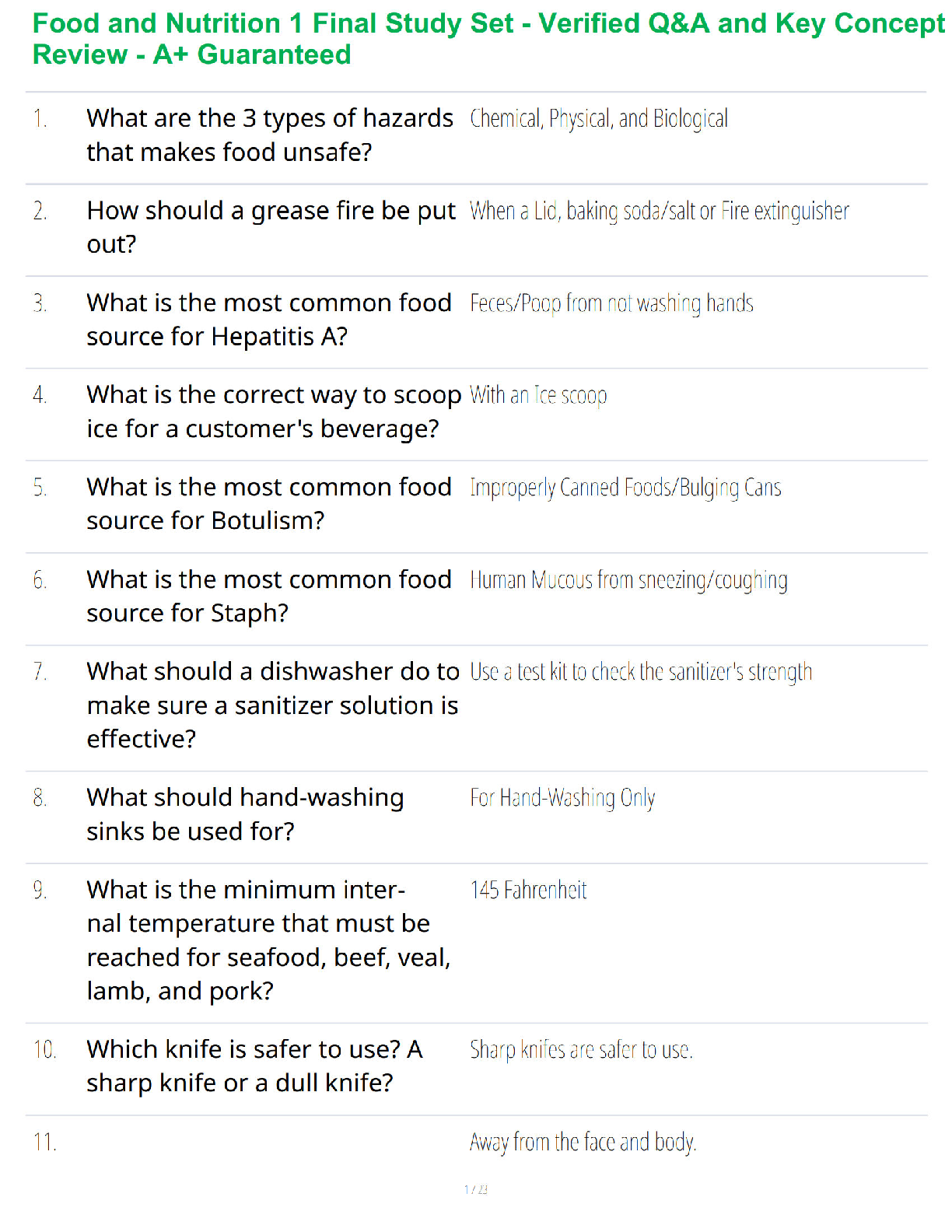
o The danger zone is the temperature range between 4 C and 60 C
o Keep hot food hot (60 C or above)
o Keep cold food cold (4 C or below)
2. Cook Food Thoroughly
o Make sure all hazardous food is cooked to an internal temperature of at least
74 C
o Cook hamburger or any ground meat all the way through making sure the
juices run clear and the meat is brown or grey
o Make sure poultry is fully cooked
3. Defrost Food Safely
o Keep frozen food below -18 C
o Food can safely defrost in the refrigerator, under running cold water or in the
microwave
4. No Cross-Contamination
o Happens in three ways:
1. Raw food or its juices comes in contact with cooked food
2. Contaminated hands touching hands
3. Using the same equipment to handle raw and cooked food
o Making sure cutting boards, knives and equipment are cleaned and sanitized
after they come in contact with hazardous food
o Store cooked or ready to eat food above raw food in the fridge
Food Packaging Techniques
o Packaging is an essential medium for preserving food quality, minimising
food wastage and reducing preservatives used in food
o Packaging is a system for preserving the safety and quality of food products
throughout the whole distribution chain to consumer by:
Maximising shelf life
Carrying important information on the label relating to preparation,
safety and nutrition
Identifying the date and the locations of manufacture for inventory
control and identification of potential hazards
Kitchen/Cooking Basics
Bake: cooking in an oven or oven type – appliance
Beat: stirring thoroughly vigorously with a wire whisk, spoon, hand beater or
electric mixer to incorporate air into food
Blanch: pre cooking usually veggies at boiling point for a few minutes and then
drenching the cooked veggies in ice cold water to stop cooking process
Blend: mixing two or more ingredients together thoroughly, blending may be done
by hand or with spoon, or low speeds of a blender/ electric mixer
Brush: coat with a liquid or mixtures such as egg whites, oil, pan dripping etc.
Cream: mixing 1 or more foods with a spoon or an electric mixer until soft, smooth
or creamy
Cut In: mixing solid fat throughout dry ingredients using 2 knives or a pastry
blender until flour coated fat particles is the desired size
Dice: cutting food into very small cubes
Fight BAC
Clean
Separate
Cook
Chill
Pathogenic Bacteria
o Odourless and tasteless bacteria that cause diseases
o The micro organisms are dangerous because it is difficult to know if they are
present in food
Pathogen
o Harmful micro-organism that can cause disease in humans
Kitchen Safety & Knife Skills
General Safety Tips:
o Secure
[Show More]