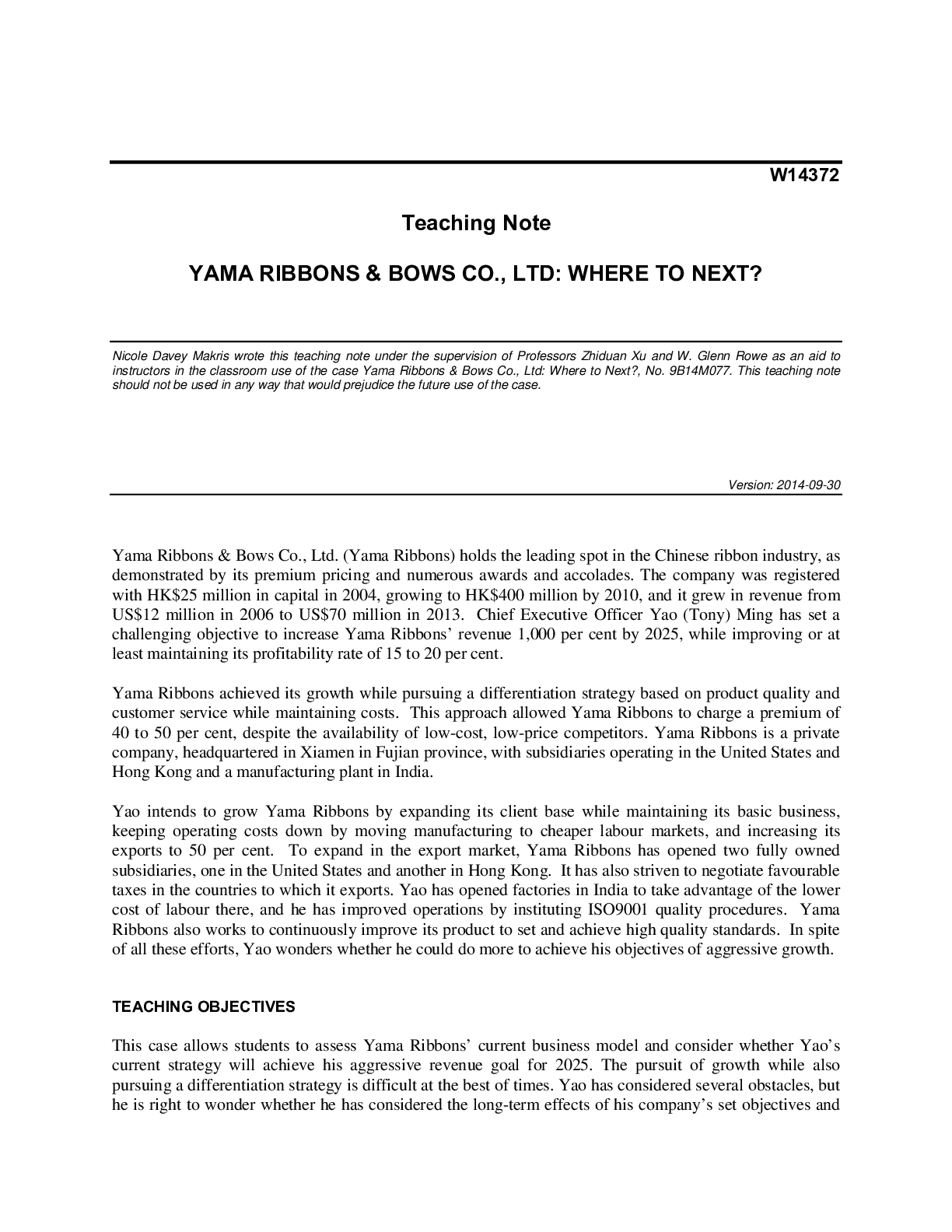
Business > CASE STUDY > TASK 2 SECONDARY DATA SOURCES.docx L509 Task 2 – Secondary Data Sources L509 – Prof (All)
TASK 2 SECONDARY DATA SOURCES.docx L509 Task 2 – Secondary Data Sources L509 – Prof
Document Content and Description Below
Last updated: 3 years ago
Preview 1 out of 6 pages
Instant download

Buy this Document to get the Full Access Instantly
Provided by Students Who Aced it
We Verify Document Content to Gurantee Accuracy
Reviews( 0 )
Document information
Connected school, study & course
About the document
Uploaded On
Jun 12, 2022
Number of pages
6
Written in
All

Additional information
This document has been written for:
Uploaded
Jun 12, 2022
Downloads
0
Views
81
Topic Tags
Related Subjects & Courses
Explore similar study resources and related concepts.
Recommended For You
Get more on CASE STUDY »
TASK 2 SECONDARY DATA SOURCES.docx L509 Task 2 – Secondary...

TASK 2 SECONDARY DATA SOURCES.docx L509 Task 2 €“ Secondary...

TASK 1 RHIO PRESENTATION OUTLINE.docx L509 Task 1 – RHIO P...

WestJet in 2009 The Fleet Expansion Decision, By Stewart Thorn...
Solution Manual for Canadian Income Taxation 20232024 26th Edi...
Solution Manual for Canadian Income Taxation (2022-2023) 25th...
Concepts in Strategic Management and Business Policy Globaliza...



Solutions Manual for Business Research Methods, 5th Edition By...
Test Bank for Business Analytics 3rd Edition Evans | All Chapt...