Business > CASE STUDY > CJS/215: Introduction To Forensics Explaining Forensics (All)
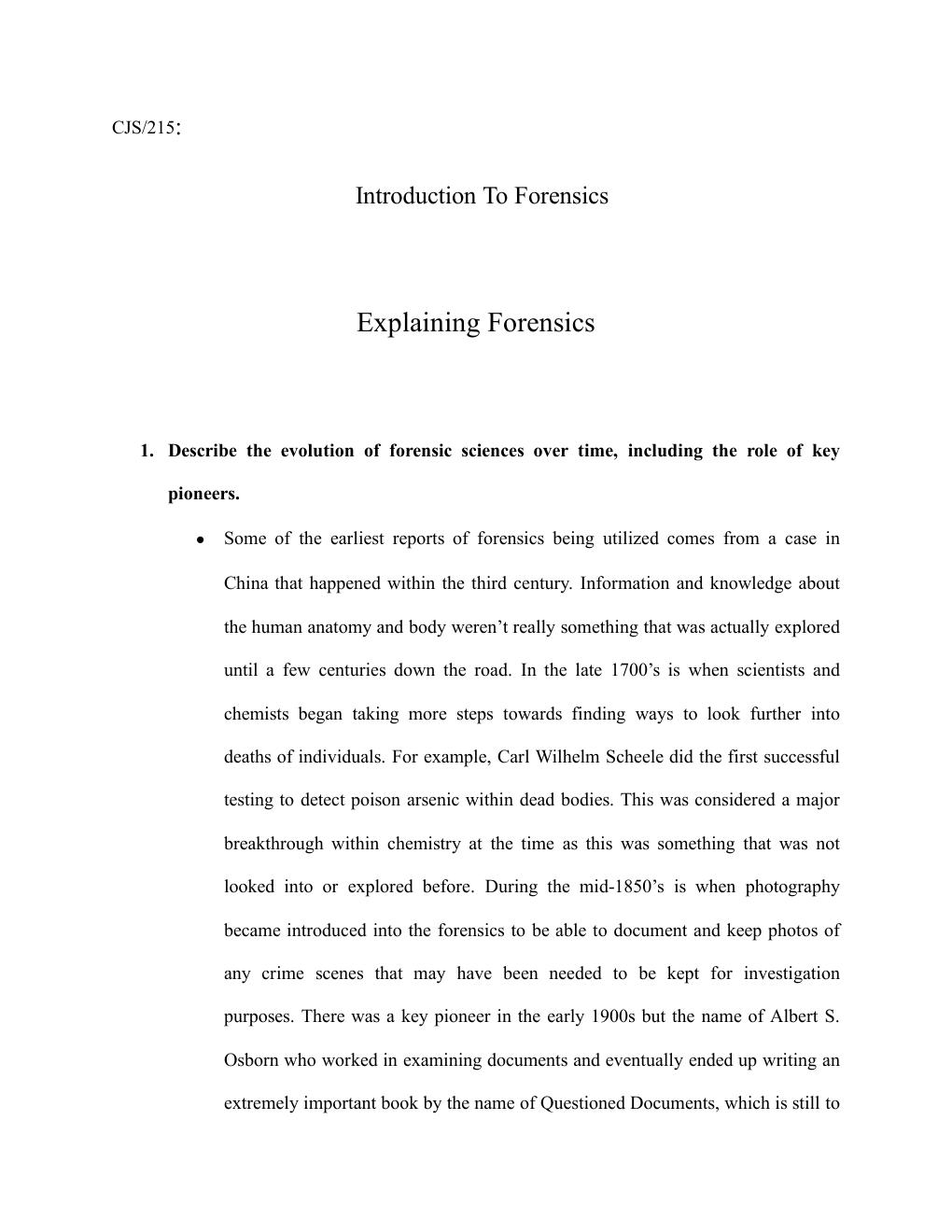
CJS/215: Introduction To Forensics Explaining Forensics
Document Content and Description Below
Last updated: 1 month ago
Preview 1 out of 4 pages
Instant download
Buy this Document to get the Full Access Instantly
Provided by Students Who Aced it
We Verify Document Content to Gurantee Accuracy
Reviews( 0 )
Document information
Connected school, study & course
About the document
Uploaded On
Jul 31, 2022
Number of pages
4
Written in
All

Additional information
This document has been written for:
Uploaded
Jul 31, 2022
Downloads
0
Views
132
Topic Tags
Recommended For You
Get more on CASE STUDY »
eBook Ordering and Payment Page | SEARCH your EBOOK TITLE on T...

WestJet in 2009 The Fleet Expansion Decision, By Stewart Thorn...
eBook Lean Analytics: Use Data to Build a Better Startup Faste...
45 Techniques Every Counselor Should Know 3rd Edition By Bradl...



How I Made It 40 Successful Entrepreneurs Reveal How They Made...
How I Made It 40 Successful Entrepreneurs Reveal How They Made...
Yama Ribbons & Bows Co., Ltd. Where to Next, By Zhiduan Xu, Gl...