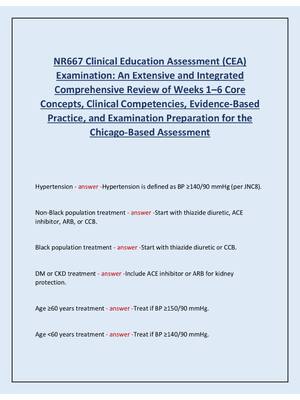
NR 667 VISE STUDY GUIDE (LATEST UPDATE) 2022/2023. Graded A
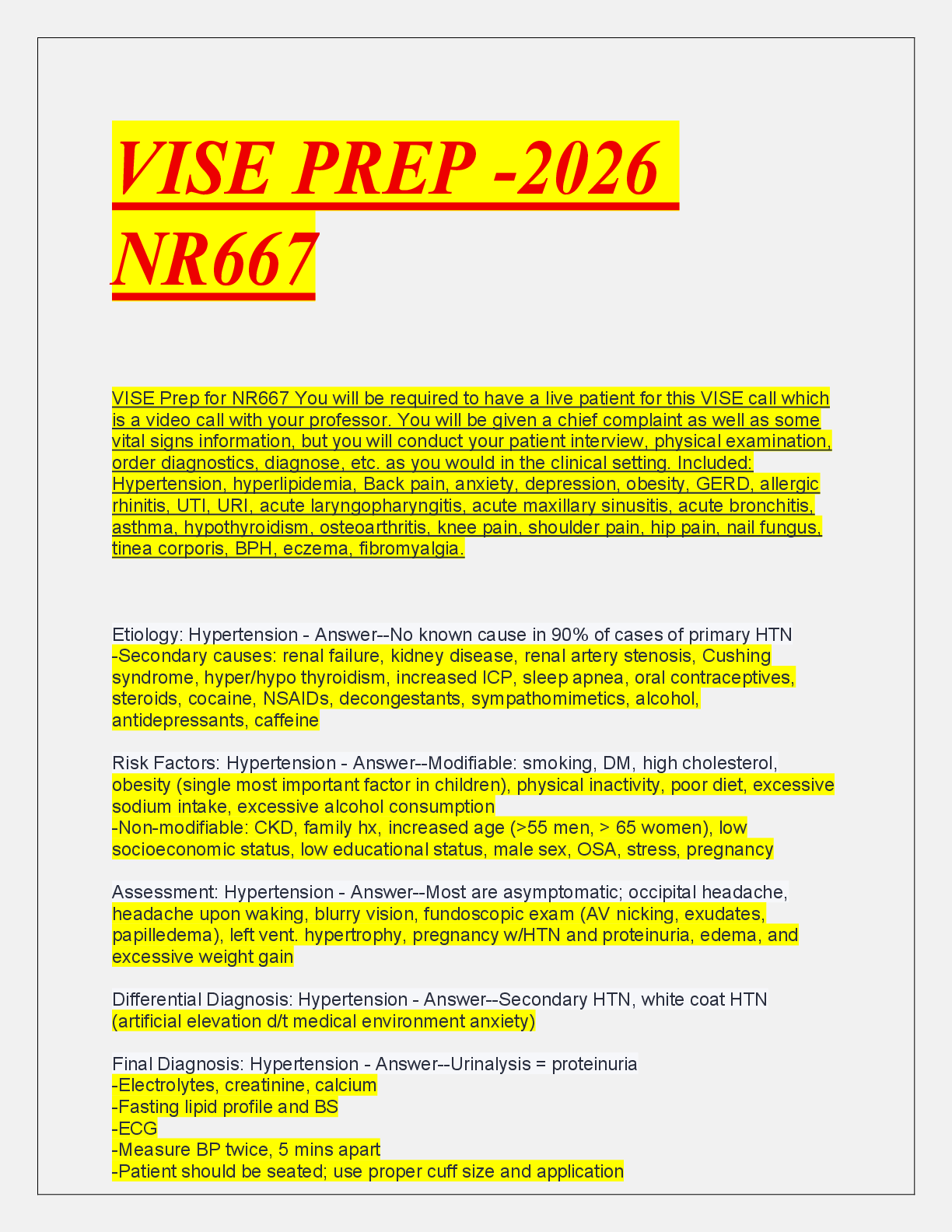
Etiology: Hypertension - ✔?-No known cause in 90% of cases of primary HTN
-Secondary causes: renal failure, kidney disease, renal artery stenosis, Cushi
...
NR 667 VISE STUDY GUIDE (LATEST UPDATE) 2022/2023. Graded A
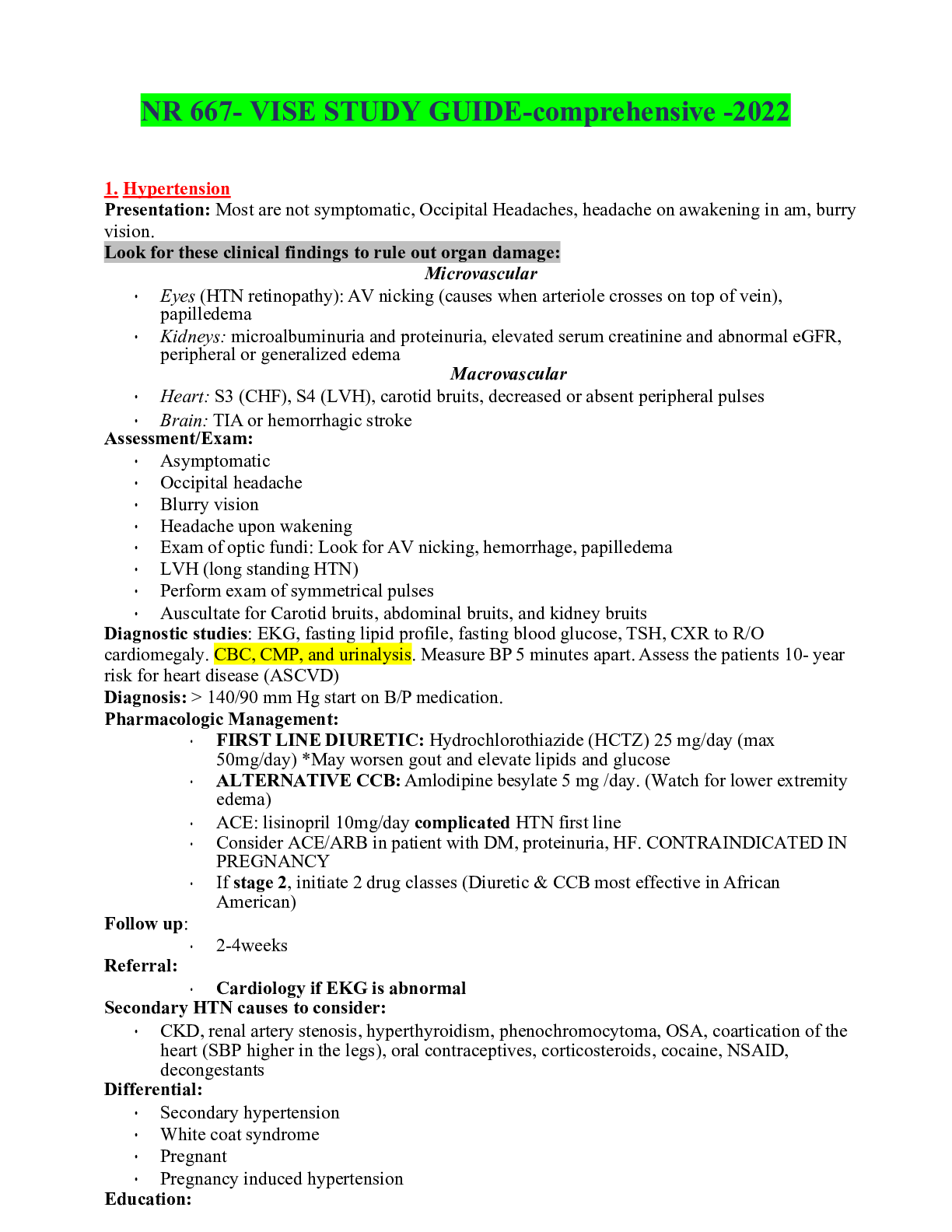
Etiology: Hypertension - ✔?-No known cause in 90% of cases of primary HTN
-Secondary causes: renal failure, kidney disease, renal artery stenosis, Cushing syndrome, hyper/hypo thyroidism, increased ICP, sleep apnea, oral contraceptives, steroids, cocaine, NSAIDs, decongestants, sympathomimetics, alcohol, antidepressants, caffeine
Risk Factors: Hypertension - ✔?-Modifiable: smoking, DM, high cholesterol, obesity (single most important factor in children), physical inactivity, poor diet, excessive sodium intake, excessive alcohol consumption
-Non-modifiable: CKD, family hx, increased age (>55 men, > 65 women), low socioeconomic status, low educational status, male sex, OSA, stress, pregnancy
Assessment: Hypertension - ✔?-Most are asymptomatic; occipital headache, headache upon waking, blurry vision, fundoscopic exam (AV nicking, exudates, papilledema), left vent. hypertrophy, pregnancy w/HTN and proteinuria, edema, and excessive weight gain
Differential Diagnosis: Hypertension - ✔?-Secondary HTN, white coat HTN (artificial elevation d/t medical environment anxiety)
Final Diagnosis: Hypertension - ✔?-Urinalysis = proteinuria
-Electrolytes, creatinine, calcium
-Fasting lipid profile and BS
-ECG
-Measure BP twice, 5 mins apart
-Patient should be seated; use proper cuff size and application
Prevention: Hypertension - ✔?-Maintaining healthy weight and BMI
-Smoking cessation
-Regular aerobic exercise
-Alcohol in moderation (< 1 oz/day)
-Stress management
-Medication compliance
-Assess for and treat OSA
Non-pharm management: Hypertension - ✔?-Stage 1: Risk score < 10% =lifestyle modification
-Stage 2: lifestyle + medication
-DASH eating plan: high fruit, veggies, grains; low fat dairy, fish, poultry, beans, nuts
-Reduce dietary sodium to 2,300mg/day, increase K+
-Reduce sat. fat intake
-Body weight reduction; 1kg of weight reduction = 1 mm/hg bp reduction
-150 mins of aerobic exercise and/or 3 sessions of isometric resistance per week
-Treat other underlying diseases
-Check bp 2x/week during pregnancy
Pharmacological management: Hypertension - ✔?-Start medication for primary prevention of CVD if pt. has ASCVD risk ≥ 10% and stage 1 HTN or if ASCVD is < 10% with bp >140/90
-Stage 2: start 2 bp-lowering medications
-African Americans: 2+ medications recommended; thiazide and CCBs are the most effective
*DO NOT use ACE and ARB concurrently
-Beta blockers are NOT first line
-Thiazides, CCBs, ACEIs, and ARBs can be used alone or in combo
Pregnancy considerations: Hypertension - ✔?-Can use beta blockers (labetalol), methyldopa, CCBs (nifedipine)
-AVOID ARBs and ACEIs
Follow-up: Hypertension - ✔?-Inquire about adherence and any side effects
-Reassess monthly until patient reaches goal, then every 3-6 months as needed
Expected course: Hypertension - ✔?-Only 54% of treated patients are at goal treatment; expect complications if under treated
-Most patients require more than one medication to reach goal bp
Possible Complications: Hypertension - ✔?-Stroke, CAD, MI, renal failure, heart failure, eclampsia (seizures), pulmonary edema, hypertensive crisis, hypertensive retinopathy, ED
Etiology: Hyperlipidemia - ✔?-Inherited disorder, high dietary intake, obesity, sedentary lifestyle, DM, hypothyroidism, anabolic steroid use, hepatitis, cirrhosis, uremia, nephrotic syndrome, stress, drug-induced (thiazide diuretics, beta blockers, cyclosporine), alcohol, caffeine, metabolic syndrome
Risk factors: Hyperlipidemia - ✔?-Family history, physical inactivity, smoking, age (men > 45, women > 55 or premature menopause without estrogen replacement), obesity, diet high in sat. fat, DM
Assessment findings: Hyperlipidemia - ✔?-Few physical findings; xanthomata (fat deposits in the skin), xanthelasma (yellow plaques on the eyelid), corneal arcus prior to age 50 (arc of cholesterol around the iris), bruits, angina pectoris, MI, stroke
Differential diagnosis: Hyperlipidemia - ✔?-Secondary causes: hypothyroidism, pregnancy, DM, non-fasting state
Final diagnosis: Hyperlipidemia - ✔?-Fasting lipid profile: 9-12 hours
-Glucose level
-Urinalysis, creatinine (for detection of nephrotic syndrome which can induce dyslipidemia)
-Baseline transaminases
-TSH for detection of hypothyroidism (which can cause secondary dyslipidemia)
-Calculate ASCVD 10-year risk
Prevention: Hyperlipidemia - ✔?-Healthy lifestyle reduces ASCVD in all age groups
-Dietary interventions: encourage mediterranean and DASH diet; limit saturated and trans fats; limit sodium intake; increase fiber, vegetables, fruits, and other whole grains; eat lean meats (poultry, fish); eggs, beans, nuts, low-fat dairy, avoid red meat, limit sugary drinks and sweets
-Mod to vigorous exercise of at least 40 mins 3-4x/week (sustained aerobic activity increases HDL, decreases total cholesterol)
-Avoid tobacco
-Appropriately manage systemic diseases (DM, hypothyroidism, HTN)
Non-pharm management: Hyperlipidemia - ✔?-Nutrition, weight reduction, increased physical activity, patient education about risk factors
Pharmacological management: Hyperlipidemia - ✔?-Assign to a statin treatment group using ASCVD 10-year risk calculator
-Primary lipid target it LDL
-Statins are 1st-line therapy
-Combo of statin and non-statin in some patients
-Consider adding non-statin if unable to achieve LDL < 70mg/dl, but VERIFY adherence to statins and lifestyle changes
-Non-statins: ezetimibe (1st), bile acid sequestrant, vibrate, PCSK9 inhibitor
Pregnancy/lactation consideration: Hyperlipidemia - ✔?-Cholesterol is usually elevated during pregnancy; measurement is not recommended and treatment is contraindicated
Follow-up: Hyperlipidemia - ✔?-Check fasting lipid panel 4-12 weeks after starting or adjusting a statin or non-statin
-Monitor for medication compliance and lifestyle modification, especially if LDL drop is less than expected
Expected course: Hyperlipidemia - ✔?-Depends on etiology and severity of disease
-1% decrease in LDL value decreases CHD risk by 2%
Possible complications: Hyperlipidemia - ✔?-CAD, cerebrovascular disease, PVD, arteriosclerosis
Etiology: DM II - ✔?-Influences by genetics and environmental factors
-High body mass and central obesity
-Drug or chemical-induced: glucocorticoids, highly active antiretroviral therapy
Risk factors: DM II - ✔?-BMI > 25
-History of gestational DM and/or macrocosmic infant
-Family history of T2DM
-Conditions associated with insulin resistance: PCOS, acanthosis nigricans)
-HDL-C < 35 and/or TG > 250
-HTN
-History of CVD
-Hemochromatosis
-Impaired fasting glucose
-Physically active < 3 days/week
Assessment findings: DM II - ✔?-Usually discovered on routine exam
-CMP and urinalysis: glycosuria, proteinuria, hyperglycemia
-Obesity
-Acanthosis nigricans
-Polydipsia, polyuria, polyphagia
-Fatigue
-Blurred vision
-Chronic skin infections
-Balanitis in men > 65 years
-Chronic candidiasis vulvovaginitis
-Hyperosmolar state or coma
Differential diagnosis: DM II - ✔?-TIDM
-Prediabetes
-Gestational diabetes
-Cushing's syndrome
-Pheochromocytoma
-Acromegaly
-Corticosteroid use
-Pancreatic insufficiency
Final diagnosis: DM II - ✔?-Fasting plasma glucose: > 126
-HgA1c: ≥ 6.5%
-Random plasma glucose + oral glucose tolerance test: ≥200 with symptoms OR 2-hour plasma glucose ≥ 200 on OGTT with 75g glucose load
-Prediabetes: fasting glucose 100-125 OR A1C 5.7-6.4% OR OGTT 140-199
-A1C every 3 months until goal is met or therapy is changed, then twice yearly with stable glycemic control
Prevention: DM II - ✔?-Weight loss of 7-10%; reach and maintain normal BMI
-Exercise 150 mins or more per week; no more than 2 consecutive days without activity
-Resistance training 2-3x/week
-Reduce length of sedentary intervals by interrupting prolonged sitting every 30 mins
-Screen for tobacco use; provide smoking cessation counseling and referral
-Screen for depression, distress, anxiety, eating disorders, cognitive impairment
-Screen for ability to afford meds, access to healthy food, food insecurity, and community support
Non-pharm management: DM II - ✔?-Weight loss is primary goal for all obese patients; modest weight loss of 5-10 lb can increase insulin sensitivity
-Refer to diabetes educator for management education and support
-Nutrition plan: 3 visits with dietician at diagnosis + f/u visits
-Avoid alcohol and smoking
-Assess medication compliance
-Assess technology use to assist in reaching goals
-Routine dental visits, thyroid palpation, skin exam, neuro exam, abdominal exam, cardiac exam, foot exam
Pharmacological management: DM II - ✔?-Consider effects of weight and comorbid conditions when selecting medications
-First line: biguanides (metformin) at dx unless contraindicated; consider XR to reduce GI side effects
-2nd/3rd line is based on established ASCVD or CKD and patient characteristics, preferences, potential adverse effects, expected A1c reduction, and cost
-Start dual therapy if A1c ≥ 1.5% above glycemic target
-Early insulin introduction: A1c > 8-10%, BS > 300, catabolism (weight loss)
-Consider GLP-1 as first injectable before insulin
-ASCVD history: GLP-1 or SGLT2 inhibitor (if adequate eGFR)
-HF or CKD: SGLT2 inhibitor
-Insulin: when oral medications have been exhausted; 0.1-0.2 units/kg/day or 10 u daily of peakless basal insulin
-If unable to reach goal, administer meal-time insulin
Pregnancy/lactation considerations: DM II - ✔?-7% of pregnancies are complicated by diabetes; 90% of these are gestational diabetes
-Screen for undiagnosed DM II at first prenatal visit
-Universal screening for GDM at 24-28 weeks gestation
-Pre-existing DM should be managed by endocrinologist, MFM, dietician, and diabetes educator
-Ideal A1c during pregnancy is < 6.0% to reduce the risk of maternal and fetal complications
*Increased risk of spontaneous abortion, stillbirth, congenital anomalies
-Insulin is the preferred treatment in GDM, T1DM and T2DM in pregnancy because it doesn't cross the placenta
Follow-up: DM II - ✔?-Individualized based on findings of initial evaluation, attainment of metabolic targets, and risk for complications
-Follow ADA standards of care for f/u recommendations
Expected course: DM II - ✔?-Dependent on glucose control; poor control results in increased risk for vascular complications
-Complications typically develop 10-15 years after onset but can present earlier if DM is undetected for years before diagnosis
Possible complications: DM II - ✔?-Diabetic kidney disease, renal failure
-Peripheral neuropathy
-Retinopathy
-Cardiovascular and peripheral vascular disease
-Glaucoma, cataracts, blindness
-Skin ulcerations, gangrene of lower extremities, limb amputations
-Charcot foot
-DKA
-Hyperosmolar hyperglycemic state
-Gastroparesis
Etiology: Back pain - ✔?-Often unclear
-Can be caused by tearing or stretching of nerves, muscles, tendons, ligaments, discs, or fascia secondary to trauma or chronic mechanical stress
-Can occur as a symptom of a degenerative disorder (spinal stenosis, DDD, disc herniation)
-Compression or irritation of a nerve root can occur along with back pain, causing radiculopathy
-Most commonly affected discs are L4-L5, and L5-S1
Risk factors: Back pain - ✔?-Obesity
-Sedentary lifestyle > inadequate conditioning
-Smoking
-Preexisting psychological conditions
-Chronic occupational strain with improper lifting techniques
-Exaggerated lumbar lordosis, chronic poor posture
-Leg length discrepancy
-Age > 65
-Job dissatisfaction
Assessment findings: Back pain - ✔?-Cauda equina is a surgical emergency that presents with back pain + 1. perineal anesthesia, 2. loss of bladder/bowel control, 3. loss of rectal sphincter tones with digital exam, 4. bilateral radicular pain, numbness and weakness
-Back, but, and thighs may be aggravated by movement, rising from seated position, standing, and flexion; may be relieved by rest, repositioning, or reclining
-Muscle spasm may be present over lumbosacral area due to ligament or muscle involvement
-Pain may radiate down leg below knee with with spinal nerve irritation and radiculopathy
-Motor, sensory, and reflex exams are essential; note asymmetry of findings
-Observe gait, lower extremity strength, and muscle bulk
Differential Diagnosis: Back pain - ✔?*New onset radicular pain in older patients is often a sign of spinal stenosis
-Low back strain
-Herniated disc
-Multiple myeloma
-Osteomyelitis
-Prostatitis, pyelonephritis
-Vascular occlusion at level of bifurcation; AAA
-Carcinoma if bony metastasis occurs
-Endometriosis, fibromyalgia
-Depression, hysteria
-Malingering (get out of work card)
-Compression fracture, osteoporosis
-Osteoarthritis
-Ankylosing spondylitis
-Cauda equina
-Hip/pelvic pathology
-Drug-seeking
Final diagnosis: Back pain - ✔?-Routine imaging is nor recommended with new onset mechanical back pain and no red flags
-Red flags: cauda equina, fracture, malignancy, infection
-Lack of improvement over 6-8 weeks warrants AP and lateral x-rays of the spine
-Red flags or severe/progressive neuro deficits, consider MRI, CT, bone scan, CBC, ESR, UA
Prevention: Back pain - ✔?-Proper lifting technique, body mechanics, and posture
-Conditioning exercises
-Maintenance of appropriate weight for height
-Avoid smoking
Non-pharm management: Back pain - ✔?-Patient education and reassurance that recovery occurs in 6-8 weeks in 80-90% of patients
-Avoid bed rest; no more than 1-2 days
-PT: for subacute or chronic back pain
-Chiropractics: limited evidence of improvement
-Acupuncture: short-term pain relief
-Hot/cold application for 20-30 mins several times per day
-Gradually resume activities as tolerated
-Shoe insoles recommended for leg length discrepancies
-CBT to reduce disability related to subacute and chronic pain
Pharmacological management: Back pain - ✔?-Tylenol: common first-line agent
-NSAIDs: effective first-line agent for short-term relief of acute and subacute low back pain; all are though to have equal efficacy
-Muscle relaxers: to reduce/eliminate muscle spasm
-Opioids: effective but significant concern for abuse, misuse, and addiction
-Tramadol: for acute or chronic back pain; short-term use
-Antidepressants: TCAs can be used for chronic back pain
[Show More]

.png)
![Preview of NR667 Complete Question Bank with Correct Answers: Final Exam Study Guide [2026 Updated]](https://browseimages.nyc3.digitaloceanspaces.com/paper-images/2026/02/25/AULA53fD2026-02-25-02-58699ee3d811bc7.png)