1. NUR 201 Lifespan 1 test
Abnormal Cellular Growth
A child with leukemia is being discharged from the hospital and will continue to take prednisone at home. Which statement by the child's parent indicates a need
...
1. NUR 201 Lifespan 1 test
Abnormal Cellular Growth
A child with leukemia is being discharged from the hospital and will continue to take prednisone at home. Which statement by the child's parent indicates a need for additional teaching about the effects of this medication?
Student Response Correct Answer Feedback
1. "I'll watch her caloric intake, since she has gained so much weight."
2. "This is a good season for bananas and oranges, so I'll buy a lot of them."
3. "I never cook with salt, since I have high blood pressure."
4. "To keep up with her schedule, I'll give her medication after breakfast."
General Feedback: Rationale for Choice 1: The parent should understand that the weight gain is a temporary side effect of the medications, not the result of overeating.
Rationale for Choice 2: This statement indicates understanding that potassium intake should be increased for a child taking prednisone.
Rationale for Choice 3: Moderate salt restriction is a good practice for a child taking prednisone.
Rationale for Choice 4: Prednisone should be given early in the day, so this is appropriate.
2.
Abnormal Cellular Growth
Which information does the nurse need to know in developing a teaching plan for a patient with a sigmoid colostomy?
Student Response Correct Answer Feedback
1. The drainage will be liquid.
2. The drainage has no odor.
3. Irrigation may not be necessary to establish regularity.
4. Digestive enzymes are present in the drainage.
General Feedback: Rationale for Choice 1: A sigmoid colostomy results in solid feces.
Rationale for Choice 2: The patient will be taught measures to minimize the odor associated with the drainage.
Rationale for Choice 3: Regularity may be achieved with irrigation or by allowing natural evacuation.
Rationale for Choice 4: The drainage does not contain significant digestive enzymes. These are generally present in the small intestine.
3.
Abnormal Cellular Growth
A child with Wilms' tumor is receiving dactinomycin (Cosmegen) and vincristine (Oncovin). The nurse should teach the child's parents how to manage which adverse reactions to the drugs?
Student Response Correct Answer Feedback
1. constipation and leukopenia
2. hyperesthesia and insomnia
3. photosensitivity and dysrhythmia
4. dyspnea and hypersensitivity reaction
General Feedback: Rationale for Choice 1: These are typical side effects of the drug combination.
Rationale for Choice 2: These effects are not associated with the drug combination.
Rationale for Choice 3: See 3).
Rationale for Choice 4: See 3).
1/1
4.
Abnormal Cellular Growth
Which is the primary goal for postoperative management of a patient who had a left lower lobectomy for treatment of cancer?
Student Response Correct Answer Feedback
1. Prevent dehydration.
2. Prevent infection.
3. Promote optimal ventilation.
4. Promote adequate venous return.
General Feedback: Rationale for Choice 1: The risk of dehydration is not as high for a patient with a lobectomy is it is for patients undergoing chemotherapy or being treated for some other cancers. This is not the primary goal in this situation.
Rationale for Choice 2: Preventing infection is a general goal for all patients with cancer, but is more of a concern with patients undergoing chemotherapy than with a patient who has had a lobectomy. This is not the primary goal.
Rationale for Choice 3: Because the lobectomy has removed a section of the lung, respiratory complications are the most likely to occur. Nursing measures to promote optimal ventilation, including positioning, breathing exercises, and removal of excess secretions may be used to acheive this goal
Rationale for Choice 4: Adequate venous return is not usually an issue following lobectomy.
5.
Abnormal Cellular Growth
Which findings should lead the nurse to suspect bleeding in a patient with cancer who had a lobectomy 24 hours ago?
Student Response Correct Answer Feedback
1. urinary output of 60 cc/hr and capillary refill less than 3 seconds
2. shortness of breath and restlessness
3. pulse rate of 96 and blood pressure of 140/88
4. incisional pain and 40 cc of bloody drainage from the chest tube
General Feedback: Rationale for Choice 1: A lobectomy is surgery for lung cancer. These findings do not indicate a common complication of the surgery, nor do they indicate a bleeding problem.
Rationale for Choice 2: These findings in a patient who has had lung surgery suggest the development of internal bleeding.
Rationale for Choice 3: These findings do not indicate an immediate or critical problem. One possible cause is postoperative dysrhythmia, but this would require further investigation.
Rationale for Choice 4: These findings are normal in a patient who has had a lobectomy.
1/1
6.
Abnormal Cellular Growth
A patient has a colostomy following surgical treatment for colon cancer. The nurse should discourage the patient from eating which food to decrease odors from the ostomy pouch?
Student Response Correct Answer Feedback
1. buttermilk
2. cucumbers
3. spinach
4. yogurt
General Feedback: Rationale for Choice 1: Buttermilk and yogurt contain cultures that actually decrease odors from the pouch.
Rationale for Choice 2: Cucumbers cause the formation of gas and associated odors in the pouch.
Rationale for Choice 3: Spinach and parsley can decrease odors from the pouch.
Rationale for Choice 4: Yogurt and buttermilk contain cultures that actually decrease odors from the pouch.
7.
Abnormal Cellular Growth
Which clinical manifestation should the nurse expect to find as the most common symptom in a patient with cancer of the bladder?
Student Response Correct Answer Feedback
1. polyuria with urgency
2. hematuria without dysuria
3. nocturia without urgency
4. pyuria with dysuria
General Feedback: Rationale for Choice 1: Polyuria (frequency of urination) with urgency is generally a symptom of a urinary tract infection.
Rationale for Choice 2: Hematuria (blood in the urine) without dysuria (painful urination) is the most common symptom of bladder cancer.
Rationale for Choice 3: Nocturia (need to urinate at night) without urgency may occur for a variety of reasons, particularly in older adults, but is not indicative of bladder cancer.
Rationale for Choice 4: Pyuria (presence of white blood cells in the urine) with dysuria (painful urination) is generally a symptom of a urinary tract infection.
1/1
8.
Abnormal Cellular Growth
Which lab data is of most concern for the patient undergoing radiation therapy?
Student Response Correct Answer Feedback
1. hemoglobin 12g/dL
2. RBC 4.9 X 10⁶/mm3
3. platelets 100,000/mm3
4. WBC 9,000/mm3
General Feedback: Rationale for Choice 1: This is a normal value for a female.
Rationale for Choice 2: This is a normal value.
Rationale for Choice 3: This value is too low, placing the patient at risk for bleeding and infection.
Rationale for Choice 4: This is a normal value.
9.
Abnormal Cellular Growth
Which is an appropriate intervention for a patient with lung cancer who develops superior vena cava syndrome?
Student Response Correct Answer Feedback
1. Position patient in Trendelenberg position.
2. Assess patient for dysphagia.
3. Monitor neurological status.
4. Apply compression stockings.
General Feedback: Rationale for Choice 1: Positioning for a patient with superior vena cava syndrome is based on facilitating breathing to improve comfort and decrease anxiety. Trendelenberg (head down, feet up) will not accomplish this.
Rationale for Choice 2: Dysphagia (difficulty swallowing) is a clinical manifestation of the edema associated with superior vena cava syndrome. The nurse would monitor for this condition, but it is not the best choice of an intervention in this situation.
Rationale for Choice 3: The patient's neurological status can be compromised by increased intracranial pressure and lack of oxygen as a result of superior vena cava syndrome.
Rationale for Choice 4: Compression stockings are not indicated for the patient with superior vena cava syndrome.
10.
Abnormal Cellular Growth
Which nursing action should be employed to help prevent dislodgement of the applicator containing radioactive elements used to treat cervical cancer?
Student Response Correct Answer Feedback
1. Maintain bed rest with bathroom privileges.
2. Provide a low-residue diet.
3. Offer bedpan every 2 hours.
4. Administer pain medication prn.
General Feedback: Rationale for Choice 1: The patient on internal radiation will be placed on total bed rest. She will have a urinary catheter and will be given a low-residue diet to limit bowel movements.
Rationale for Choice 2: A low-residue diet limits bowel movements and decreases the risk of dislodgement.
Rationale for Choice 3: See 1).
Rationale for Choice 4: Pain is generally not severe with internal radiation, and mild pain medication on a regular schedule should be sufficient.
11.
Abnormal Cellular Growth
When planning care for a patient immediately following a modified radical mastectomy, the nurse should give priority to which nursing diagnosis?
Student Response Correct Answer Feedback
1. self-care deficit related to partial immobility
2. ineffective breathing pattern related to fear and pain
3. knowledge deficit: follow-up care
4. risk for sexual dysfunction related to loss of a body part
General Feedback: Rationale for Choice 1: This is a valid diagnosis, but not the one that takes priority. Learning about self-care will begin about a day after the surgery.
Rationale for Choice 2: The patient's pain and breathing difficulty should be the nurse's first priority.
Rationale for Choice 3: Learning and reinforcement of information previously given regarding follow-up care will begin about a day after the surgery.
Rationale for Choice 4: Preparation for dealing with possible sexual dysfunction is a later priority than addressing the immediate concerns with pain and breathing difficulty.
12.
Abnormal Cellular Growth
A nursing goal for a patient being treated with steroid hormones for cancer is to decrease the intake of which of the following?
Student Response Correct Answer Feedback
1. calcium
2. phosphorus
3. potassium
4. sodium
General Feedback: Rationale for Choice 1: Calcium-rich foods help the patient increase protein and calorie intake during chemotherapy.
Rationale for Choice 2: Phosphorus does not generally cause problems for patients undergoing steroid hormone chemotherapy.
Rationale for Choice 3: Potassium does not generally cause problems for patients undergoing steroid hormone chemotherapy.
Rationale for Choice 4: Fluid retention is often a problem for patients receiving steroid hormones for chemotherapy. Restricting sodium intake helps prevent this problem.
13.
Abnormal Cellular Growth
In planning care for a young adult patient with glioma, the nurse should instruct the family that the patient is prone to developing which problem?
Student Response Correct Answer Feedback
1. constipation
2. seizures
3. pathologic fractures
4. urinary tract infections
General Feedback: Rationale for Choice 1: Constipation is unlikely to be a complication of glioma. It may occur as a side effect of chemotherapy.
Rationale for Choice 2: Glioma, a common type of brain tumor, is very likely to cause seizures.
Rationale for Choice 3: Pathologic fractures are associated with bone tumors and bone metastasis.
Rationale for Choice 4: Urinary tract infections are unlikely to be a complication of glioma.
14.
Abnormal Cellular Growth
Which expected outcome is most appropriate for the nurse to include in the home care plan for a patient with a new colostomy? The patient will
Student Response Correct Answer Feedback
1. demonstrate colostomy care.
2. clean the colostomy site with sterile H2O.
3. check the colostomy bag daily.
4. irrigate the colostomy two times a day.
General Feedback: Rationale for Choice 1: A return demonstration is the best way to ensure that the patient knows self-care techniques.
Rationale for Choice 2: The site should be cleaned with mild soap.
Rationale for Choice c: The schedule for checking, changing, and irrigation will be set with the nurse based on the type of colostomy, pouch system, and patient factors. The most likely of these to be practiced daily is irrigation.
Rationale for Choice 4: If the patient is planning to practice irrigation, it should be done once a day at the same time.
15.
Abnormal Cellular Growth
When death occurs from metastatic osteogenic sarcoma, which site is most often affected?
Student Response Correct Answer Feedback
1. kidneys
2. liver
3. lungs
4. spine
General Feedback: Rationale for Choice 1: Osteogenic sarcoma (osteosarcoma) generally begins in the distal femur, the proximal tibia, or the humerus. The most common site of metastasis is the lung. Metastasis typically takes about two years and is usually fatal.
Rationale for Choice 2: Osteogenic sarcoma (osteosarcoma) generally begins in the distal femur, the proximal tibia, or the humerus. Regardless of the point of origin, the most common site of metastasis is the lung. Metastasis typically takes about two years and is usually fatal.
Rationale for Choice 3: Osteogenic sarcoma (osteosarcoma) generally begins in the distal femur, the proximal tibia, or the humerus. Regardless of the point of origin, the most common site of metastasis is the lung. Metastasis typically takes about two years and is usually fatal.
Rationale for Choice 4: Osteogenic sarcoma (osteosarcoma) generally begins in the distal femur, the proximal tibia, or the humerus. Regardless of the point of origin, the most common site of metastasis is the lung. Metastasis typically takes about two years and is usually fatal.
16.
Abnormal Cellular Growth
The nurse is developing a care plan for a family with a nursing diagnosis of anticipatory grieving related to a diagnosis of advanced ovarian cancer in the mother. The nurse should consider which intervention to be of primary importance?
Student Response Correct Answer Feedback
1. Discuss treatment modalities.
2. Refer the family to social services.
3. Request that a member of the clergy visit.
4. Establish a trusting relationship.
General Feedback: Rationale for Choice 1: This will not help with anticipatory grieving.
Rationale for Choice 2: The nurse needs to know the family better to determine if this step is appropriate.
Rationale for Choice 3: See 2).
Rationale for Choice 4: This is the first step in developing the care plan.
17.
Abnormal Cellular Growth
The nurse administering vincristine (Oncovin) to a patient with head and neck cancer should monitor the patient for which possible side effects?
Student Response Correct Answer Feedback
1. hair loss, numbness, and decreased reflexes
2. nausea, vomiting, and hemorrhagic cystitis
3. weakness, ataxic gait, and diarrhea
4. hypercalcemia, constipation, and fluid retention
General Feedback: Rationale for Choice 1: Neuropathy and alopecia are expected side effects of vincristine chemotherapy.
Rationale for Choice 2: These side effects are characteristic of alkylating agents like cisplatin, or possibly of cyclophosphamide.
Rationale for Choice 3: These side effects may indicate a complication such as spinal cord compression.
Rationale for Choice 4:These side effect more likely indicate complications of the cancer itself rather than the specific chemotherapy regimen.
18.
Abnormal Cellular Growth
On a patient's fifth day following chemotherapy, the nurse observes a decrease in neutrophils. Which nursing diagnosis should receive priority?
Student Response Correct Answer Feedback
1. altered nutrition: less than body requirements
2. activity intolerance
3. risk for injury
4. risk for infection
General Feedback: Rationale for Choice 1: Neutrophil levels do not generally relate to nutrition issues.
Rationale for Choice 2: The patient may experience fatigue, but this is not the first priority.
Rationale for Choice 3: This diagnosis is appropriate to consider, since the risk for injury and the risk for infection are closely linked, but it is not the first priority.
Rationale for Choice 4: Neutrophils (white blood cells) are an important defense against infection, and addressing a decrease should be the nurse's first priority.
19.
Abnormal Cellular Growth
At 2 AM, a 60-year-old patient who is receiving intracavitary radiation therapy for uterine cancer calls the nurse and says that the implant has fallen out of place and is in the bed. Which is the appropriate initial nursing intervention?
Student Response Correct Answer Feedback
1. Help the patient into a chair, change the linen, and save the implant for the doctor.
2. Use lead tongs to reinsert the implant into the patient.
3. Notify the radiologist and stay in the room with the patient.
4. Use long-handled forceps to pick up the implant and place it in a lead-lined container.
General Feedback: Rationale for Choice 1: This action prolongs exposure of both patient and nurse to the radioactive source.
Rationale for Choice 2: Reimplantation would be done by a radiation oncologist. X rays and anesthesia are usually required for this procedure.
Rationale for Choice 3: This action prolongs exposure of both patient and nurse to the radioactive source.
Rationale for Choice 4: This action properly applies the principles of time, distance, and shielding.
20.
Abnormal Cellular Growth
In planning a presentation for a support group of clients with cancer, the nurse should include which information about metastasis?
Student Response Correct Answer Feedback
1. Cancer cells can enter blood vessels and go to other parts of the body.
2. Chemotherapy combinations are designed to prevent metastasis.
3. The lymphatic system promotes tumor growth.
4. X-ray therapy cannot be used after metastasis occurs.
General Feedback: Rationale for Choice 1: Cancer cells traveling in the bloodstream is one of the primary mechanisms of metastasis.
Rationale for Choice 2: This is not the purpose of combining chemotherapy medications.
Rationale for Choice 3: Tumors may invade the lymphatic system, but that system does not directly contribute to tumor growth.
Rationale for Choice 4: Radiation therapy is sometimes used palliatively in cases of metastasis.
21.
Abnormal Cellular Growth
Which discharge instruction should the nurse plan to give to prevent complications associated with lymphedema in a patient who has had a modified radical mastectomy?
Student Response Correct Answer Feedback
1. Continue postoperative exercises of the affected arm for one month following surgery.
2. Apply lotion to the hand of the affected side instead of cutting the cuticles.
3. Avoid the use of insect repellents on the affected arm.
4. Resume blood pressure monitoring on the affected arm one year following surgery.
General Feedback: Rationale for Choice 1: Exercises are done with both arms for four to six weeks, until full range of motion is restored.
Rationale for Choice 2: Trauma such as skin breaks is the primary cause of lymphedema, so trimming the cuticles should be avoided.
Rationale for Choice 3: Insect bites are an injury that should be avoided, so repellents are a good idea as long as they are not irritating to the patient's skin.
Rationale for Choice 4: It is not necessary to wait for a year before taking blood pressure on the affected arm. It seems unlikely that this patient would be monitoring her own blood pressure in any case.
22.
Abnormal Cellular Growth
Which instruction should the nurse give to an adult patient with severe stomatitis from chemotherapy?
Student Response Correct Answer Feedback
1. Keep dentures in place during the day.
2. Rinse mouth with baking soda in water.
3. Clean teeth with a stiff brush after each meal.
4. Dilute commercial mouthwash with saline before using.
General Feedback: Rationale for Choice 1: Dentures may irritate the oral mucosa and cause further pain and tissue damage.
Rationale for Choice 2: This will be soothing and promote healing without posing other problems for the patient.
Rationale for Choice 3: A patient with severe stomatitis should not be using a toothbrush at all.
Rationale for Choice 4: Patients with stomatitis should not use alcohol-based mouthwash.
23.
Abnormal Cellular Growth
The nurse is assessing a patient with thrombocytopenia secondary to chemotherapy. Which clinical manifestation indicates the need for immediate action?
Student Response Correct Answer Feedback
1. insomnia
2. fatigue
3. excessive bleeding
4. persistent headache
General Feedback: Rationale for Choice 1: Insomnia in a patient with thrombocytopenia is not an emergency. It can often be addressed with pain relief measures.
Rationale for Choice 2: Fatigue is a normal finding for this patient, and can be addressed with routine nursing actions.
Rationale for Choice 3: Excessive bleeding is an emergency in the patient with thrombocytopenia.
Rationale for Choice 4: This manifestation should be investigated, but is not an emergency.
24.
Abnormal Cellular Growth
Which intervention is appropriate to include in a care plan for a patient with multiple myeloma?
Student Response Correct Answer Feedback
1. Prepare for hemodialysis.
2. Restrict fluids.
3. Administer calcium supplements.
4. Administer anticoagulant medication.
General Feedback: Rationale for Choice 1: Plasmapheresis -- a form of hemodialysis -- is used when a patient with multiple myeloma shows signs of increased serum viscosity.
Rationale for Choice 2: Patients with multiple myeloma should be kept well hydrated.
Rationale for Choice 3: Calcium excess may be a problem for the patient with multiple myeloma, so calcium supplements would not be used.
Rationale for Choice 4: Any patient undergoing chemotherapy has increased risk of bleeding. Anticoagulants are not recommended.
25.
Abnormal Cellular Growth
Which assessment findings are manifestations of acute leukemia?
Student Response Correct Answer Feedback
1. fatigue, anemia, and enlarged liver and spleen
2. weight gain, thrombocytopenia, and rash on the palms of the hands and soles of the feet
3. irritability, decreased uric acid, and increased white blood cell count
4. enlarged lymph nodes, increased hemoglobin, and decreased activated partial thromboplastin time
General Feedback: Rationale for Choice 1: These are common manifestations of acute leukemia. Anemia causes the fatigue, and proliferation of abnormal cells leads to enlargement of the liver and spleen.
Rationale for Choice 2: Thrombocytopenia with weight gain and rash would be an unusual combination for a patient with cancer. It is more likely to indicate a metabolic problem.
Rationale for Choice 3: These findings suggest a urinary or kidney disorder.
Rationale for Choice 4: These findings are too general to make a judgment about their cause.
26.
Abnormal Cellular Growth
Which statement made by the patient who is receiving external radiation therapy indicates the need for more teaching?
Student Response Correct Answer Feedback
1. "I'll wear loose sweatpants until the treatments are completed."
2. "I'm rinsing my mouth three times daily with weak saltwater."
3. "I'll limit swimming in my pool to twice a week."
4. "I'll ask for assistance when getting in and out of the bath."
General Feedback: Rationale for Choice 1: Skin irritation can be a problem related to external radiation therapy, and this clothing choice will minimize the problem.
Rationale for Choice 2: Rinsing with weak saltwater is a good precaution against infection.
Rationale for Choice 3: Swimming may pose unnecessary risks because of skin irritation and exposure to sources of infection.
Rationale for Choice 4: The patient is at risk for injury leading to bruising or bleeding, so assistance may be needed during bathing.
27.
Abnormal Cellular Growth
A patient with malignant melanoma asks the nurse the purpose of taking interleukin-2. Which explanation should the nurse provide?
Student Response Correct Answer Feedback
1. It protects the normal cells.
2. It replaces damaged cells.
3. It shrinks the tumor mass.
4. It strengthens the immune response.
General Feedback: Rationale for Choice 1: This is a property of monoclonal antibodies, a specific type of biologic response modifier (BRM).
Rationale for Choice 2: This is one of the purposes of bone marrow transplantation.
Rationale for Choice 3: This is one of the purposes of chemotherapy in general.
Rationale for Choice 4: Therapy with biologic response markers (BRMs) like interleukin-2 is based on restoration of the body's natural defenses (immune response).
28.
Abnormal Cellular Growth
Which is the most appropriate action for the nurse to take when a patient is experiencing nausea related to chemotherapy?
Student Response Correct Answer Feedback
1. Administer prescribed antiemetics prior to chemotherapy.
2. Suggest foods that look and taste appealing.
3. Provide small, frequent meals.
4. Limit fluid intake prior to chemotherapy.
General Feedback: Rationale for Choice 1: This is the single most important action.
Rationale for Choice 2: This may help the patient's appetite, but it is not the nurse's first action in this situation.
Rationale for Choice 3: This is recommended for patients with anorexia, but may not be helpful in the period of nausea.
Rationale for Choice 4: Adequate fluids are important before, during, and after chemotherapy, to dilute drug levels that stimulate vomiting.
29.
Abnormal Cellular Growth
A toddler with neuroblastoma has completed a course of chemotherapy and is being cared for at home. Which sign should the community health nurse instruct the parents to report immediately?
Student Response Correct Answer Feedback
1. The child appears tired and takes two naps during the day.
2. The central venous catheter entry site appears reddened.
3. A small bruise appears after the child tripped over a toy.
4. The child's axillary temperature is 99.7° F (37.6° C) at 4:00 PM.
General Feedback: Rationale for Choice 1: Fatigue and a need to need are expected in a toddler with neuroblastoma.
Rationale for Choice 2: This may indicate the beginning of an infection.
Rationale for Choice 3: Bleeding (as in bruising) is a concern, but the circumstances do not suggest a serious problem.
Rationale for Choice 4: This is a normal afternoon temperature reading for a toddler.
30.
Abnormal Cellular Growth
Which food should the nurse encourage to decrease a patient's risk of developing colorectal cancer?
Student Response Correct Answer Feedback
1. broiled meat
2. fresh dairy
3. grilled fish
4. steamed vegetables
General Feedback: Rationale for Choice 1: Red meat is associated with colorectal cancer risk, and carcinogens may be produced in the broiling process.
Rationale for Choice 2: Fresh dairy foods are of no particular benefit in decreasing risk of colorectal cancer. Unless they are skim products, these foods contain animal fat, which guidelines suggest should be avoided.
Rationale for Choice 3: Grilling or broiling fish may introduce carcinogens associated with colorectal cancer risk.
Rationale for Choice 4: Fruits and vegetables (especially cruciferous vegetables) are recommended to decrease the risk of colorectal cancer. Steaming preserves nutritive qualities and does not introduce carcinogens.
31.
Abnormal Cellular Growth
Which intervention is most appropriate to increase intake in a patient with cancer who is experiencing anorexia? The nurse instructs the patient to
Student Response Correct Answer Feedback
1. drink fluids with meals.
2. eat a variety of foods each meal.
3. rinse mouth prior to meals.
4. prepare aromatic foods.
General Feedback: Rationale for Choice 1: This measure may cause the patient to feel full and stop eating.
Rationale for Choice 2: Selection of food should focus on preference, tolerance, and nutritional qualities, rather than insisting on variety.
Rationale for Choice 3: Rinsing the mouth reduces unpleasant taste sensations and stimulates appetite.
Rationale for Choice 4: If the patient enjoys aromatic foods, this may be appropriate, but it is not a typical instruction.
32.
Abnormal Cellular Growth
A school-age child with lymphoma is receiving chemotherapy. Which activity by the child's parent indicates adequate learning regarding the child's condition?
Student Response Correct Answer Feedback
1. cooking the child's favorite dish of sausage and peppers
2. denying a visit by the child's classmate who has a cold
3. supervising the child's use of dental floss once a day
4. taking a rectal temperature twice a day to check for infection
General Feedback: Rationale for Choice 1: Patients having chemotherapy should not be given spicy foods, even if they are a favorite.
Rationale for Choice 2: The child is at risk for infection, and should not be exposed to another child with a cold.
Rationale for Choice 3: Dental floss may irritate the gums and contribute to stomatitis or introduce infection.
Rationale for Choice 4: The nurse will avoid an action that may cause irritation or trauma to the rectum, as this could lead to bleeding.
33.
Abnormal Cellular Growth
Which instruction should the nurse include in the teaching plan of a patient who develops diarrhea as a side effect of an antineoplastic drug?
Student Response Correct Answer Feedback
1. Drink more fluids during meals.
2. Increase the intake of high-fiber foods such as vegetables.
3. Increase the intake of high-potassium foods such as bananas.
4. Eat carbohydrates such as crackers throughout the day.
General Feedback: Rationale for Choice 1: Some fluids stimulate intestinal motility, so this instruction is too broad.
Rationale for Choice 2: Foods should be low in bulk and nonirritating.
Rationale for Choice 3: Low bulk foods like bananas are indicated for treatment of diarrhea. There is a risk for hypokalemia in patients with diarrhea.
Rationale for Choice 4: Crackers provide no particular benefit to this patient. Whole grains may need to be restricted.
34.
Abnormal Cellular Growth
A patient with actinic keratosis asks if she is at risk for developing skin cancer. The nurse's reply should be based on which knowledge?
Student Response Correct Answer Feedback
1. Skin cancer is the result of a genetic anomaly.
2. Use of a sunblock on these lesions will prevent skin cancer.
3. Ten to twenty percent of these lesions transform into skin cancer.
4. Use of vitamin E on these lesions will prevent the development of skin cancer.
General Feedback: Rationale for Choice 1: Genetic factors are most associated with malignant melanoma. Actinic keratosis does not have a genetic component.
Rationale for Choice 2: Sunblock should be used to prevent lesions, not to treat them.
Rationale for Choice 3: Some actinic keratosis lesions do eventually transform into squamous cell carcinoma.
Rationale for Choice 4: Topical vitamin E does not prevent skin cancer, although it is not harmful if applied to the lesions of actinic keratosis.
35.
Cardiovascular Problems
Which intervention should the nurse implement initially when a patient has a hemolytic blood transfusion reaction?
Student Response Correct Answer Feedback
1. Assess the vital signs.
2. Administer diphenhydramine hydrochloride (Benadryl).
3. Slow the transfusion to a keep vein open (KVO) rate.
4. Stop the transfusion and administer normal saline.
General Feedback: Rationale for Choice 1: General guidelines for transfusion include regular assessment of vital signs, but this is not the first response to a transfusion reaction.
Rationale for Choice 2: This is not the first response. However, a patient who has had a mild transfusion reaction may be premedicated with antihistamine for any future transfusion.
Rationale for Choice 3: As the transfusion is causing the reaction, it is not safe to simply slow it. Normal saline will be used to keep the vein open after the transfusion has been stopped.
Rationale for Choice 4: Stopping the transfusion and administering normal saline to maintain venous patency is the first response to a transfusion reaction. The physician should then be notified and other protocols followed.
36.
Cardiovascular Problems
A patient who has been admitted to the coronary care unit with a myocardial infarction is very anxious. What is the rationale for initiating measures to reduce the patient's anxiety?
Student Response Correct Answer Feedback
1. Hormones related to anxiety interact adversely with cardiac medications.
2. Patients cooperate best when they are free of anxiety.
3. Anxiety alters baseline physical assessment data.
4. Anxiety increases the body's oxygen demand.
General Feedback: Rationale for Choice 1: Some hormones related to anxiety do stimulate the sympathetic nervous system and increase the incidence of dysrhythmias. However, interaction with cardiac drugs is not the primary reason for taking measures to reduce anxiety.
Rationale for Choice 2: Providing information to the patient and family members should eventually decrease anxiety, but the primary rationale relates to the physiological effects of anxiety on the heart.
Rationale for Choice 3: The relationship of anxiety to baseline assessment data is not relevant to the situation of a patient who has just had a myocardial infarction.
Rationale for Choice 4: Hormones related to anxiety stimulate the sympathetic nervous system, causing a stress response that increases cardiac workload. Measures to reduce anxiety will decrease oxygen demand, which should relieve pain as well.
37.
Cardiovascular Problems
Which is a therapeutic effect of nitroglycerin (Nitrostat)?
Student Response Correct Answer Feedback
1. smooth muscle relaxation
2. coronary vasoconstriction
3. increased venous return
4. elevated stroke volume
General Feedback: Rationale for Choice 1: Nitroglycerin (Nitrostat) acts primarily by relaxing smooth muscle in the blood vessels around the heart.
Rationale for Choice 2: Nitroglycerin causes vasodilation.
Rationale for Choice 3: Nitroglycerin decreases venous return.
Rationale for Choice 4: Nitroglycerin decreases cardiac output, which means that it reduces stroke volume.
38.
Cardiovascular Problems
Which statement by a patient with pernicious anemia indicates an understanding of the nurse's teaching plan about the therapeutic regimen?
Student Response Correct Answer Feedback
1. "I will increase my intake of meats."
2. "I will be able to stop therapy when my red blood cell count is normal."
3. "I will take multivitamins and iron tablets daily."
4. "I will need to have vitamin B12 injections on a monthly basis."
General Feedback: Rationale for Choice 1: Eating red meat is one way to address an iron deficiency. Pernicious anemia is not the same as iron-deficiency anemia.
Rationale for Choice 2: In pernicious anemia, the red blood cell counts are abnormally formed rather than deficient. Once therapy for pernicious anemia is started, it is usually for life.
Rationale for Choice 3: This is an effective approach to iron-deficiency anemia.
Rationale for Choice 4: Pernicious anemia is linked with a deficiency of vitamin B12. This is addressed with monthly injections in most cases.
39.
Cardiovascular Problems
The nurse is closely monitoring a client with premature ventricular contractions (PVCs). Which PVC configuration most likely indicates that the client is at risk for a more serious arrhythmia?
Student Response Correct Answer Feedback
1. coupled
2. unifocal
3. preceded by a P wave
4. falling on the R wave
General Feedback: Rationale for Choice 1: Coupled PVCs means that two premature ventricular contractions (or beats) are occurring together. This increases the potential that the ventricles will not be fully repolarized, leading to a more dangerous arrhythmia.
Rationale for Choice 2: Unifocal PVCs occur in isolation, and are not especially associated with more serious arrhythmias.
Rationale for Choice 3: PVCs have no associated P waves.
Rationale for Choice 4: The most dangerous PVCs are related to the T wave.
40.
Cardiovascular Problems
Which medication is administered to increase a patient's cardiac output?
Student Response Correct Answer Feedback
1. digoxin (Lanoxin)
2. nifedipine (Procardia)
3. nitroglycerin
4. propranolol hydrochloride (Inderal)
General Feedback: Rationale for Choice 1: Digoxin (Lanoxin) strengthens myocardial contraction, thus increasing cardiac output.
Rationale for Choice 2: Nifedipine (Procardia) is a calcium channel blocker that decreases contractility and oxygen demand. It is prescribed for angina.
Rationale for Choice 3: Nitroglycerin reduces oxygen demand and decreases left ventricular preload and afterload. It is prescribed for angina.
Rationale for Choice 4: Propranolol hydrochloride (Inderal) is a beta blocker that reduces oxygen demand, heart rate, and blood pressure.
41.
Cardiovascular Problems
In caring for a group of patients on a cardiac rehabilitation unit, which task should not be delegated by the registered nurse?
Student Response Correct Answer Feedback
1. helping the patient start the exercise regimen
2. discussing a heart-healthy diet with the patient
3. instructing the patient to avoid exercises after eating
4. taking vital signs while the patient is on the treadmill
General Feedback: Rationale for Choice 1: An assistant may help the patient exercise safely.
Rationale for Choice 2: The registered nurse may delegate this task to a dietician or to an appropriately trained subordinate.
Rationale for Choice 3: This task is considered patient education, and should not be delegated.
Rationale for Choice 4: Taking vital signs is an appropriate task to delegate.
42.
Cardiovascular Problems
In which position should the nurse place a patient with pericarditis to relieve pain?
Student Response Correct Answer Feedback
1. Fowler's
2. prone
3. sidelying
4. supine
General Feedback: Rationale for Choice 1: A patient with pericarditis is likely to be uncomfortable lying down. Fowler's is a possible position to try. If the patient is able to sit upright and lean forward, chair rest may be appropriate.
Rationale for Choice 2: The pain of pericarditis is worsened with lying down.
Rationale for Choice 3: See 2).
Rationale for Choice 4: See 2).
43.
Cardiovascular Problems
A preschool child is admitted to the hospital in sickle cell crisis. In assessing this child, which information is of primary importance?
Student Response Correct Answer Feedback
1. The child refuses to drink fluids.
2. The child lives in a high rise building.
3. The child's parents have a history of smoking.
4. The child received pre-kindergarten immunizations one week ago.
General Feedback: Rationale for Choice 1: Oral hydration is of highest importance during painful sickle cell crisis.
Rationale for Choice 2: The possibility of hypoxia exists if the child must use the stairs regularly.
Rationale for Choice 3: Secondhand smoke can cause hypoxia, so the parents should be encouraged to stop smoking. This is not the primary concern when the child is hospitalized.
Rationale for Choice 4: Immunization is important to prevent infection, and is not a factor in the occurrence of sickle cell crisis.
44.
Cardiovascular Problems
Which information should the nurse include when providing instruction about propranolol (Inderal) to a patient with hypertension? Inderal
Student Response Correct Answer Feedback
1. may cause impaired kidney function.
2. can produce signs and symptoms of migraine headaches.
3. can produce increased sexual desire.
4. may produce insomnia.
General Feedback: Rationale for Choice 1: Impaired kidney function is associated with the use of diuretics to treat hypertension.
Rationale for Choice 2: Propranolol (Inderal) is commonly used to prevent migraines.
Rationale for Choice 3: Sexual side effects of antihypertension medications are usually decreases in desire or function. Inderal is not associated with these side effects.
Rationale for Choice 4: Inderal, a beta blocker, can produce insomnia in conjunction with mental depression.
45.
Cardiovascular Problems
A patient suddenly develops chest pain and dyspnea. Which intervention is the highest nursing priority?
Student Response Correct Answer Feedback
1. Call the physician.
2. Lower the head of the bed.
3. Start an intravenous line.
4. Apply oxygen via nasal cannula.
General Feedback: Rationale for Choice 1: Facility policies will most likely state that calling the physician is the second priority, after starting oxygen.
Rationale for Choice 2: Lowering the head of the bed is likely to decrease the patient's comfort and to cause anxiety.
Rationale for Choice 3: Unless the patient is already known to have coronary artery disease (CAD), the use of IV medications will require a physician order. After oxygen is started, the nurse should identify possible IV sites.
Rationale for Choice 4: Applying oxygen is the first priority, to minimize myocardial damage.
46.
Cardiovascular Problems
Which statement by a patient indicates understanding of proper care and monitoring of a pacemaker?
Student Response Correct Answer Feedback
1. "I should stay 10 feet away from my microwave oven."
2. "I should exercise by walking rather than by swimming."
3. "When going through airport security, I should request scanning by a hand scanner."
4. "When my pacemaker needs checking, I can have it checked over the telephone."
General Feedback: Rationale for Choice 1: A household microwave oven does not produce significant electromagnetic interference.
Rationale for Choice 2: Swimming is not contraindicated for a patient with a pacemaker.
Rationale for Choice 3: While the hand scanners used at airports have less powerful magnetic fields than the walk-through units, they are still a risk. The patient should request a hand (pat-down) search.
Rationale for Choice 4: Telephone-based pacemaker monitoring is now readily available either from the patient's home or at a pacemaker clinic site.
47.
Cardiovascular Problems
Which assessment for the patient who has undergone cardiac surgery requires priority intervention?
Student Response Correct Answer Feedback
1. temperature 96° F
2. oxygen saturation 93%
3. urinary output 25 to 30 ml/hour
4. serum potassium level 3.0 mEq/L
General Feedback: Rationale for Choice 1: The temperature of a patient after cardiac surgery is usually low because of the bypass machinery and procedures used.
Rationale for Choice 2: A saturation of 93% is slightly below the normal range of 95-100%, but dealing with this is not the first priority for a patient after cardiac surgery.
Rationale for Choice 3: Renal failure is a possible complication that could be indicated by a urinary output that drops below 25 ml/hour. This should be monitored, but is not the first priority.
Rationale for Choice 4: This potassium level is below the normal range of 3.5 to 5.0 mEq/L. Hypokalemia can cause dysrhythmias and even cardiac arrest.
48.
Cardiovascular Problems
An anginal episode is often precipitated by which physiological factor?
Student Response Correct Answer Feedback
1. insufficient coronary blood flow
2. embolization of plaque
3. thrombic occlusion of the coronary artery
4. spasm of the peripheral arteries
General Feedback: Rationale for Choice 1: Coronary insufficiency results in a decreased oxygen supply to meet an increased myocardial demand for oxygen in response to a physical condition or emotional stress.
Rationale for Choice 2: Embolization of plaque is an abnormal finding indicative of atherosclerosis.
Rationale for Choice 3: Thrombic occlusion is the pathophysiological factor in myocardial infarction (heart attack).
Rationale for Choice 4: Spasm of the peripheral arteries occurs in acute coronary syndrome.
49.
Cardiovascular Problems
Which is an early sign of congestive heart failure in an infant?
Student Response Correct Answer Feedback
1. anorexia
2. bradypnea
3. orthopnea
4. tachycardia
General Feedback: Rationale for Choice 1: Fatigue, rather than anorexia, hampers the ability of an infant with congestive heart failure to gain adequate nutrition. Nutritional problems are not usually an early sign.
Rationale for Choice 2: Tachypnea rather than bradypnea is an early sign of congestive heart failure. An infant may have a rate higher than 60 breaths per minute.
Rationale for Choice 3: Orthopnea (a form of dyspnea found when the infant is recumbent) is not one of the earliest signs of congestive heart failure.
Rationale for Choice 4: Tachycardia (rapid sleeping heart rate, defined as greater than 160 bpm for an infant) is often the first sign of congestive heart failure.
50.
Cardiovascular Problems
A patient with heart failure is given potassium, digitalis, and furosemide (Lasix). Which finding is essential for the nurse to report to the physician?
Student Response Correct Answer Feedback
1. weight gain of two pounds over a couple of days
2. slightly elevated temperature for 24 hours
3. nausea and vomiting upon rising
4. increased urinary output during the early morning hours
General Feedback: Rationale for Choice 1: This weight gain in a patient taking potassium, digitalis, and furosemide (Lasix) may indicate a worsening condition, and should be reported before it becomes critical.
Rationale for Choice 2: This is unlikely to constitute a problem or to be related to the medications.
Rationale for Choice 3: Nausea and vomiting would be more typical in a patient taking beta blockers.
Rationale for Choice 4: Increased urinary output is an expected result of diuretics like Lasix.
51.
Cardiovascular Problems
The nurse teaches a patient about the effect of cigarette smoking on the development of coronary artery disease. What is the rationale for this instruction?
Student Response Correct Answer Feedback
1. Nicotine causes arterial vasodilation, resulting in hypertension and decreased blood flow.
2. Cigarette smoking promotes platelet aggregation, resulting in blood clot formation in the heart.
3. Inhalation of smoke increases carbon dioxide levels, resulting in severely limited amounts of oxygen available to the heart.
4. Cigarette smoking leads to decreased available hemoglobin, resulting in anemia.
General Feedback: Rationale for Choice 1: Nicotine causes vasoconstriction. This does lead to hypertension and decreased blood flow.
Rationale for Choice 2: Cigarette smoking increases risk of clot formation by promoting platelet aggregation.
Rationale for Choice 3: Inhalation of smoke increases carbon monoxide, not carbon dioxide, levels. Because carbon monoxide combines with hemoglobin better than oxygen does, it deprives tissue of oxygen.
Rationale for Choice 4: Anemia is not implicated in the development of coronary artery disease in patients who smoke.
52.
Cardiovascular Problems
Which question is most important for the nurse to ask a patient before administering thrombolytic medication?
Student Response Correct Answer Feedback
1. "When was your last tetanus shot?"
2. "Are you allergic to shellfish?"
3. "Have you recently injured yourself?"
4. "Is this your first heart attack?"
General Feedback: Rationale for Choice 1: There is no connection between tetanus shots and thrombolytic therapy.
Rationale for Choice 2: This question would be asked prior to injecting a dye for a diagnostic procedure.
Rationale for Choice 3: Because of the risk for bleeding during thrombolytic therapy, a recent injury should be investigated further before starting the therapy, to ensure that protective clots are not dissolved.
Rationale for Choice 4: The decision to start thrombolytic therapy is not based on the number of heart attacks the patient has had.
53.
Cardiovascular Problems
A patient becomes suddenly pale and diaphoretic, then quickly becomes nonresponsive and pulseless. The cardiac monitor displays a series of wide and bizarre QRS complexes at regular intervals. Which condition is the patient most likely experiencing?
Student Response Correct Answer Feedback
1. sinus tachycardia
2. ventricular fibrillation
3. ventricular tachycardia
4. premature ventricular contractions
General Feedback: Rationale for Choice 1: Sinus tachycardia usually displays a normal QRS shape. The patient in sinus tachycardia will have a pulse.
Rationale for Choice 2: Ventricular fibrillation displays irregular waves with no recognizable QRS complexes, and disorganized, quivering ventricular rhythm. The patient will have no palpable pulse.
Rationale for Choice 3: Ventricular tachycardia displays wide and bizarre QRS complexes at regular intervals. The patient may not have a pulse.
Rationale for Choice 4: Premature ventricular contractions (complexes) display wide, bizarre QRS complexes at regular intervals, but the patient may feel nothing or report a sense that the heart has skipped a beat.
54.
Cardiovascular Problems
How does the nurse monitor the effectiveness of a plasma transfusion?
Student Response Correct Answer Feedback
1. Assess vital signs.
2. Monitor urinary output.
3. Review coagulation times.
4. Check hemoglobin and hematocrit.
General Feedback: Rationale for Choice 1: Vital signs are assessed before the transfusion to establish a baseline, during transfusion to monitor for signs of transfusion reaction, and afterwards to compare with the baseline. However, they do not directly indicate effectiveness of the transfusion.
Rationale for Choice 2: Urinary output is not a useful indicator of the effectiveness of a transfusion. Hematuria may occur as part of a transfusion reaction.
Rationale for Choice 3: To monitor the effectiveness of a transfusion, a platelet count is usually ordered one hour afterwards, and the data on coagulation times reviewed.
Rationale for Choice 4: Hemoglobin and hematocrit are not useful indicators of the effectiveness of a plasma transfusion.
55.
Cardiovascular Problems
Which statement made by a patient on long-term anticoagulant therapy indicates that the nurse needs to revise the teaching plan?
Student Response Correct Answer Feedback
1. "I use laxatives, as needed, to keep stools soft."
2. "I use a toothbrush with soft bristles."
3. "I always wear shoes when walking outside."
4. "I use a night-light to avoid bumping into furniture."
General Feedback: Rationale for Choice 1: A patient on long-term anticoagulant therapy should not take any other medications or supplements without consulting the physician.
Rationale for Choice 2: Using a soft toothbrush is appropriate to prevent bleeding from irritated gums.
Rationale for Choice 3: Wearing shoes when walking outside is appropriate to prevent injury and bleeding.
Rationale for Choice 4: Using a night-light is appropriate to prevent injury and bleeding.
56.
Cardiovascular Problems
Which patient teaching is indicated for the patient who will use nitroglycerin for treatment of acute anginal pain?
Student Response Correct Answer Feedback
1. Sit or lie down for approximately 30 minutes to minimize the danger of hypotension and syncope.
2. Ambulate soon after taking the drug so that it is better distributed to body tissues.
3. Measure apical pulse every five minutes during the time of taking the drug.
4. Accept an intravenous infusion with norepinephrine until the physician arrives.
General Feedback: Rationale for Choice 1: The patient's first action at the onset of acute anginal pain should be to sit or lie down. This will promote comfort and reduce the chance of injury from a fall.
Rationale for Choice 2: The patient should rest for at least 15 to 20 minutes after taking nitroglycerin, as the possibility of fainting persists.
Rationale for Choice 3: It is not necessary for the patient to monitor pulse during an anginal episode.
Rationale for Choice 4: This would not be a routine part of patient teaching for the use of nitroglycerin. Unless the patient is defined as high risk, medical help capable of starting an IV may not be summoned.
57.
Cardiovascular Problems
A patient is receiving furosemide (Lasix) 40 mg daily. Which observation is most indicative that an electrolyte imbalance is developing?
Student Response Correct Answer Feedback
1. euphoria
2. muscle weakness
3. polyphagia
4. restlessness
General Feedback: Rationale for Choice 1: Euphoria does not indicate a problem related to furosemide (Lasix).
Rationale for Choice 2: Muscle weakness is a symptom of hypokalemia, which occurs in patients taking diuretics like Lasix that deplete potassium.
Rationale for Choice 3: Polyphagia is one of the symptoms of hyperglycemia associated with diabetes.
Rationale for Choice 4: Restlessness is one of the key features of left-sided heart failure, caused by decreased cardiac output.
58.
Cardiovascular Problems
When planning care for a 10-month-old infant with iron deficiency anemia, the nurse should be chiefly concerned with increasing the infant's intake of which food?
Student Response Correct Answer Feedback
1. cereals
2. eggs
3. milk
4. vegetables
General Feedback: Rationale for Choice 1: An infant with iron deficiency anemia can receive supplemental iron most conveniently through iron-fortified cereals and formula.
Rationale for Choice 2: Eggs are not a good source of iron. They are a common food allergy trigger.
Rationale for Choice 3: Cow's milk should not be given to an infant under 12 months old, because allergy to the protein in milk could cause gastrointestinal bleeding and lead to iron deficiency.
Rationale for Choice 4: Most vegetables are not a good source of iron, and it would be difficult to feed an infant enough vegetables to provide adequate supplementation.
59.
Cardiovascular Problems
Which coagulation disorder is characterized by formation of tiny clots in the microcirculation?
Student Response Correct Answer Feedback
1. vitamin K deficiency
2. factor VIII deficiency
3. idiopathic thrombocytopenic purpura (ITP)
4. disseminated intravascular coagulation (DIC)
General Feedback: Rationale for Choice 1: Vitamin K deficiency is typically the result of malnutrition or of antibiotic use causing depletion of the intestinal flora that produce vitamin K.
Rationale for Choice 2: Factor VIII deficiency is associated with hemophilia A, a genetic condition.
Rationale for Choice 3: Idiopathic thrombocytopenia purpura may be caused by a variety of factors, including viral infection, use of sulfa drugs, systemic lupus erythematosus, and pregnancy.
Rationale for Choice 4: In disseminated intravascular coagulation (DIC), normal hemostatic mechanisms are altered and many tiny clots form in the microcirculation.
60.
Cardiovascular Problems
A patient has been admitted with congestive heart failure. Which assessment data indicates right-sided ventricular failure?
Student Response Correct Answer Feedback
1. crackles
2. dependent edema
3. dyspnea
4. frothy sputum
General Feedback: Rationale for Choice 1: Crackles indicate left-sided heart failure (failure of the left ventricle).
Rationale for Choice 2: Dependent edema is a key indicator of right-sided heart failure (failure of the right ventricle).
Rationale for Choice 3: Dyspnea indicates left-sided heart failure.
Rationale for Choice 4: Frothy sputum, which sometimes develops in a patient with left-sided heart failure, indicates pulmonary edema.
61.
Cardiovascular Problems
When a patient who is receiving methyldopa (Aldomet) for hypertension complains of light-headedness, the nurse should give the patient which instruction?
Student Response Correct Answer Feedback
1. Stand still and wait until the symptom subsides.
2. Reduce the intake of sodium.
3. Move slowly from one position to another.
4. Avoid alcohol consumption.
General Feedback: Rationale for Choice 1: If the patient feels light-headed, a seated position will be safer.
Rationale for Choice 2: Reducing sodium intake is a general recommendation for hypertension, but not a specific precaution for methyldopa or for the symptom of light-headedness.
Rationale for Choice 3: Many medications for hypertension, including methyldopa, can cause postural hypotension or light-headedness with movement.
Rationale for Choice 4: Alcohol consumption is not related to the light-headedness from the hypertension medication. However, it should be noted that methyldopa may cause drowsiness or sedation, and these effects could be intensified by alcohol consumption.
62.
Cardiovascular Problems
Which finding should be expected in the patient with chronic anemia?
Student Response Correct Answer Feedback
1. bradypnea
2. cyanosis
3. fatigue
4. restlessness
General Feedback: Rationale for Choice 1: See 3).
Rationale for Choice 2: See 3).
Rationale for Choice 3: Symptoms of chronic anemia include fatigue, weakness, dyspnea, and anorexia.
Rationale for Choice 4: See 3).
63.
Cardiovascular Problems
The physician prescribes an antihypertensive medication for a male patient recently diagnosed with hypertension. Which information should the nurse include in the patient's teaching plan to ensure that the patient takes the medication as prescribed?
Student Response Correct Answer Feedback
1. Provide information about how the medication prevents death and enhances the patient's quality of life.
2. Discuss the side effects of the medication and potential for an alteration in sexual function.
3. Encourage the patient to take the medication daily or every other day if the side effects are unpleasant.
4. Instruct the patient's spouse to call the physician and report the patient's level of compliance with the medical regimen.
General Feedback: Rationale for Choice 1: The patient does need to understand the action of the drug in controlling hypertension. The action should be described in terms of controlling the condition, not preventing death. The patient may not initially see the effects of the drug as an enhancement of his quality of life.
Rationale for Choice 2: The nurse should acknowledge the sexual side effects of the particular medication and indicate a willingness to help the patient if they occur. Sometimes, medications can be changed to eliminate or reduce the sexual side effects.
Rationale for Choice 3: Strict adherence to the medication schedule is important. The patient should not be encouraged to experiment with dosage.
Rationale for Choice 4: A patient on medication for hypertension should not need supervision by another family member. This instruction takes away the patient's autonomy, which may be especially difficult for a male patient to adjust to.
64.
Cardiovascular Problems
Which patient statement indicates the need for further instruction regarding warfarin sodium (Coumadin) therapy?
Student Response Correct Answer Feedback
1. "I will increase my intake of dark green and yellow vegetables."
2. "I will take the Coumadin at the same time every day."
3. "I will arrange to have blood tests done periodically."
4. "I will refrain from drinking alcoholic beverages."
General Feedback: Rationale for Choice 1: These vegetables contain generous amounts of vitamin K, which may counteract the effects of warfarin.
Rationale for Choice 2: This is correct information.
Rationale for Choice 3: Regularly scheduled appointments for blood tests are important to ensure proper levels of the anticoagulant.
Rationale for Choice 4: Alcohol can be used in moderation, though it does tend to increase the anticoagulant effect. It is not necessary to abstain completely.
65.
Cardiovascular Problems
Which data supports a nursing diagnosis of decreased cardiac output related to loss of mechanical pumping ability secondary to myocardial infarction?
Student Response Correct Answer Feedback
1. edema, oliguria, and hypotension
2. wheezes, pulmonary crackles, and dry hacking cough
3. cyanotic nail beds, decreased urinary output, and cool skin
4. bradycardia, chest pain, and syncope
General Feedback: Rationale for Choice 1: These data may indicate hypovolemic shock or right-sided heart failure.
Rationale for Choice 2: These data suggest left-sided heart failure.
Rationale for Choice 3: These data indicate cardiogenic shock as an effect of the inadequate output of the heart following a myocardial infarction.
Rationale for Choice 4: These data do suggest a cardiac problem that should be investigated further, but they do not support the nursing diagnosis of decreased cardiac output related to loss of mechanical pumping ability secondary to myocardial infarction.
66.
Cardiovascular Problems
The nurse has completed teaching regarding precipitating factors of angina. Which statement by the patient indicates that outcomes for teaching have been met?
Student Response Correct Answer Feedback
1. "I will reduce my sexual activities."
2. "I will have to rest for most of the day as long as I have this disease."
3. "I will avoid outdoor activities when the temperatures are extreme."
4. "I will eliminate coffee from my diet until I get better."
General Feedback: Rationale for Choice 1: Sexual activity may trigger angina, but proper planning makes it possible for the patient to continue and enjoy sexual activity.
Rationale for Choice 2: The patient with angina should balance rest with activity.
Rationale for Choice 3: Exposure to cold, in particular, leads to increased oxygen demand, as does exercise. The patient should be encouraged to exercise but to avoid adding the stress of extremes in temperature.
Rationale for Choice 4: Coffee does not need to be eliminated, although the patient with angina may consider reducing coffee consumption if it seems to increase heart rate.
67.
Cardiovascular Problems
Which nursing intervention should be included in the plan of care for a patient with cardiac failure?
Student Response Correct Answer Feedback
1. Support the lower arms with pillows when the head of the bed is elevated 30°.
2. Eliminate carbonated beverages from the diet.
3. Report weight gains of more than 1/4 to 1/2 lb over two days.
4. Hold digitalis preparation if peripheral pulse is greater than 90.
General Feedback: Rationale for Choice 1: This intervention decreases the workload of the heart.
Rationale for Choice 2: Fluid volume excess is a concern for a patient with cardiac failure. Fluid restrictions, sodium restriction (2-3 g/day), and diuretics may be used to address this problem. However, a blanket elimination of carbonated beverages may not be in the interests of the patient.
Rationale for Choice 3: This level of weight gain should not cause concern. A weight gain of 2-3 lb over 24 hours should be reported.
Rationale for Choice 4: Digitalis should be withheld if the pulse is less than 60 with atrial fibrillation. This may indicate that an AV conduction block is developing.
68.
Respiratory Problems
A patient with chronic respiratory disease reports an increased loss of energy. Which suggestion should the nurse offer to the patient?
Student Response Correct Answer Feedback
1. "You should alternate activities with long rest periods."
2. "You should participate in a regular exercise program."
3. "You should complete high-energy tasks late in the day."
4. "You should accept your limits on activities requiring energy."
General Feedback: Rationale for Choice 1: Activity intolerance is a common problem in COPD. Patients reporting a lack of energy are likely to be already taking long rest periods between activities, not realizing that what they really should be doing is more structured exercise to build their tolerance.
Rationale for Choice 2: Regular exercise including aerobic, strength, and inspiratory muscle training is recommended to prevent the deconditioning that comes from activity intolerance.
Rationale for Choice 3: The patient’s energy level is likely to be highest after sleep, not late in the day.
Rationale for Choice 4: This could exacerbate deconditioning.
69.
Respiratory Problems
The nurse is caring for a patient on ventilatory support. Which type of support prevents alveolar collapse?
Student Response Correct Answer Feedback
1. assist/control mode
2. intermittent mandatory ventilation
3. positive end-expiratory pressure
4. controlled mandatory ventilation
General Feedback: Rationale for Choice 1: Assist-control mode simply responds to each breathing attempt by administering a breath, or delivers preset breaths.
Rationale for Choice 2: Intermittent mandatory ventilation delivers preset breaths, but also allows the patient to take unassisted breaths.
Rationale for Choice 3: Positive end-expiratory pressure applies positive pressure to keep the alveoli from collapsing between breaths.
Rationale for Choice 4: Controlled mandatory ventilation delivers preset breaths without regard to the patient’s attempts to breathe.
70.
Respiratory Problems
Asthma is associated with airway obstruction caused by which physiological factors?
Student Response Correct Answer Feedback
1. loss of lung elasticity and changes in the structure of the alveoli
2. swelling of the bronchial lining and filling of the bronchi with mucus
3. superimposed infection and hypoxemia
4. hyperexpansion of the chest and loss of lung compliance
General Feedback: Rationale for Choice 1: These factors contribute to emphysema.
Rationale for Choice 2: These factors are specific to asthma.
Rationale for Choice 3: These are common complications of COPD.
Rationale for Choice 4: These factors may be found in emphysema.
71.
Respiratory Problems
Which dietary recommendation should the nurse include in a teaching plan for a patient with sleep apnea?
Student Response Correct Answer Feedback
1. Avoid alcohol before sleep.
2. Increase carbohydrates.
3. Force fluids.
4. Take B complex vitamins.
General Feedback: Rationale for Choice 1: Alcohol and sleep medicines both relax the muscles at the back of the throat, making it harder to breathe.
Rationale for Choice 2: Weight loss is a primary goal for the patient with sleep apnea, and carbohydrates are more likely to need to be decreased than increased.
Rationale for Choice 3: Fluid intake should be increased, but not to the point of forcing fluids.
Rationale for Choice 4: There is no particular indication for the value of taking B complex vitamins.
72.
Respiratory Problems
When a patient complains of knifelike chest pain during inspiration, the nurse should suspect that the pain is most likely due to which problem?
Student Response Correct Answer Feedback
1. atelectasis
2. bronchitis
3. pleurisy
4. pneumothorax
General Feedback: Rationale for Choice 1: Atelectasis or lung collapse causes labored breathing because of decreased surface area and obstructed airways.
Rationale for Choice 2: Bronchitis causes mucus build-up and obstructed airflow, but not sharp pain.
Rationale for Choice 3: Pleurisy’s classic sign is knifelike chest pain.
Rationale for Choice 4: Pneumothorax may have no symptoms, and while sharp pain on inspiration does occur, it is not as diagnostic as the knifelike pain that characterizes pleurisy.
73.
Respiratory Problems
Which assessment is most important when caring for a patient who is scheduled for a tonsillectomy?
Student Response Correct Answer Feedback
1. pedal pulse
2. cardiac output
3. airway patency
4. hemoglobin level
General Feedback: Rationale for Choice 1: It is not necessary to use the pedal pulse for a child having a tonsillectomy.
Rationale for Choice 2: Cardiac output is not a priority for a generally healthy child who is having a tonsillectomy.
Rationale for Choice 3: Tonsillectomy is performed to remove swollen tonsils that threaten to obstruct breathing or swallowing. The nurse should monitor the patency of the airway throughout care for this patient.
Rationale for Choice 4: After the tonsillectomy, the nurse will monitor for the development of bleeding. However, checking the hemoglobin level is not a priority in caring for this patient.
74.
Respiratory Problems
A three-year-old child who has Hodgkin's disease is administered a Mantoux TB skin test. After 72 hours, a red raised area approximately 11 mm in diameter develops at the test site. What is the nurse's best interpretation of this result?
Student Response Correct Answer Feedback
1. Active tuberculosis is shown to be present.
2. The skin reaction is negative for tuberculosis.
3. There is sensitivity to the tuberculosis bacillus.
4. There is an allergy to the serum used in the test.
General Feedback: Rationale for Choice 1: The Mantoux test does not confirm the presence of active tuberculosis.
Rationale for Choice 2: A negative skin reaction is one in which the raised area is less than 5 mm.
Rationale for Choice 3: The American Academy of Pediatrics defines a raised area of 10 mm or more as a positive skin reaction in a child under age four or having medical risk factors like Hodgkin's disease. The positive skin reaction indicates sensitivity to the bacillus.
Rationale for Choice 4: The Mantoux test uses purified protein derivative (PPD). It is unlikely to cause an allergic reaction. The red raised area reported does not indicate an allergy.
75.
Respiratory Problems
Which nursing intervention is the priority when administering thrombolytic therapy to a patient with a pulmonary embolism?
Student Response Correct Answer Feedback
1. Monitor platelet counts.
2. Administer an anticoagulant concurrently.
3. Use noninvasive blood pressure monitoring.
4. Discontinue infusion if uncontrolled bleeding occurs.
General Feedback: Rationale for Choice 1: Platelets (thrombocytes) are the target of thrombolytic therapy. Such therapy for a patient with a pulmonary embolism requires that all other invasive procedures be discontinued during the therapy.
Rationale for Choice 2: Anticoagulants are given after thrombolytic therapy is completed, to prevent bleeding. They are discontinued before administration of the therapeutic infusion.
Rationale for Choice 3: Monitoring blood pressure is not the first priority for a patient with a pulmonary embolism.
Rationale for Choice 4: Active, uncontrolled bleeding is a contraindication for thrombolytic therapy.
76.
Respiratory Problems
What is necessary for continuous positive airway pressure (CPAP) to be most effective for an infant with respiratory distress? The infant must be
Student Response Correct Answer Feedback
1. able to breathe spontaneously without assistance.
2. frequently stimulated to maintain respiratory rate.
3. intubated and maintained on a controlled ventilation.
4. suctioned frequently to maintain alveolar ventilation.
General Feedback: Rationale for Choice 1: Ability to breathe spontaneously without assistance is the criterion for using continuous positive airway pressure (CPAP) to relieve respiratory distress in an infant.
Rationale for Choice 2: An infant who must be frequently stimulated cannot be assisted with CPAP.
Rationale for Choice 3: CPAP may be provided via nasal prongs, nasopharyngeal tubes, or endotracheal tube. Intubation is not a requirement for CPAP.
Rationale for Choice 4: Frequent suctioning should be avoided for an infant with respiratory distress, regardless of the method chosen for assisted ventilation.
77.
Respiratory Problems
A patient with acute pulmonary edema is receiving furosemide (Lasix) PO and digoxin (Lanoxin) PO. It is most essential that the nurse assess this patient for which potential complication?
Student Response Correct Answer Feedback
1. hypernatremia
2. hypervolemia
3. hypocalcemia
4. hypokalemia
General Feedback: Rationale for Choice 1: Furosemide (Lasix) depletes sodium. Hypernatremia is unlikely.
Rationale for Choice 2: The patient receiving diuretics for pulmonary edema can develop either hypo- or hypervolemia, but monitoring for hypokalemia takes priority.
Rationale for Choice 3: Hypocalcemia is not usually an issue with patients receiving furosemide and digoxin.
Rationale for Choice 4: Furosemide depletes potassium, and has the potential to cause hypokalemia. The addition of digoxin makes assessment of potassium balance especially important because of the risk of digoxin toxicity.
78.
Respiratory Problems
Which is an appropriate discharge instruction for the nurse to give to a patient who has undergone a laryngectomy? The nurse demonstrates
Student Response Correct Answer Feedback
1. how to irrigate the airway.
2. how to protect the vocal cords.
3. alternative communication methods.
4. a technique to tightly cover the stoma.
General Feedback: Rationale for Choice 1: The airway of a patient who has had a total laryngectomy may be suctioned, but it is not irrigated. The stoma should be protected from water entering it.
Rationale for Choice 2: The vocal cords are removed during a laryngectomy.
Rationale for Choice 3: The patient who has had a laryngectomy must learn alternative communication methods immediately. Possibilities include writing, lip speaking, and using a communication board. Eventually the patient may learn to speak using the esophagus or a mechanical device called an electric larnyx.
Rationale for Choice 4: The stoma should never be tightly covered, as this would obstruct the patient's only airway.
79.
Respiratory Problems
Which finding in a chest tube drainage system connected to suction requires nursing action?
Student Response Correct Answer Feedback
1. continuous bubbling in the water-seal chamber
2. tidaling in the water-seal chamber
3. fluid fluctuation in the tubing
4. presence of small clots in the tubing
General Feedback: Rationale for Choice 1: Continuous bubbling in the water-seal chamber indicates the possibility of an air leak, and should be investigated promptly.
Rationale for Choice 2: Tidaling (fluctuation) in the water-seal chamber indicates that the system is working effectively.
Rationale for Choice 3: Fluid fluctuation in the tubing indicates normal functioning of the system.
Rationale for Choice 4: Presence of small clots in the tubing indicates that the nurse should "milk" the tubing in the direction of the drainage chamber. This is an important but not an urgent action.
80.
Respiratory Problems
A patient with chronic obstructive pulmonary disease (COPD) has just started oxygen therapy via nasal cannula. Which nursing action should be included in the patient's care plan?
Student Response Correct Answer Feedback
1. Periodically check the oxygen humidity.
2. Closely monitor the respiratory rate for bradypnea.
3. Increase the oxygen flow rate if dyspnea increases.
4. Keep the cannula lubricated with petroleum jelly.
General Feedback: Rationale for Choice 1: If humidification is being used, the amount of water should be checked every six to eight hours, but the oxygen system will regulate the percentage.
Rationale for Choice 2: Bradypnea (slowing breathing rate) could indicate an impending problem.
Rationale for Choice 3: The flow rate should not be changed without discussing the adjustment with the health care provider.
Rationale for Choice 4: A water-soluble lubricant like K-Y jelly can be used. Petroleum jelly might be inhaled, so it should not be used on a nasal cannula.
81.
Respiratory Problems
Which assessment data should lead the nurse to suspect that a patient is developing pneumonia?
Student Response Correct Answer Feedback
1. fever, tachypnea, cough, and crackles
2. chronic cough, purulent secretions, hemoptysis, and clubbing
3. dyspnea, fatigue, anorexia, and weight loss
4. shortness of breath, cough, edema, and headache
General Feedback: Rationale for Choice 1: Fever, tachypnea, cough, and crackles are key indicators of the development of pneumonia.
Rationale for Choice 2: Chronic cough, purulent secretions, hemoptysis, and clubbing are data that suggest bronchiectasis.
Rationale for Choice 3: Dyspnea, fatigue, anorexia, and weight loss are data that suggest a lung abscess.
Rationale for Choice 4: Shortness of breath, cough, edema, and headache are data that suggest cor pulmonale with right ventricular failure.
82.
Respiratory Problems
What is the expected outcome of administering cromolyn sodium (Intal) to a patient with asthma?
Student Response Correct Answer Feedback
1. to produce bronchodilation
2. to decrease airway inflammation
3. to prevent the allergic reaction
4. to relax the smooth muscles
General Feedback: Rationale for Choice 1: Cromolyn sodium is not a bronchodilator, although many asthma medications are.
Rationale for Choice 2: Cromolyn sodium does have an antiinflammatory effect, but the reason it is included in the medication regimen for a patient with asthma relates to inhibition of allergic reactions. Other asthma medications are prescribed primarily for the antiinflammatory effect.
Rationale for Choice 3: Cromolyn sodium is prescribed as a daily medication to inhibit the release of histamine.
Rationale for Choice 4: Theophylline is an asthma medication that relaxes the smooth muscles.
83.
Respiratory Problems
In which position should the nurse place the patient undergoing a thoracentesis?
Student Response Correct Answer Feedback
1. sitting on the edge of the bed with arms and head resting on the over-the-bed table
2. in a dorsal recumbent position with the lower extremities slightly elevated
3. on the affected side with the head of the bed lowered
4. prone with a small pillow under the head and neck
General Feedback: Rationale for Choice 1: Thoracentesis is best performed on a patient who is seated with head and arms on the bedside table. If this is not possible, the physician will direct what position can be used.
Rationale for Choice 2: The dorsal recumbent position would not provide good access for this diagnostic procedure.
Rationale for Choice 3: A thoracentesis involves the insertion of a needle on the affected side, so the patient cannot be lying on that side.
Rationale for Choice 4: This would likely be an uncomfortable position, and it would not be conducive to successful insertion of the needle for the thoracentesis.
84.
Respiratory Problems
The nurse teaches pursed-lip breathing exercises to patients with emphysema. What is the purpose of pursed-lip breathing?
Student Response Correct Answer Feedback
1. to prolong exhalation and increase airway pressure during expiration
2. to shorten exhalation and increase airway pressure during inspiration
3. to shorten exhalation and decrease airway pressure during expiration
4. to prolong exhalation and increase airway pressure during inspiration
General Feedback: Rationale for Choice 1: Pursed-lip breathing slows (prolongs) exhalation and builds the patient's ability to control rate and depth of respiration.
Rationale for Choice 2: Pursed-lip breathing prolongs exhalation and maintains positive airway pressure. The technique is primarily related to expiration, not inspiration.
Rationale for Choice 3: Pursed-lip breathing prolongs exhalation and maintains positive airway pressure.
Rationale for Choice 4: Pursed-lip breathing is primarily related to expiration. The technique used for inspiration is abdominal or diaphragmatic breathing.
85.
Respiratory Problems
A patient has been admitted to the hospital for removal of a malignancy in the larynx. A permanent tracheostomy will be inserted and the nurse will provide suctioning when secretions are present. Which action is appropriate when suctioning a tracheostomy?
The nurse
Student Response Correct Answer Feedback
1. applies suction while inserting the catheter to stimulate the cough reflex.
2. applies suction for no longer than 10 seconds while withdrawing the catheter.
3. utilizes medical asepsis while suctioning a tracheostomy.
4. rinses the catheter in the sink with H2O between suctionings.
General Feedback: Rationale for Choice 1: Suction is not applied during insertion of the catheter. It is true that the catheter should be inserted just far enough to stimulate the cough reflex.
Rationale for Choice 2: Suction should be applied no longer than 10 to 15 seconds, as the catheter is being withdrawn. Longer suction may cause hypoxia, dysrhythmias, and even cardiac arrest.
Rationale for Choice 3: Suctioning requires sterile technique (surgical asepsis).
Rationale for Choice 4: The catheter should be rinsed with sterile normal saline solution.
86.
Respiratory Problems
After completing chest physiotherapy for a patient with chronic obstructive pulmonary disease (COPD), the nurse auscultates diminished breath sounds in all lung fields. Which nursing action is appropriate?
Student Response Correct Answer Feedback
1. Encourage deep breathing.
2. Apply nasal oxygen at 2 L/min.
3. Document the finding.
4. Repeat the treatment.
General Feedback: Rationale for Choice 1: Encouraging deep breathing is not an effective response to the finding of diminished breath sounds after chest physiotherapy.
Rationale for Choice 2: Providing nasal oxygen is not likely to affect the quality of the patient's breath sounds.
Rationale for Choice 3: The breath sounds of a patient with COPD are often diminished, so this finding is not unexpected, but because it persists after a session of chest physiotherapy that might be expected to improve the patient's condition, it should be documented.
Rationale for Choice 3: Frequency of chest physiotherapy should be determined based on the patient's response and tolerance. The fact that lung sounds are diminished may indicate a need to revise the treatment plan. This should be investigated before repeating chest physiotherapy
87.
Respiratory Problems
A patient who has chest tubes attached to a Pleur-evac water-seal drainage system is being transported to X ray. Which is the most appropriate action for the nurse to take during transit?
Student Response Correct Answer Feedback
1. Clamp the chest tubes close to the chest wall and disconnect the Pleur-evac.
2. Clamp the chest tubes securely and maintain the sterility of the Pleur-evac.
3. Maintain the patency of the chest tubes and hang the Pleur-evac from an IV pole.
4. Maintain the patency of the chest tubes and keep the Pleur-evac below the chest level.
General Feedback: Rationale for Choice 1: The chest tubes should not be clamped during transportation. Clamping can cause pneumothorax. Thedrainage system should stay connected throughout.
Rationale for Choice 2: The chest tubes should not be clamped during transportation. Clamping can cause pneumothorax.
Rationale for Choice 3: The chest tubes should remain patent, and the drainage system should be placed below the patient's chest level. An IV pole is not appropriate.
Rationale for Choice 4: The chest tubes should be kept open and the drainage system should be placed below the patient's chest level. This prevents fluid from flowing backward.
88.
Respiratory Problems
The physician orders gentamicin sulfate (Garamycin) 60 mg IV every 8 hours to treat an upper respiratory infection in an older adult patient. The nurse should assess the patient for toxic effects to which body system?
Student Response Correct Answer Feedback
1. hepatic
2. integumentary
3. neurological
4. renal
General Feedback: Rationale for Choice 1: Hepatotoxicity is not an expected adverse effect of gentamicin sulfate (Garamycin).
Rationale for Choice 2: Gentamicin is not toxic to the integumentary system. Hypersensitivity reactions involving the skin do occur. Topical gentamicin can be used in treating skin infections.
Rationale for Choice 3: Gentamicin does have potential neurological effects, but they are not as critical a concern as the toxicity to the renal system.
Rationale for Choice 4: Gentamicin sulfate, an aminoglycoside, has a number of serious side effects. The toxic effect on the renal system is of special concern if the patient is an older adult.
89.
Respiratory Problems
The home health nurse monitors a child using a peak expiratory flow meter. Which action by the patient indicates that the patient needs additional teaching? The patient
Student Response Correct Answer Feedback
1. sits up straight for the test.
2. places the lips closely and tightly around the mouthpiece.
3. blows out as hard and quickly as possible.
4. records the highest of three readings.
General Feedback: Rationale for Choice 1: Correct use of a peak expiratory flow meter requires the patient to stand up.
Rationale for Choice 2: The lips should be closed tightly around the mouthpiece of the peak flow meter.
Rationale for Choice 3: This describes the desired technique for getting an accurate reading from the peak flow meter.
Rationale for Choice 4: Each use of the peak flow meter should include three separate readings, with a 30-second wait between attempts.
90.
Respiratory Problems
Which nursing intervention can help a patient on a ventilator cope with anxiety?
Student Response Correct Answer Feedback
1. art therapy
2. therapeutic touch
3. relaxation therapy
4. encouraging verbalization
General Feedback: Rationale for Choice 1: Art therapy has no particular relevance to the needs of a patient who is anxious and needs a ventilator. Some art materials might be inappropriate for use in the same area where a ventilator is being used.
Rationale for Choice 2: Therapeutic touch is generally good for promoting relaxation and pain relief, but it would not be the first choice for a patient on a ventilator.
Rationale for Choice 3: Relaxation therapy is most effective in enhancing the patient's feeling of control and thus decreasing anxiety caused by breathing difficulties.
Rationale for Choice 4: A patient on a ventilator has difficulty communicating verbally. This intervention would increase anxiety.
91.
Respiratory Problems
Which assessment finding is most indicative of cardiac tamponade in the patient after cardiac surgery?
Student Response Correct Answer Feedback
1. temperature of 100° F
2. falling pulmonary artery wedge pressure (PAWP)
3. cessation of chest tube drainage
4. altered level of consciousness
General Feedback: Rationale for Choice 1: Fever is not typical in cardiac tamponade.
Rationale for Choice 2: Pulmonary artery wedge pressure (PAWP) is typically increased in cardiac tamponade.
Rationale for Choice 3: Cessation of chest tube drainage may signal clotting, leading to fluid build-up in the pericardium and cardiac tamponade.
Rationale for Choice 4: Altered level of consciousness is not typical in cardiac tamponade. The patient may be anxious or feel faint.
92.
Respiratory Problems
Which observation indicates an improvement in the condition of a 16-year-old patient who is experiencing an acute asthma attack?
Student Response Correct Answer Feedback
1. pulse oximeter reading of 85%
2. pulse rate of 110 beats per minute
3. productive cough with rapid breathing
4. respiration rate of 18 breaths per minute
General Feedback: Rationale for Choice 1: A pulse oximeter reading of 85% is well below the acceptable range of 95 to 100%. This does not indicate improvement.
Rationale for Choice 2: A pulse rate of 110 beats per minute is unacceptably high for a 16-year-old patient, and indicates that the problem has not yet resolved itself.
Rationale for Choice 3: Productive cough with rapid breathing indicates that the acute asthma attack is still going on.
Rationale for Choice 4: A respiration rate of 18 is within the normal range for a 16-year-old patient, and indicates improvement.
93.
Respiratory Problems
In which position should the nurse place a patient with orthopnea to reduce fatigue and dyspnea?
Student Response Correct Answer Feedback
1. dorsal recumbent, with both feet elevated
2. semi-Fowler's, with the knees gatched
3. high-Fowler's, with the arms supported on pillows
4. sitting on the side of the bed, with the feet on the floor
General Feedback: Rationale for Choice 1: A patient with orthopnea is uncomfortable lying flat (dorsal recumbent), and raising the legs would not improve the situation.
Rationale for Choice 2: A patient with orthopnea will find some increase in comfort from semi-Fowler's position, but it is not the best position, particularly if the arms are left unsupported.
Rationale for Choice 3: High-Fowler's position with arms supported is the best choice of those offered for this patient with orthopnea.
Rationale for Choice 4: A patient with orthopnea may be most comfortable sitting fully upright, as on the side of the bed, but the key to making this position effective is the placement of an overbed table across the lap for the patient to rest on. Simply sitting on the side of the bed with feet on the floor will not reduce fatigue and dyspnea.
94.
Respiratory Problems
Which patient should have priority in receiving pneumococcal vaccination during a vaccine shortage?
Student Response Correct Answer Feedback
1. a 60-year-old patient in good health
2. a 55-year-old patient with repeated upper respiratory infections
3. a 37-year-old patient recently diagnosed with bronchitis
4. a 23-year-old patient with cystic fibrosis
General Feedback: Rationale for Choice 1: This patient is in good health and not old enough to take priority. Guidelines set the age of high risk at 65 and older.
Rationale for Choice 2: This patient is not old enough or ill enough to take priority over the patient with cystic fibrosis.
Rationale for Choice 3: This patient should not receive the vaccine during treatment for bronchitis. It is unlikely that the patient would qualify under the guidelines for risk.
Rationale for Choice 4: This patient falls into the priority group of people at increased risk because of chronic illness. The consequences of pneumococcal disease for a patient with cystic fibrosis are especially serious.
95.
Respiratory Problems
Which acid-base disturbance is indicated by a PaCO2 of 52 mm/Hg and a pH of 7.30?
Student Response Correct Answer Feedback
1. metabolic acidosis
2. metabolic alkalosis
3. respiratory acidosis
4. respiratory alkalosis
General Feedback: Rationale for Choice 1: Metabolic acidosis is indicated by a low or normal PaCO2 and pH < 7.4.
Rationale for Choice 2: Metabolic alkalosis is indicated by a high or normal PaCO2 and pH > 7.4.
Rationale for Choice 3: The combination of pH < 7.4 and PaCO2 > 40 indicates respiratory acidosis.
Rationale for Choice 4: Respiratory alkalosis is indicated by low PaCO2 and pH > 7.4.
96.
Respiratory Problems
The nurse observes a family member caring for a patient with cor pulmonale. The patient becomes agitated and irritable. Which nursing action is most appropriate at this time?
Student Response Correct Answer Feedback
1. Inform the family member that the patient's behavior is expected.
2. Explain to the family member that the patient's behavior may indicate a need for more oxygen.
3. Recommend that the patient be left alone until the patient is less irritable.
4. Suggest that the family member decrease environmental stimuli.
General Feedback: Rationale for Choice 1: While it may be true that this behavior is typical of a patient with cor pulmonale, the nurse should provide the family member with information about how to help.
Rationale for Choice 2: Cor pulmonale is right-sided heart failure with chronic respiratory failure. Irritability and agitation are key signs of air hunger.
Rationale for Choice 3: The patient needs oxygen. A physical problem, not a mood, is causing the irritability.
Rationale for Choice 4: Decreasing environmental stimuli will not do anything to address the patient’s need for oxygen.
97.
Respiratory Problems
Which data is most suggestive that the patient is beginning to experience hypoxia?
Student Response Correct Answer Feedback
1. shortness of breath
2. complaint of weakness
3. increased sputum
4. mental confusion
General Feedback: Rationale for Choice 1: Difficulty breathing (dyspnea) may develop, but shortness of breath is not usually the first complaint of a patient who is developing hypoxia.
Rationale for Choice 2: Fatigue, rather than weakness, is the most likely complaint of a patient with hypoxia. It is not generally an early sign.
Rationale for Choice 3: Increased sputum suggest the development of respiratory obstruction or congestion, rather than hypoxia.
Rationale for Choice 4: Neurological effects are often the first distinctive signs that a patient is developing hypoxia.
98.
Respiratory Problems
Following an auto accident, a patient is brought to the emergency department with right-sided paradoxical movement of the chest wall and complaints of difficulty breathing. Which is the most likely cause of these symptoms?
Student Response Correct Answer Feedback
1. flail chest
2. pleural effusion
3. cardiac tamponade
4. tension pneumothorax
General Feedback: Rationale for Choice 1: Paradoxical chest movement with breathing difficulty results from movement of a detached rib segment (flail segment).
Rationale for Choice 2: Pleural effusion causes dyspnea and tracheal deviation.
Rationale for Choice 3: In cardiac tamponade, falling blood pressure, restlessness, and difficulty breathing are characteristic. The paradoxical chest movement would not be seen.
Rationale for Choice 4: In tension pneumothorax, air hunger and agitation are the classic signs.
99.
Respiratory Problems
Which situation indicates that a chest tube drainage system is working properly?
Student Response Correct Answer Feedback
1. The chest tubing remains clamped.
2. There is fluid in the suction chamber.
3. The set-up is elevated above the level of the mattress.
4. There are no fluid fluctuations in the water-seal chamber.
General Feedback: Rationale for Choice 1: Blockage (as in clamping) of the chest tubing can lead to a tension pneumothorax.
Rationale for Choice 2: The presence of fluid in the suction chamber indicates that the chest tube drainage system is being effective.
Rationale for Choice 3: The chest tube drainage system should be placed below the patient's chest level.
Rationale for Choice 4: Fluctuations in the water-seal chamber are a normal finding. If they are absent, the nurse should check the tubing for kinks, blockage, or a loop hanging below the rest.
100.
Respiratory Problems
Which nursing action would be omitted from the plan of care for a patient with chronic obstructive pulmonary disease (COPD)?
Student Response Correct Answer Feedback
1. Monitor pulse oximetry and arterial blood gases.
2. Monitor patterns of respirations and breath sounds.
3. Monitor cardiovascular status by assessing cardiac enzymes.
4. Monitor for gastrointestinal discomfort by abdominal palpation.
General Feedback: Rationale for Choice 1: Monitoring pulse oximetry and arterial blood gases is important to ensure appropriate oxygenation for the patient with COPD.
Rationale for Choice 2: Monitoring patterns of respiration and breath sounds is essential to identify changes in condition that may indicate complications such as bronchospasm or improvements based on nursing interventions.
Rationale for Choice 3: Cardiac enzymes are assessed when a myocardial infarction is suspected. They are not relevant to this situation.
Rationale for Choice 4: Abdominal palpation is appropriate for use in this situation.
[Show More]




.png)
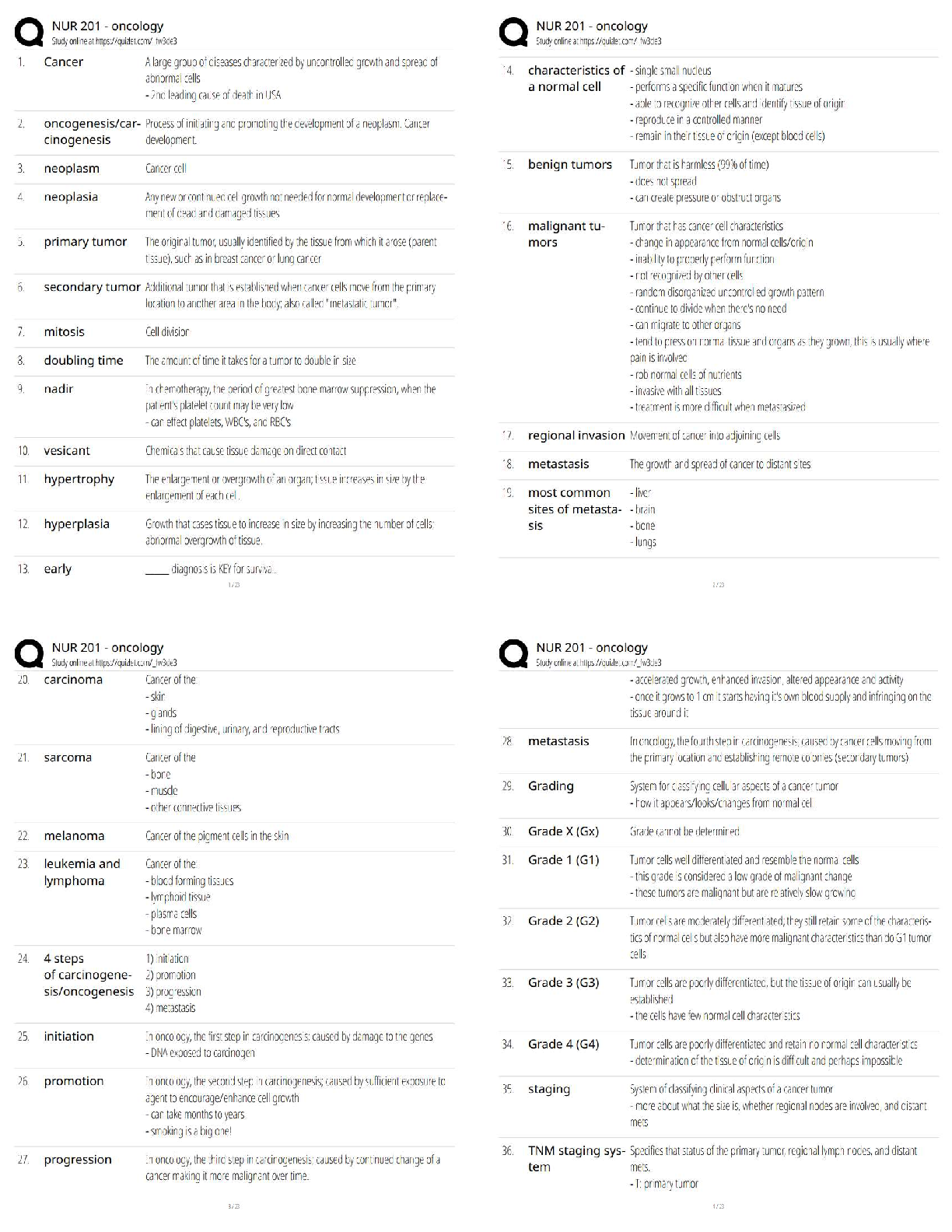

 Pneumonia Chronic Obstructive Pulmonary Disease Clinical Reasoning Case Study Medical surgical (NUR 201) Pneumonia-COPD case study solutions.png)