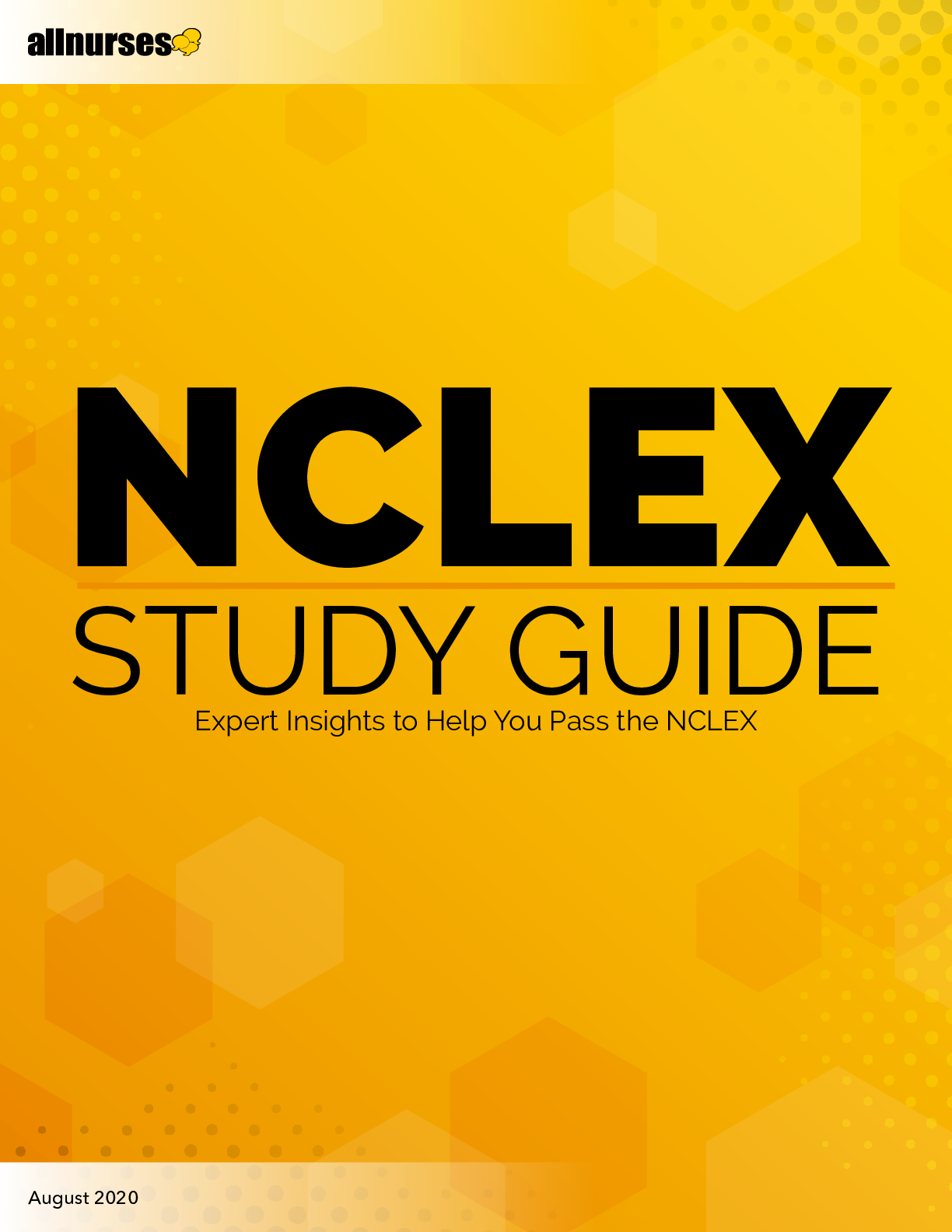
NURSING > NCLEX > Mark Klimek Audio Lectures: Lecture 12 Prioritization, Delegation, and Staff Management Prioritizing (All)
Mark Klimek Audio Lectures: Lecture 12 Prioritization, Delegation, and Staff Management Prioritizing patients
Document Content and Description Below
Last updated: 3 years ago
Preview 1 out of 6 pages
Instant download
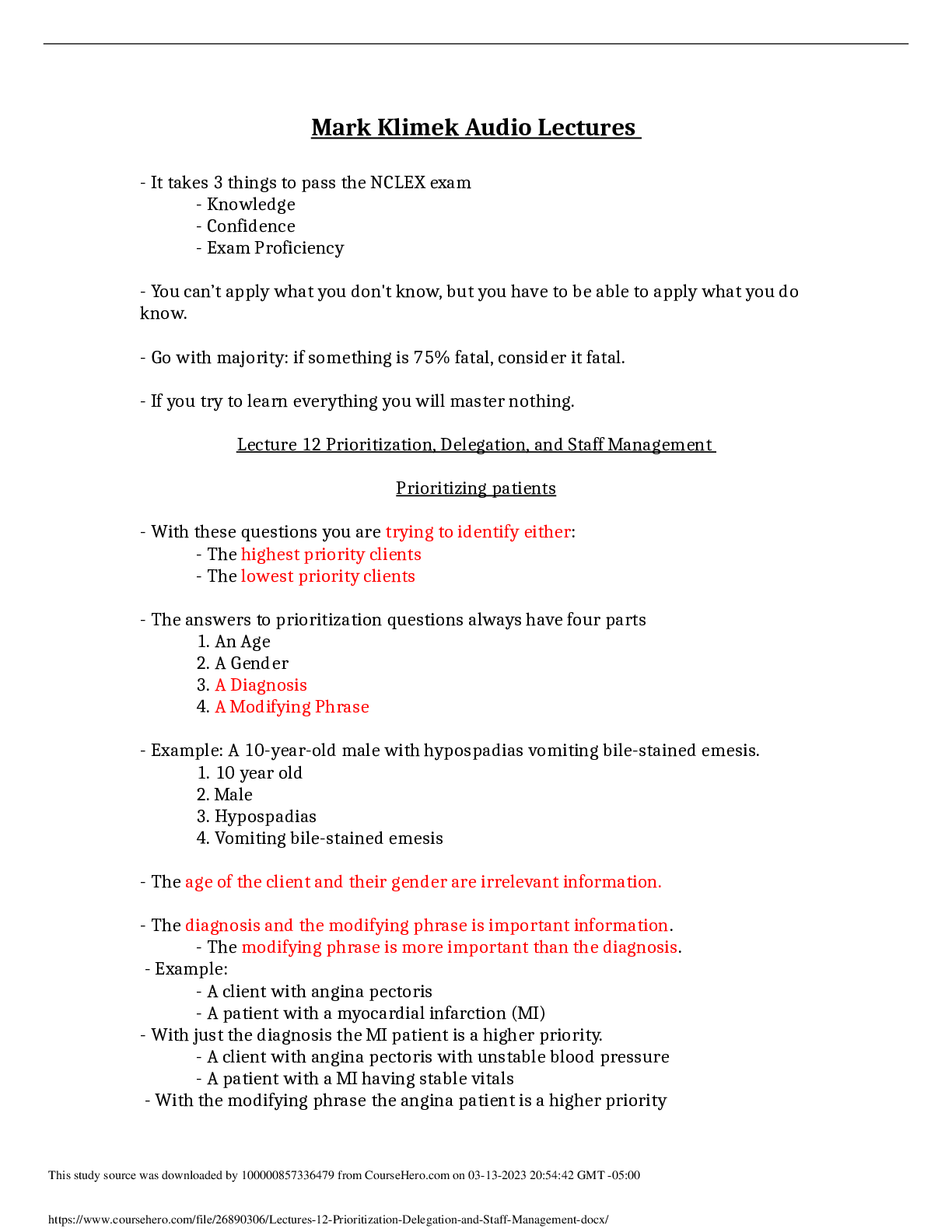
Buy this Document to get the Full Access Instantly
Provided by Students Who Aced it
We Verify Document Content to Gurantee Accuracy
Also available in bundle (1)
Click Below to Access Bundle(s)
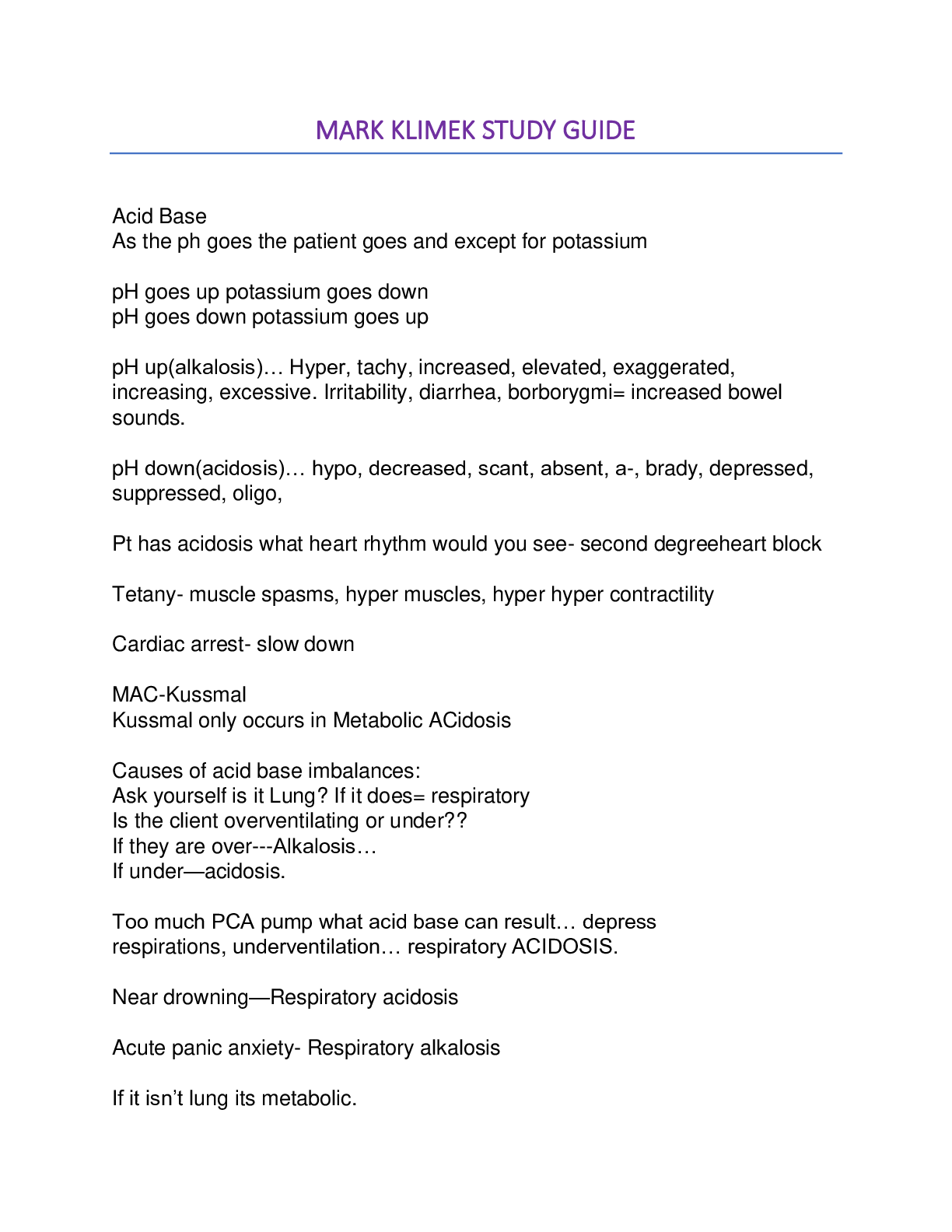
THIS BUNDLE CONTAINS: All the Mark Klimek NCLEX Lecture materials and Guides plus the Audio Lectures you will ever need for Quick NCLEX Test Readiness . Please see the description below for full details.
Mark Klimek Audio Lectures Lecture 10 Maternal health and newborn health: Calculating Due-Dates. Lecture 6 Drug toxicity’s, Dumping Syndrome vs. Hiatal Hernia, Electrolytes Drug Toxicity’s Mark Kli...
By SuperSolutions© 5 years ago
$39
23
Reviews( 0 )
Document information
Connected school, study & course
About the document
Uploaded On
Feb 02, 2021
Number of pages
6
Written in
All

Additional information
This document has been written for:
Uploaded
Feb 02, 2021
Downloads
2
Views
944
Topic Tags
Related Subjects & Courses
Explore similar study resources and related concepts.
Recommended For You
Get more on NCLEX »
Mark Klimek Audio Lectures: Lecture 12 Prioritization, Delegat...
Mark Klimek Audio Lectures: Lecture 12 Prioritization, Delegat...
Mark Klimek Audio Lectures: Lecture 12 Prioritization, Delegat...
.png)
Mark Klimek Audio Lectures: Lecture 3 Cardiac Medications, Ca...

Mark Klimek Audio Lectures Lecture 11 Fetal Heart Monitoring F...
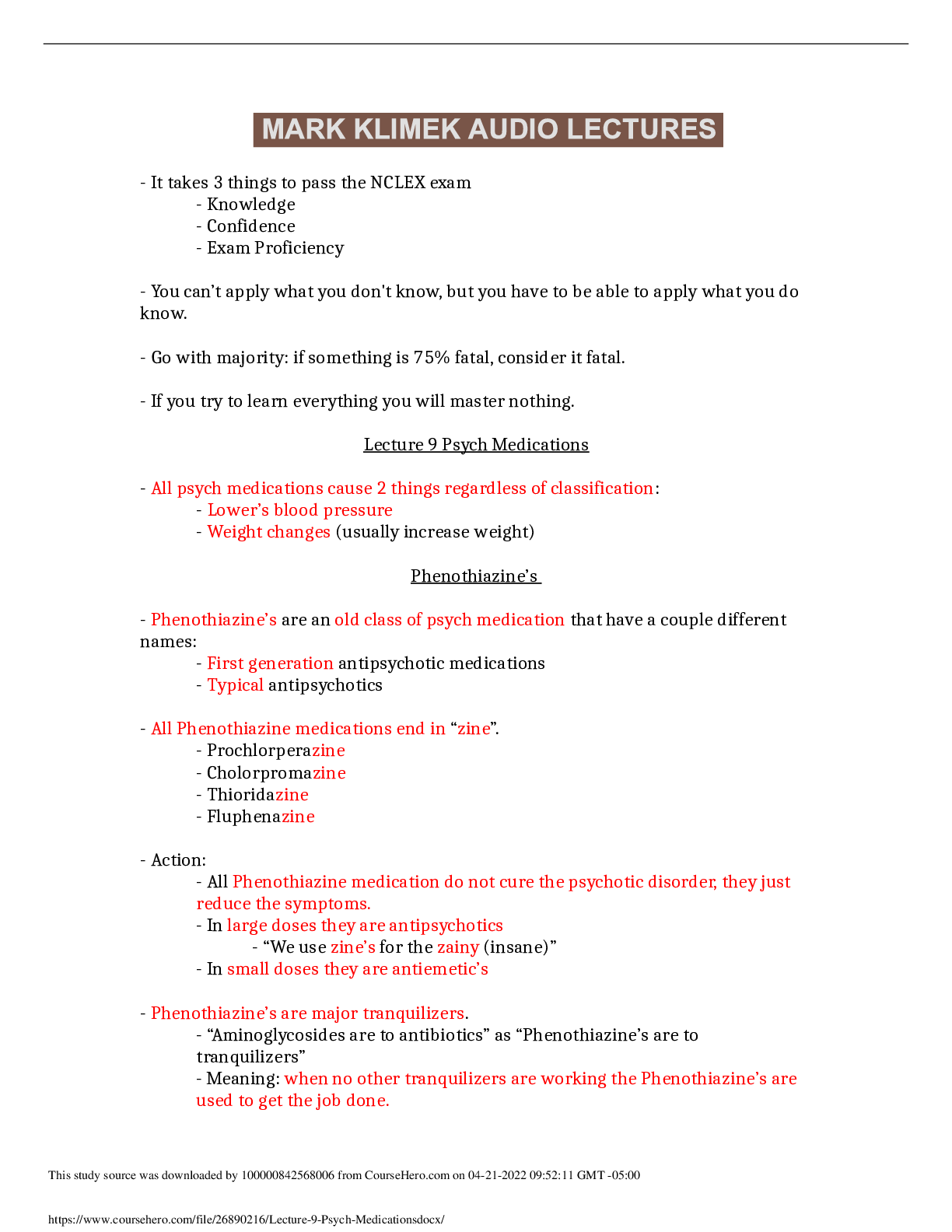

Mark Klimek Audio Lectures| Lecture 6 Drug toxicity’s, Dumping...
 2022.png)
FINC 4720 Final Exam (Lecture 12 - Examination and Supervision...
.png)
FINC 4720 Final Exam (Lecture 12 - Examination and Supervision...
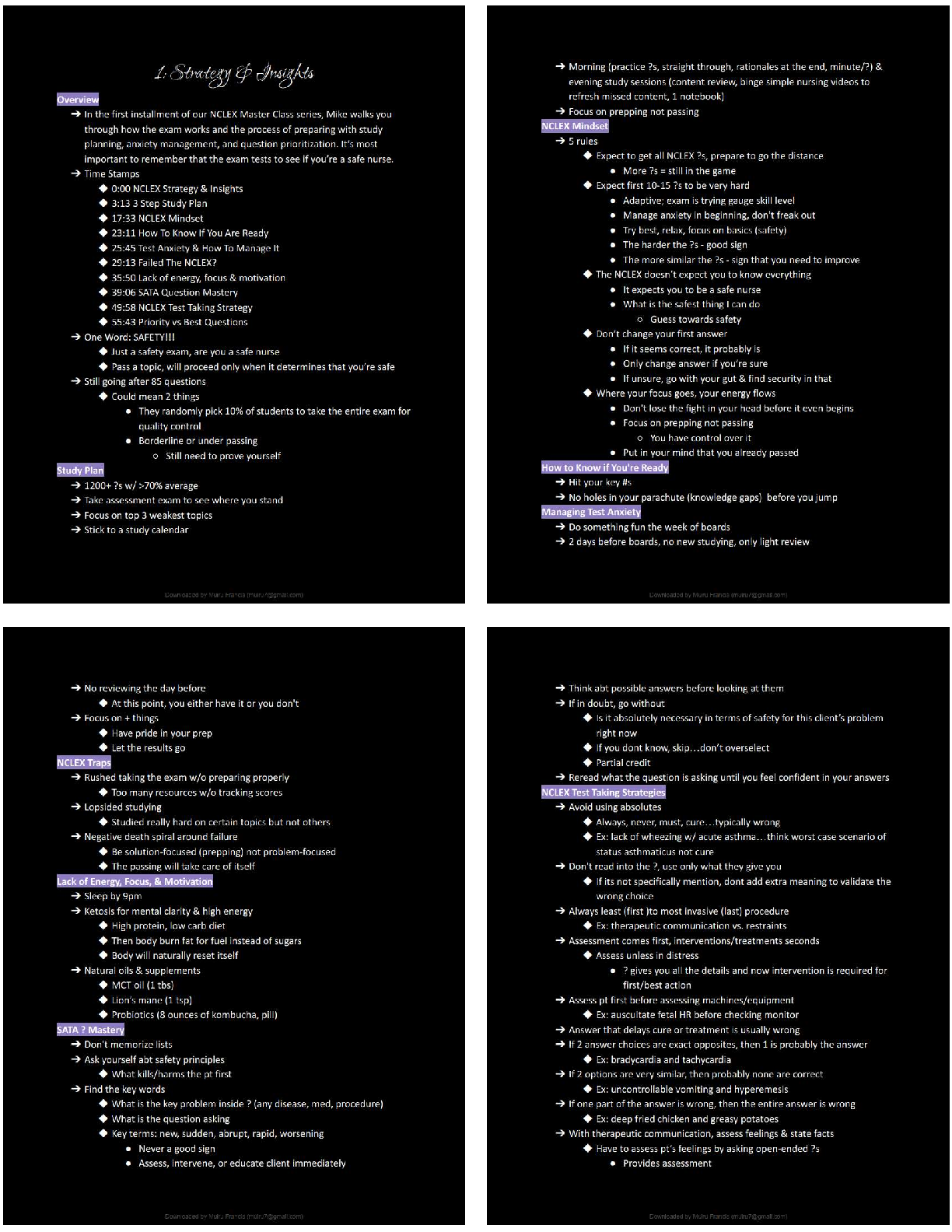
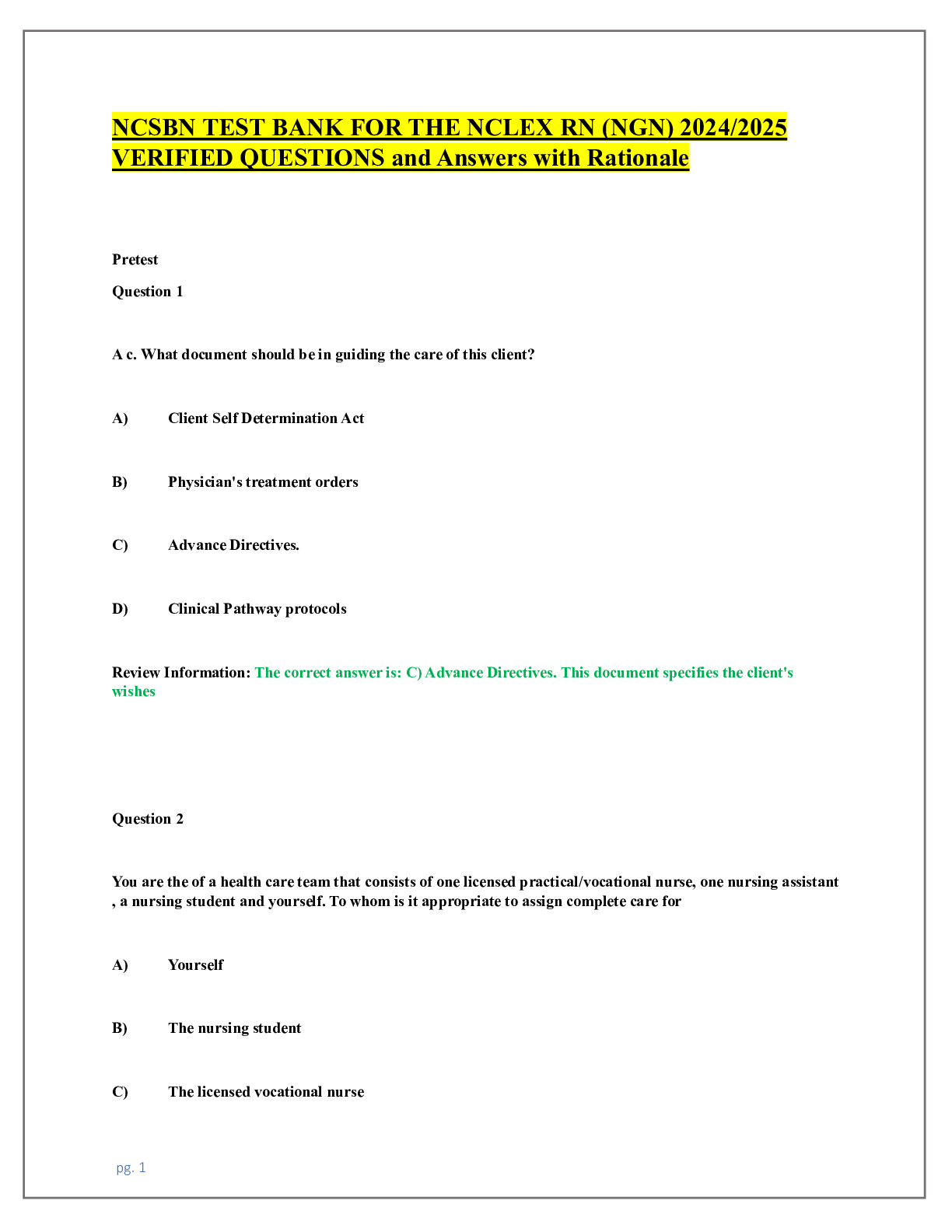
NCSBN TEST BANK FOR THE NCLEX RN (NGN) 2024/2025 VERIFIED QUES...
NCSBN TEST BANK for the NCLEX-RN & NCLEX-PN UPDATED Question...

SAUNDERS COMPREHENSIVE REVIEW FOR NCLEX TEST BANK latest 2022/...
Mark Klimek Audio Lectures 12 | Prioritization, Delegation, an...
 answers (1).png)
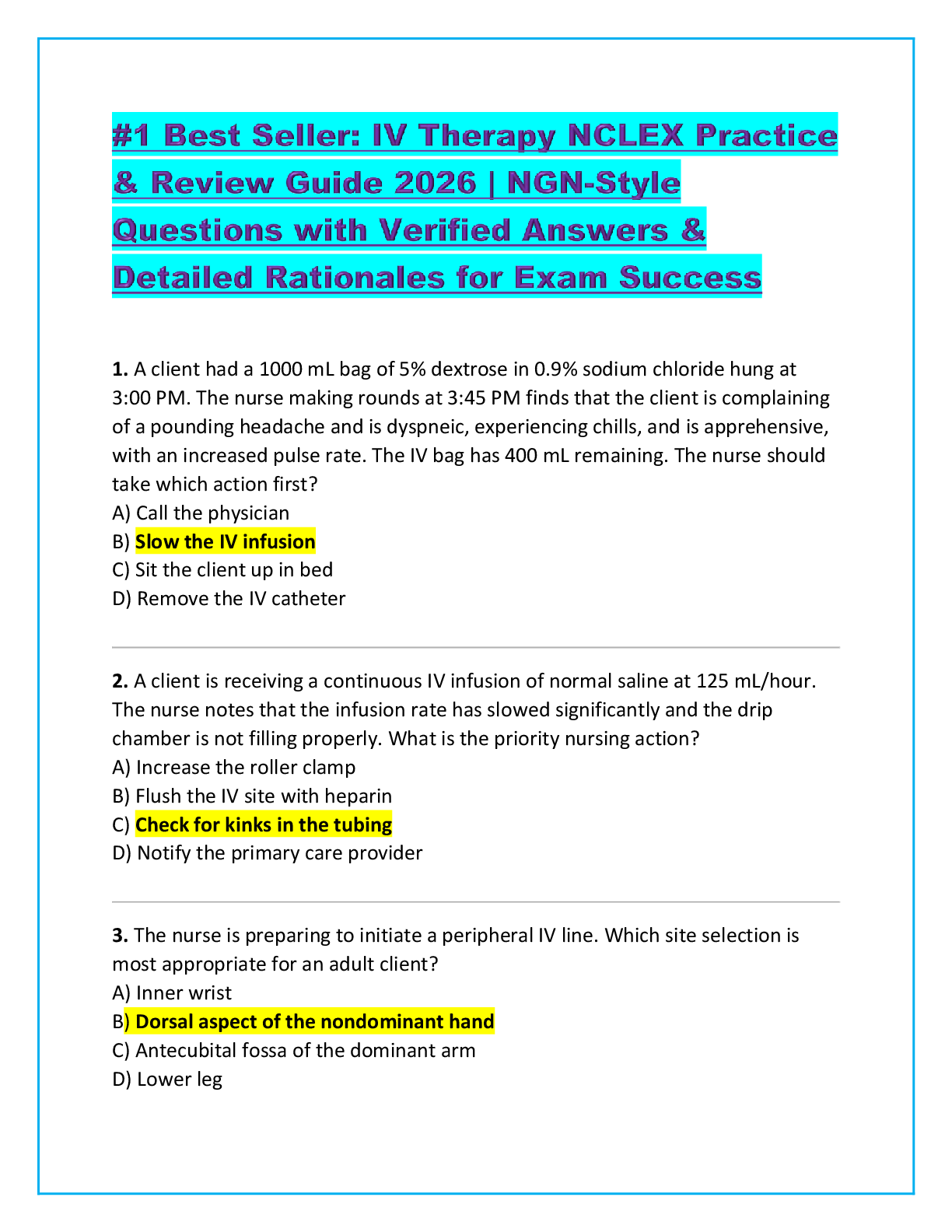

ATI TEAS 7 | 4 Versions for Reading, Math, Science, English, A...
.png)