Political Science > ESSAY > Why is it important to balance majority rule with minority rights? (All)
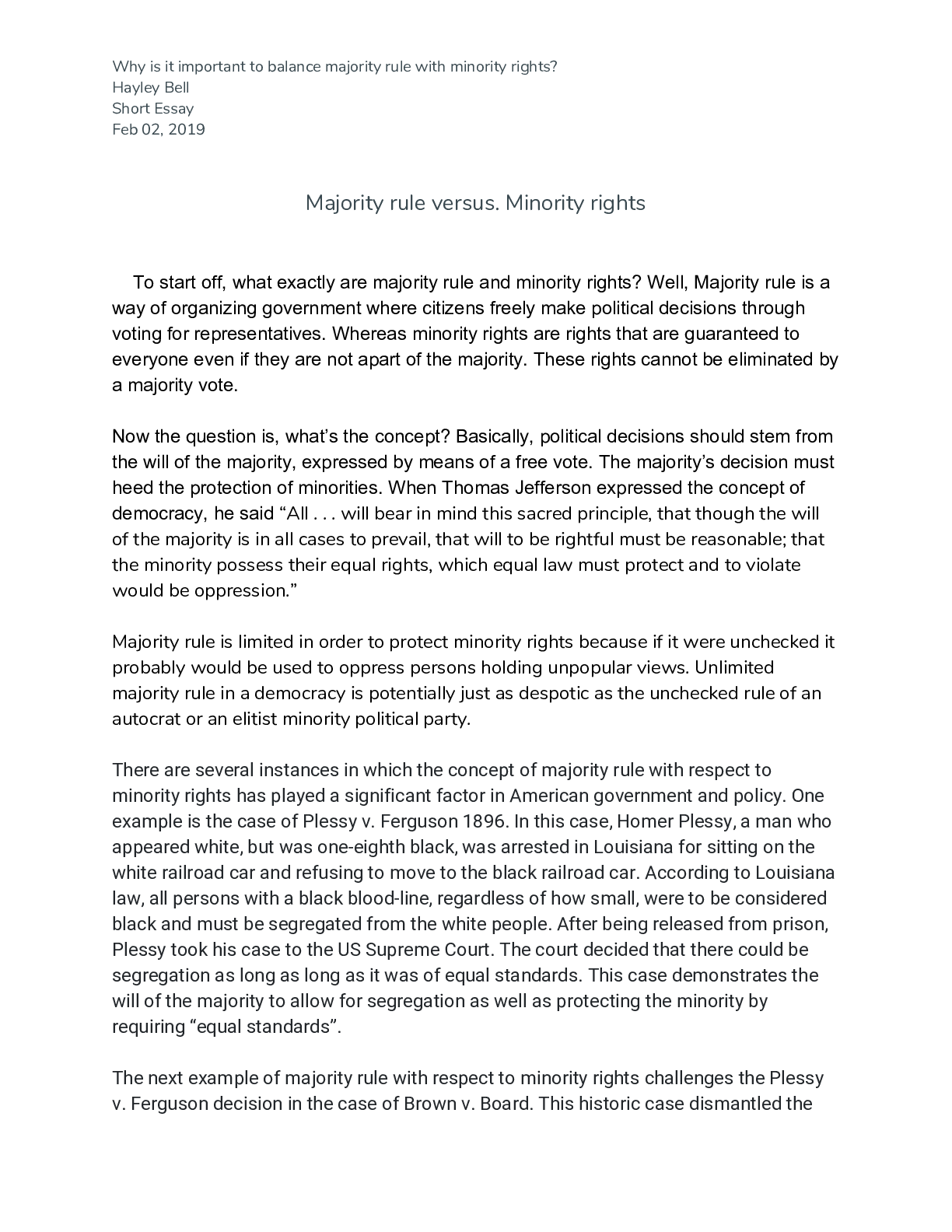
Why is it important to balance majority rule with minority rights?
Document Content and Description Below
Last updated: 3 years ago
Preview 1 out of 2 pages
Instant download
Buy this Document to get the Full Access Instantly
Provided by Students Who Aced it
We Verify Document Content to Gurantee Accuracy
Reviews( 0 )
Document information
Connected school, study & course
About the document
Uploaded On
May 22, 2021
Number of pages
2
Written in
All

Additional information
This document has been written for:
Uploaded
May 22, 2021
Downloads
0
Views
258
Topic Tags
Recommended For You
Get more on ESSAY »
We The People An introduction to American politics 10th Editio...

Analyzing Politics Rationality, Behavior, and Institutions, 2e...
 5e William Bianco David Canon.png)
American Politics Today (Essentials) 5e William Bianco David C...

POLI 330N Final Exam - Question and Answers 2019 - TEST BANK:...
TEST BANK for Terrorism and Homeland Security 10th Edition by...

Test Bank for Public Policy, Politics, Analysis, and Alternati...

Test Bank for Government in America, People, Politics, and Pol...


POS 486 FINAL EXAM_ POS486 Final Exam Questions and Answers(Gr...

POLI 330 Week 4 Quiz 1 SG - Chamberlain College (2019) All Ans...
POLI 330N > QUIZ WEEK 2 LATEST, ATTEMPT SCORE 30/30. CHAMBERLA...
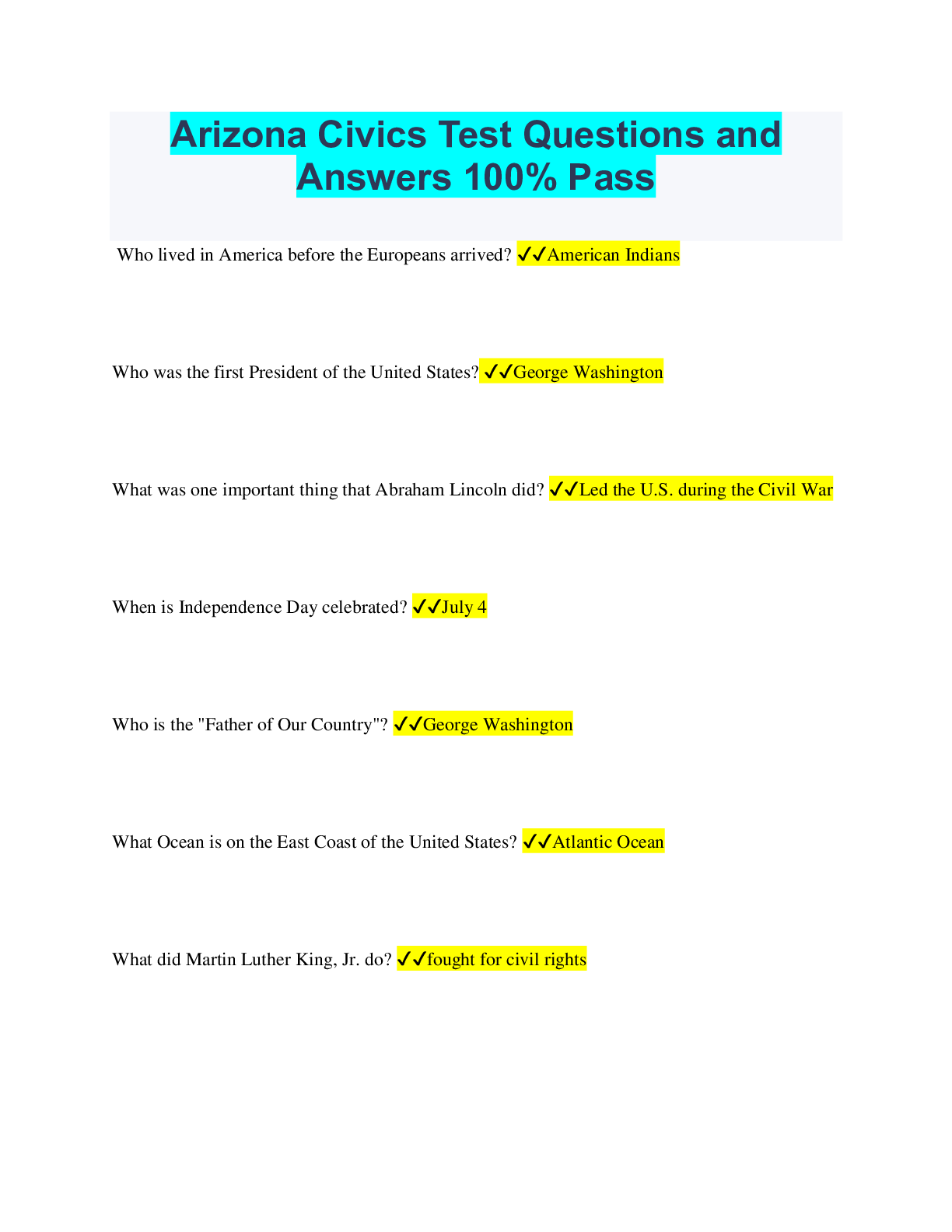
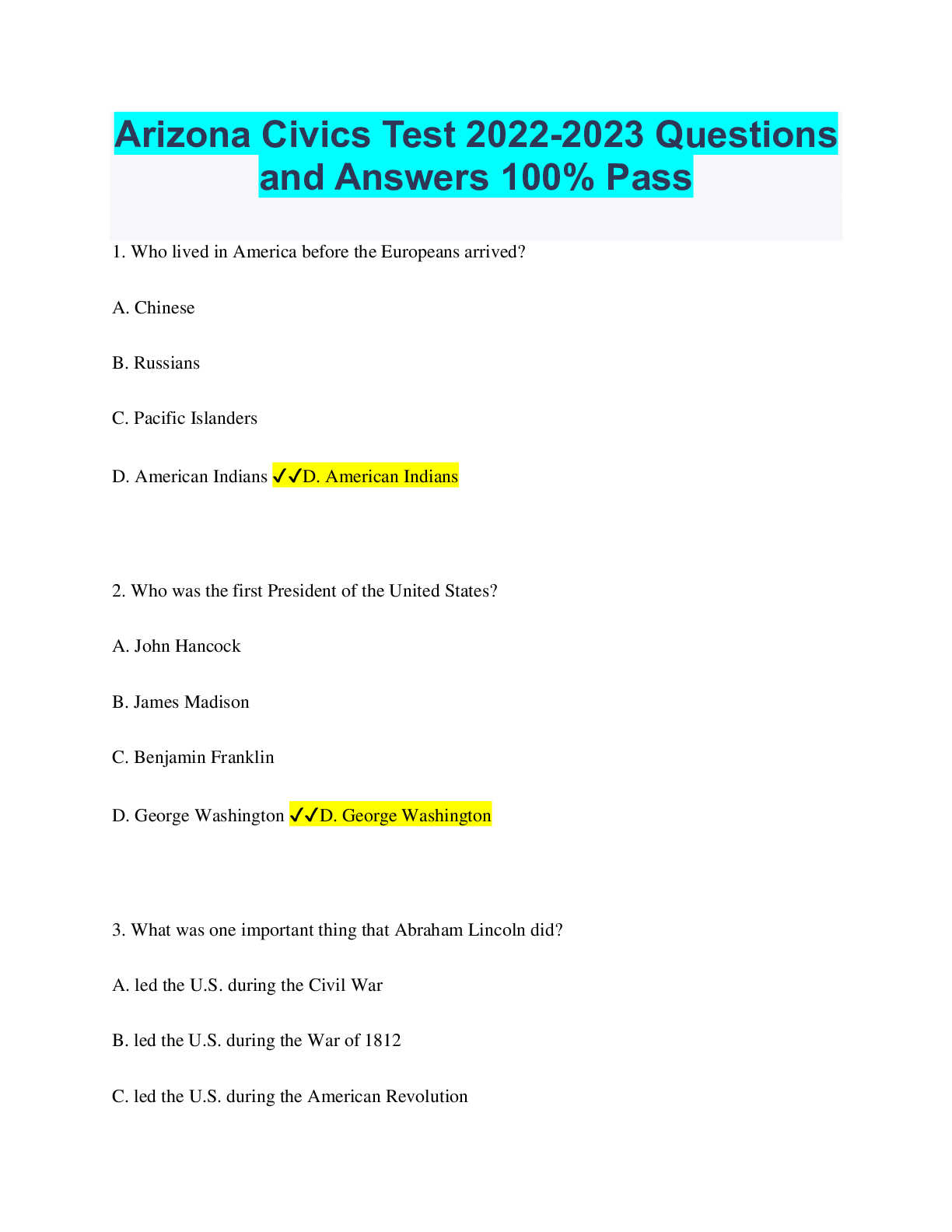
Arizona Civics Test 2022-2023 Questions and Answers 100% Pass

Columbia High School, Lake CityPOLS INTERNATIOWorld Politics N...





.png)




.png)


